L’estacade De L’île Saint-Louis — History & Facts
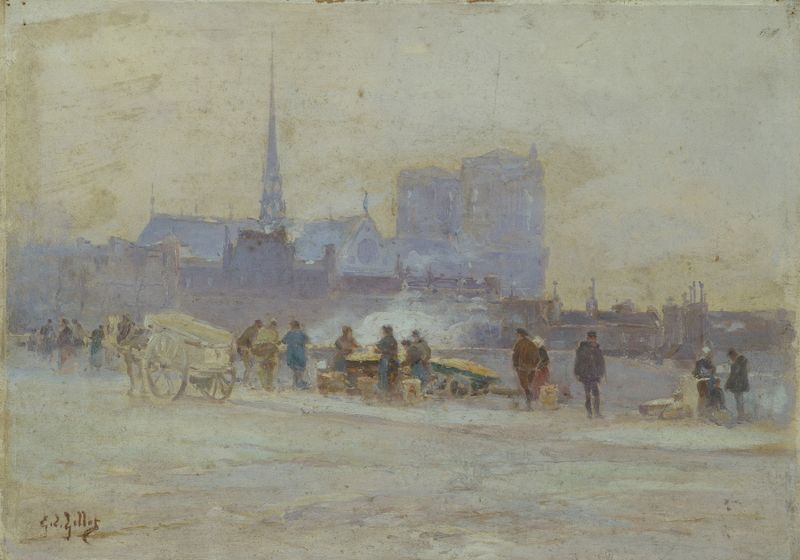
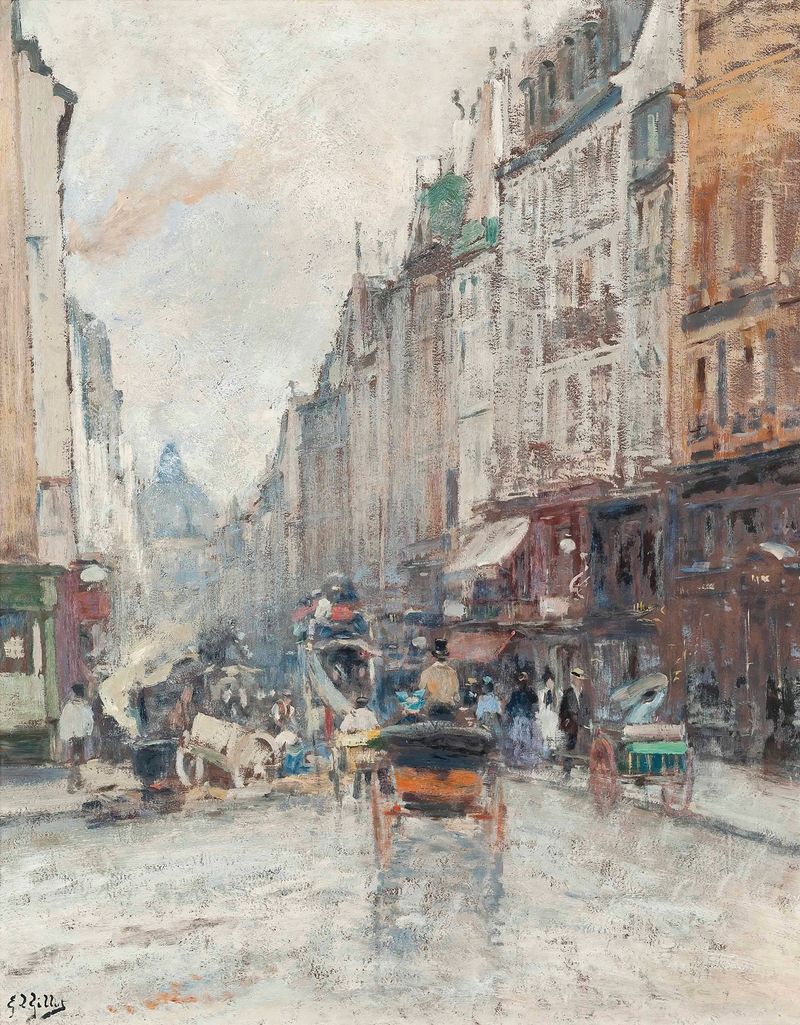
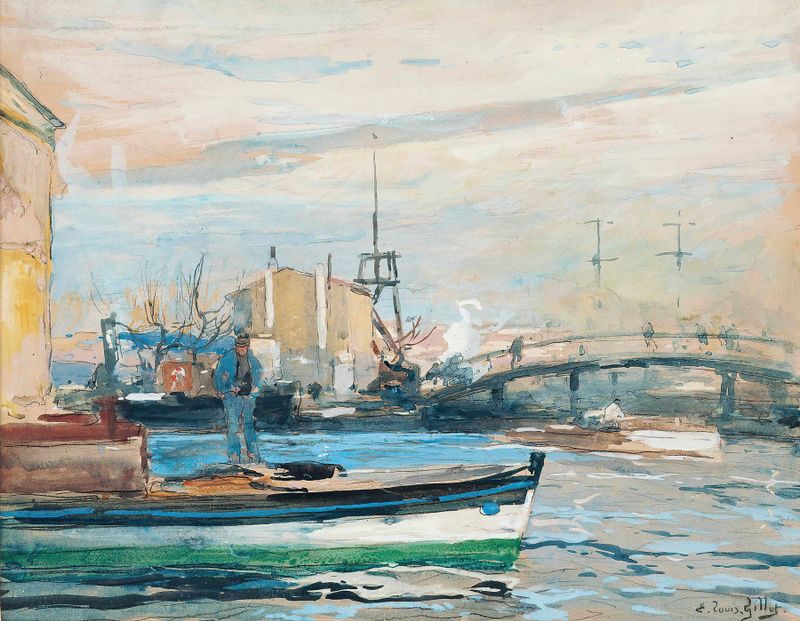
Each stroke of paint whispers of destinies intertwined and moments suspended in time. Look to the lower left to find the rustic charm of the dock, its wooden beams jutting into the water, welcoming the memory of countless journeys. Notice the soft, muted palette that evokes a sense of nostalgia, as shades of blue and brown converge in a gentle embrace. The light, filtered through hazy clouds, dances upon the water, creating a shimmering path that leads the eye deeper into the scene, drawing you into the world Gillot has crafted. At first glance, the painting may seem a mere depiction of a riverside view, but delve deeper, and you’ll uncover layers of meaning.
The contrast between the tranquil waters and the sturdy structure of the dock speaks to the balance between nature and human endeavor. The lightness of the clouds over the solid ground suggests a fleeting moment, a reminder of the ephemeral nature of existence and the destinies that await those who pass by. Each element harmonizes to reflect the tension between permanence and transience. In 1900, Gillot was immersed in the Parisian art scene, navigating the shifting tides of impressionism.
During this period, he found himself deeply influenced by the interplay of light and color, experimenting with the soft focus that would come to define his work. The city was alive with innovation, as artists pushed boundaries, and through L’estacade De L’île Saint-Louis, he mirrored the pulse of a world in transformation, capturing both the essence of a moment and the ripple of destiny.