Oberengadiner Winterlandschaft — History & Facts
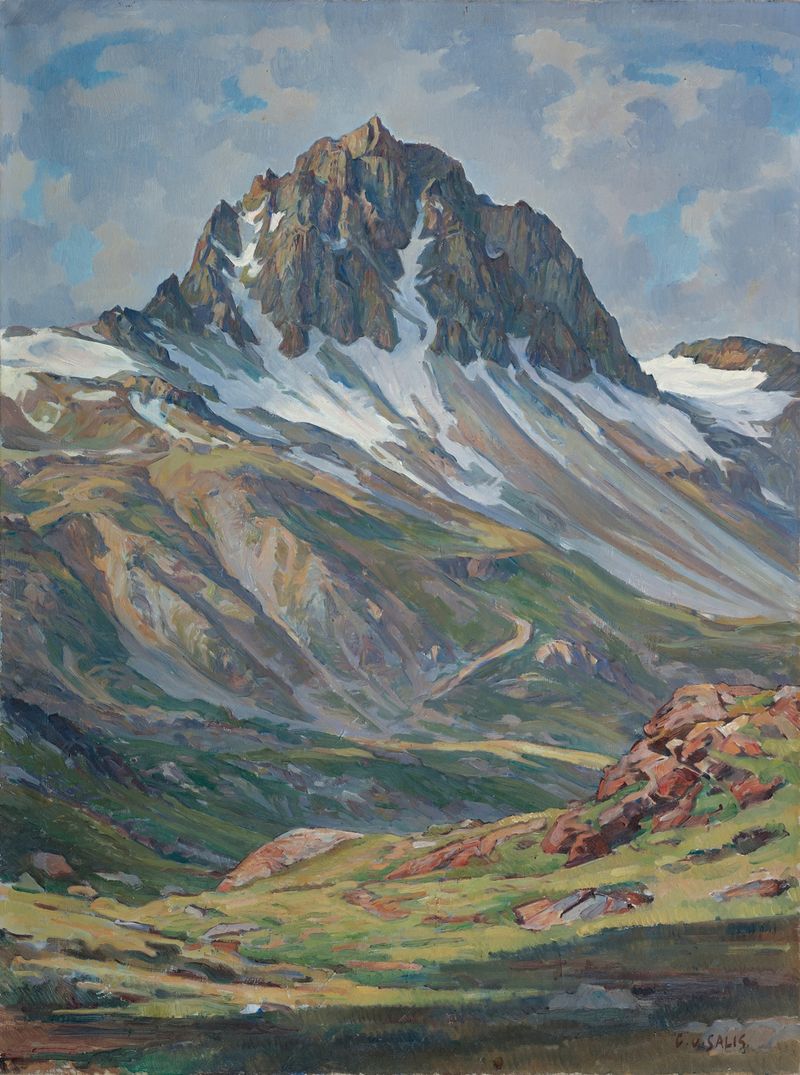
In the stillness of winter landscapes, the echoes of life and mortality resonate deeply, reminding us of our fragile existence amid nature's splendor and silence. Look to the center of the canvas, where a vast expanse of snow-tipped mountains looms majestically, their peaks kissed by a soft, ethereal light. The play of pale blues and whites creates a delicate tranquility, inviting the viewer to explore the intricate textures and fading shadows as they dance across the undisturbed snow. A few distant pines break the uniformity, standing like sentinels in a serene yet stark world, guiding the eye and heart to the contemplative space nestled within the elevation of the landscape. As you observe the composition, notice how the contrast between light and shadow evokes a sense of solitude, reminding us of life's fleeting moments.
The gentle undulations of the terrain whisper stories of seasons long past and the inexorable passage of time, while the calmness of the scene envelops the viewer in a bittersweet embrace. Each brushstroke seems to capture both the beauty of the eternal winter and the ephemeral nature of life, creating a poignant dialogue between the artist's vision and our own mortality. In 1913, the artist found inspiration amidst the serene beauty of the Oberengadin region in Switzerland. At that time, he was immersed in the early 20th-century artistic movements that sought to connect with nature and the emotional landscape of the human experience.
This painting reflects not only his technical prowess but also a contemplative introspection that mirrored the changing world around him, where the timelessness of nature stood in stark contrast to the rapid advancements of modern life.