October in the Blue Mountains — History & Facts
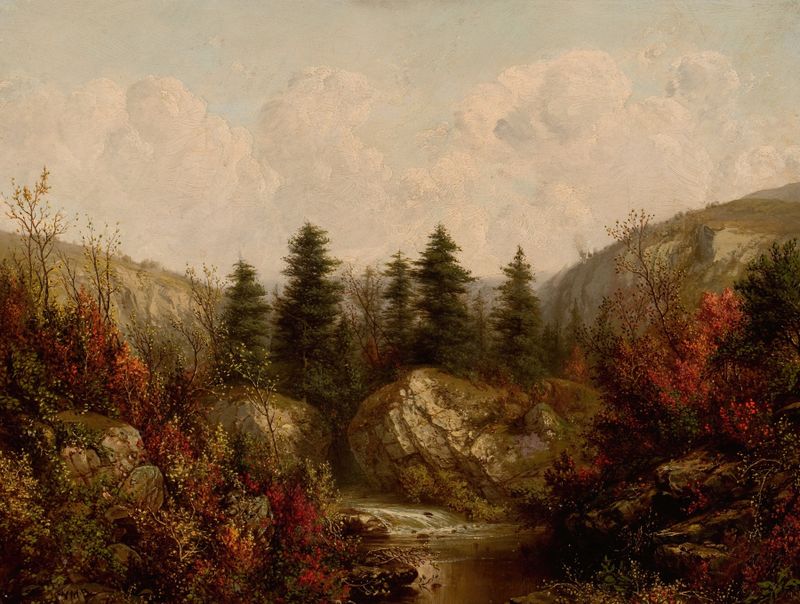
Can beauty exist without sorrow? In the depths of nostalgia, where the memory of autumn leaves mingles with the whisper of lost time, the answer may lie within the hues of a landscape. Look closely at the expanse of the canvas, where the cool, muted blues resonate with a sense of calm. Notice how the delicate interplay of light and shadow dances across the rolling hills, creating an immersive atmosphere that draws the viewer into the scene. The gentle strokes evoke the rustling leaves, while the blending of colors hints at the fleeting nature of autumn—a season that embodies both vibrancy and decay. In this piece, a poignant contrast emerges between the serene beauty of the landscape and the underlying ache of transience.
The tranquil waters reflect the towering mountains, yet they also symbolize the passage of time, inviting contemplation of what has gone and what remains. The solitude portrayed suggests a profound introspection, prompting the viewer to recognize the bittersweet essence of nostalgia that colors our memories. Created during a time when the Hudson River School was influencing American landscape painting, the artist found inspiration in the natural beauty of the Blue Mountains. Working in the late 19th century, he embraced the Romantic ideals of his contemporaries, while infusing his own vision of the world.
This period in art was marked by a growing fascination with nature, reflecting both the beauty and fragility of the environment.