River through an Autumn Forest — History & Facts
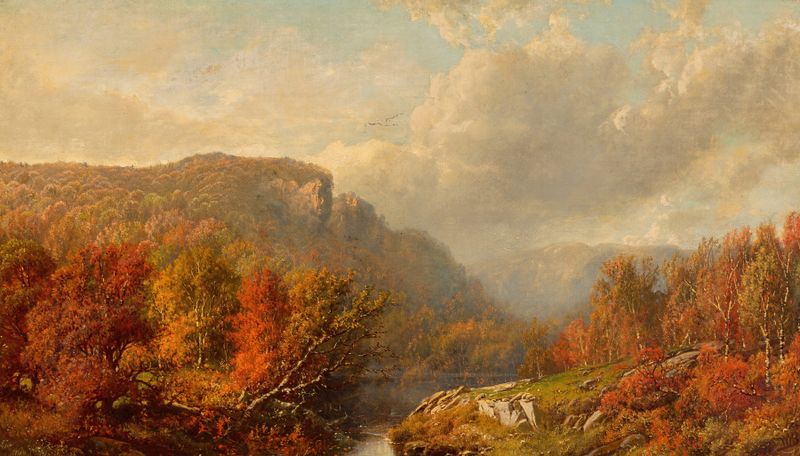
When did color learn to lie? In a world where vibrant hues often mask the ache of solitude, a moment of stillness reveals the truth lurking beneath the surface. Look to the center of the canvas where the river meanders, its reflective surface a shimmering embrace of golden and russet tones. Notice how the trees flank the waterway, their leaves a patchwork quilt of autumnal warmth, yet each branch seems to lean away, as if deliberately avoiding connection. The brushwork is both delicate and intentional, inviting the viewer to trace the winding path of the water, while the surrounding foliage provides a stark contrast in its vividness—highlighting the melancholy hidden within this picturesque scene. At first glance, the colors allure, but a closer inspection unveils an underlying tension.
The river, while beautiful, suggests a journey void of companionship, leading through an isolation wrapped in the warmth of autumn. The trees, vibrant yet distant, evoke a sense of longing—a poignant reminder of how nature can reflect our deepest emotions even amidst its beauty. William Mason Brown created this work during the mid-19th century, a time when American art was shifting towards a deeper connection with nature. Living in a rapidly industrializing society, artists like Brown explored themes of solitude and reflection in their landscapes, capturing a longing for simplicity and authenticity in a world increasingly defined by change.