Off Heligoland — History & Facts
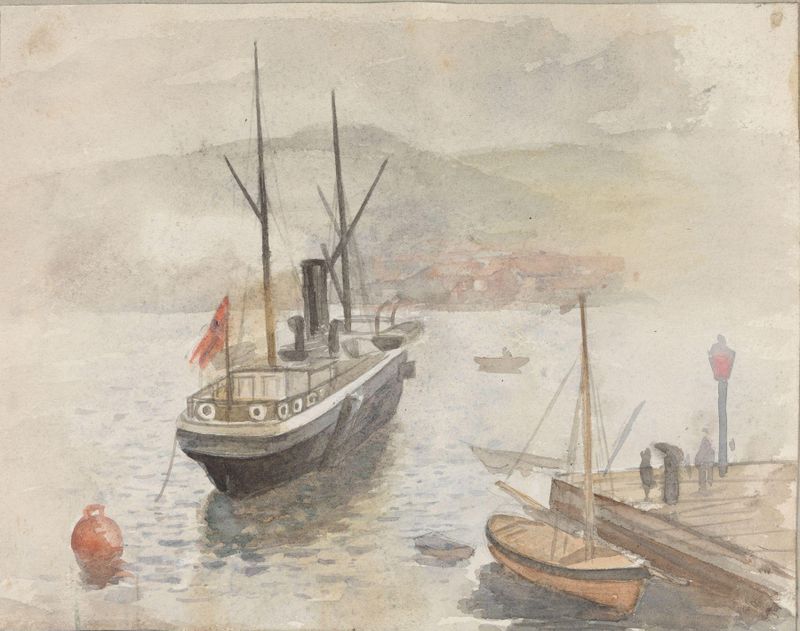
What if silence could speak through light? In Off Heligoland, the interplay of radiance and shadow whispers tales of destiny, anchoring viewers in the poignant stillness of the moment. Look to the horizon, where the brushstrokes blend sea and sky in a delicate dance of blues and greens. The gentle waves lap against the rocky shore, capturing a fleeting moment in time. Notice how the light cascades onto the water, shimmering like scattered diamonds, while soft clouds hover above, hinting at an impending change.
The composition draws the eye inward, inviting contemplation, as the juxtaposition of vibrant color against the muted tones of the land evokes a sense of both urgency and tranquility. In this artwork, the vastness of the ocean mirrors the boundless nature of hope, while the looming cliffs represent the weight of fate. The tension between the calm surface and the unseen depths below suggests uncharted paths and untold stories. A solitary seagull drifting in the sky may symbolize freedom, as it contrasts the fixed solidity of the land, embodying the duality of aspiration versus confinement. Frederik Collett painted Off Heligoland in 1865, a period marked by significant shifts in European art and society.
Living in Norway, Collett was influenced by Romantic ideals that celebrated nature's power and beauty. This painting emerged amidst a changing world, where the industrial revolution was redefining humanity's relationship with the environment, urging artists like Collett to explore themes of destiny and the sublime in their work.