Old Houses near Cambridge — History & Facts
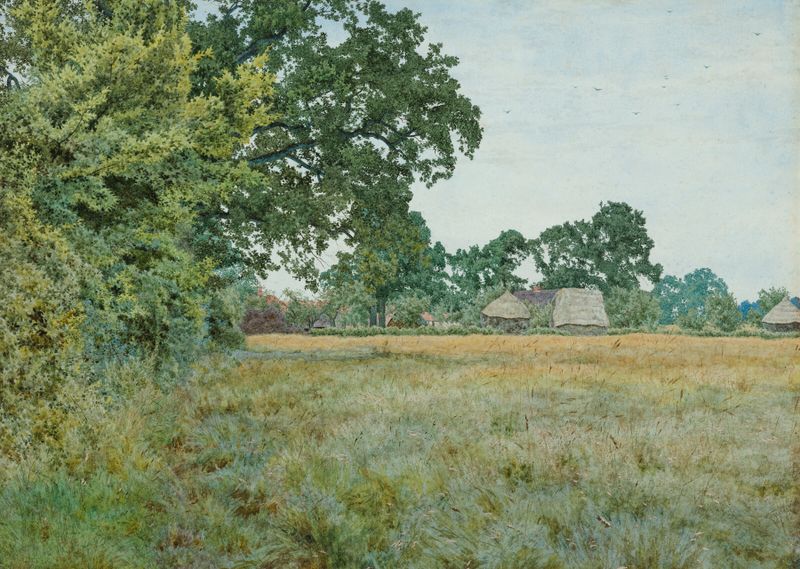
What if beauty was never meant to be finished? In Old Houses near Cambridge, a delicate landscape whispers the story of enduring rebirth through the lens of time and nature. Look to the left at the soft, weathered facades of the houses, their faded hues blending seamlessly with the lush green that encircles them. The brushstrokes convey a gentle, inviting texture, while the dappled sunlight casts a serene glow over the scene, creating a sense of warmth and nostalgia. Focus on the way the trees frame the architecture, embodying a protective embrace, as if they are guardians of memories long forgotten. Beneath the tranquil surface, the painting reveals a deeper tension between decay and renewal.
The crumbling walls symbolize the passage of time, yet they coexist with vibrant foliage, suggesting that beauty can thrive even amidst impermanence. The contrast of man-made structures against the lively, chaotic growth of nature speaks to the cyclical dance of life—a reminder that decay gives way to new beginnings. Created in 1906, this piece emerged during a transformative era in British art, where the influence of Impressionism began to reshape perceptions of landscape painting. Fraser Garden, influenced by the burgeoning Arts and Crafts Movement, sought to capture the intimacy of the English countryside, as he grappled with personal challenges and the evolving tides of modernity.
This work encapsulates the harmony he found in his surroundings, reflecting a moment where nostalgia and the promise of rebirth intertwine.