Trees and Undergrowth — History & Facts
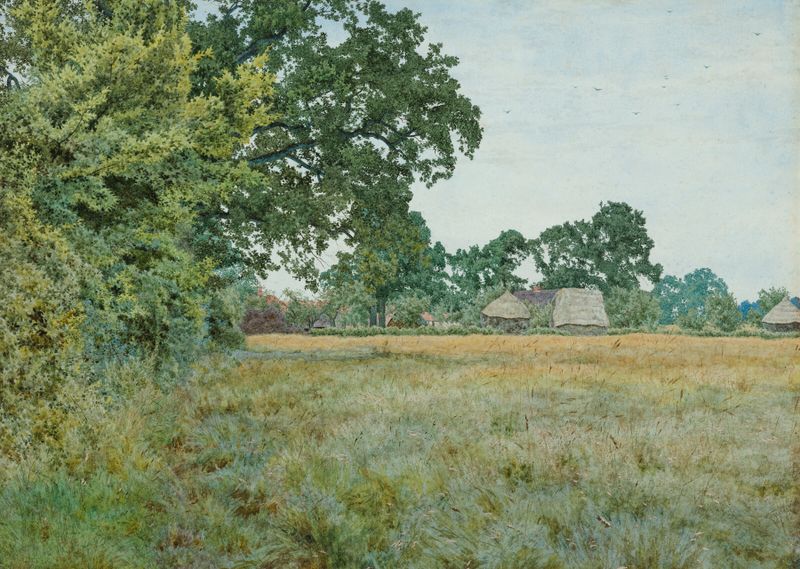
In the quiet embrace of nature, beauty reveals itself in ways unseen, inviting us to explore the subtleties of the world. Look to the left at the delicate interplay of greens and browns, where the trees rise majestically against a wash of soft, dappled light. The artist’s brushwork captures the textured undergrowth with a lush vibrancy that draws the eye deeper into the composition. As the viewer’s gaze wanders, they are led through a labyrinth of foliage, where every detail—each leaf, each shadow—contributes to the painting’s serene atmosphere. Within this tranquil scene lies a tension between the stillness of the forest and the vibrant life that pulses beneath the surface.
The juxtaposition of light and shadow evokes a sense of mystery, as if the trees themselves guard secrets hidden in their depths. The harmonious palette whispers of beauty, yet hints at the inevitable passage of time—a reminder that nature is both a sanctuary and a cycle of life and decay. In 1885, William Fraser Garden painted this work in an era where the Impressionist movement was redefining artistic expression, embracing nature’s fleeting moments. Living amid the lush landscapes of Scotland, he sought to capture the essence of the natural world with a keen eye for detail.
This period of his life marked a shift towards a more personal interpretation of beauty, perfectly embodied in the tranquil embrace of Trees and Undergrowth.