Olive trees near Jerusalem — History & Facts
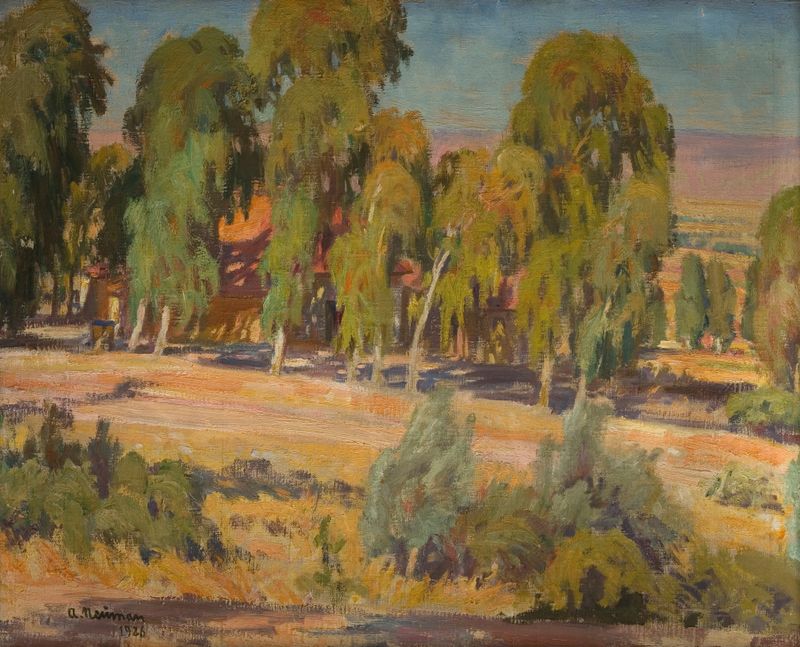
In the quiet embrace of an olive grove, grief murmurs in the rustling leaves, while the weight of history presses upon the land like a lingering shadow. There, the olive trees stand resilient yet weary, bearing witness to the passage of time and the stories of those who tread beneath their branches. Look to the center of the canvas, where the gnarled trunks twist and turn, their deep ochre and muted greens reflecting the somber tones of the earth. The sunlight spills through the foliage, casting dappled patterns on the ground, inviting your gaze to wander down the path that meanders into the background.
Notice the brushwork—the delicate strokes that give life to the leaves, juxtaposed against the thick, textured bark of the trees. The composition speaks of a harmonious yet melancholic landscape, embodying both the beauty and the burden of existence. The emotional undercurrents within this work are palpable; the olive trees symbolize endurance in the face of adversity, while their twisted forms evoke a sense of mourning for lost histories. The subdued palette signifies a world muted by grief, contrasting the vitality of nature with the sorrow of human experiences.
This is not merely a representation of a landscape; it is a meditation on survival, memory, and the deep-rooted connections between people and their land. During 1925, when this piece was created, Abraham Neuman was immersed in the cultural upheaval of post-WWI Europe. The world of modern art was shifting, as artists sought new ways to express identity and emotion in a landscape marred by conflict. Neuman, living in Jerusalem, drew inspiration from his surroundings, capturing the complex interplay of beauty and sorrow inherent in the olive trees, a symbol of both peace and persistence amid turmoil.