On The Beach, Dunrobin — History & Facts
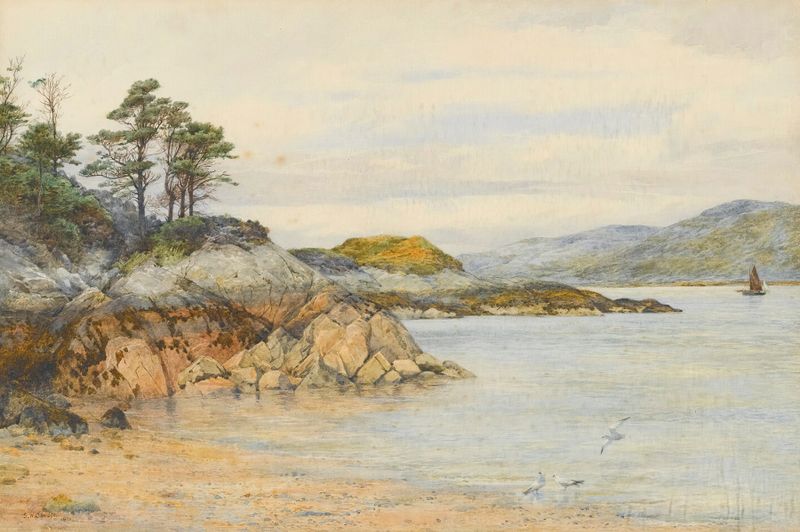
Where does light end, and longing begin? On The Beach, Dunrobin encapsulates that very question, revealing a moment suspended between time and memory, where the legacy of a place intertwines with the fleeting nature of human experience. Look to the left at the gentle waves lapping against the shore, their cerulean hues merging with whispers of foamy white. Notice how the sunlight dances upon the surface, casting sparkling reflections that beckon the eye. Draw your gaze to the figures scattered along the beach; they seem lost in contemplation, their postures imbued with a collective sense of nostalgia.
The soft brushstrokes create a delicate harmony between the figures and the landscape, inviting viewers to explore the depth of their emotions. Within this tranquil scene lies an undercurrent of tension. The distant horizon, painted in subdued pastels, suggests the endless possibilities and unspoken desires of those present. The figures, seemingly absorbed in their own reflections, convey a sense of isolation amidst the shared space, echoing the longing for connection and the weight of memory.
Each brushstroke captures the essence of a fleeting moment, hinting at the stories left unsaid and the histories that linger in the air. Samuel William Oscroft created this work in 1891, during a time when the Impressionist movement was gaining momentum in England. Living in a world transitioning towards modernity, Oscroft sought to encapsulate not just the landscape, but the emotional resonance of places, drawing from his own experiences within the natural beauty of Britain. This painting stands as a testament to a legacy of artistic exploration, bridging the gap between reality and the ephemeral.