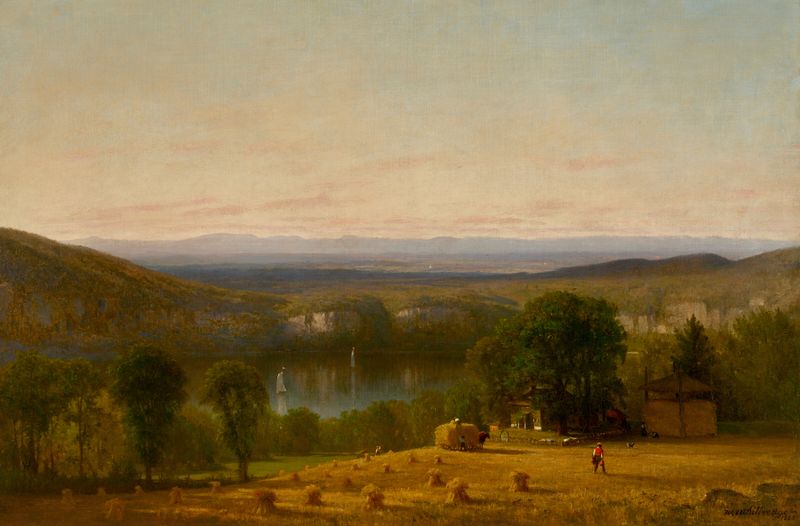
On the Platte River — History & Facts
In On the Platte River, vibrant strokes capture the essence of movement, inviting viewers to explore the dynamic interplay of nature's elements. The painting whispers of the river's flow, evoking a sense of freedom and tranquility that lingers long after the gaze has shifted. Look to the center of the canvas, where the river snakes gracefully through lush greenery. Notice how the painter employs a palette of rich greens and soft blues, blending them seamlessly to depict rippling waters beneath a dappled sky.
The textured brushwork creates a sense of vitality, while light dances across the surface, revealing hidden depths and inviting the viewer to lose themselves in the scene. Each stroke carries a rhythm, echoing the gentle rush of the water. Delve into the contrasts found within the artwork: the stillness of the trees against the vivacious flow of the river, the soft reflections that hint at quiet contemplation amidst the energy. Look closely at the interplay of light and shadow; it speaks to the balance between chaos and serenity inherent in nature.
This harmony mirrors the dualities of life — the tranquil spaces providing rest amidst constant motion. The artist created On the Platte River during a time when the American landscape was being increasingly celebrated in art. Working in the mid to late 19th century, he was influenced by the Hudson River School's emphasis on natural beauty. Whittredge's explorations of the American wilderness came at a moment of burgeoning national identity, capturing both the essence of the landscape and the deeper human connection to it.