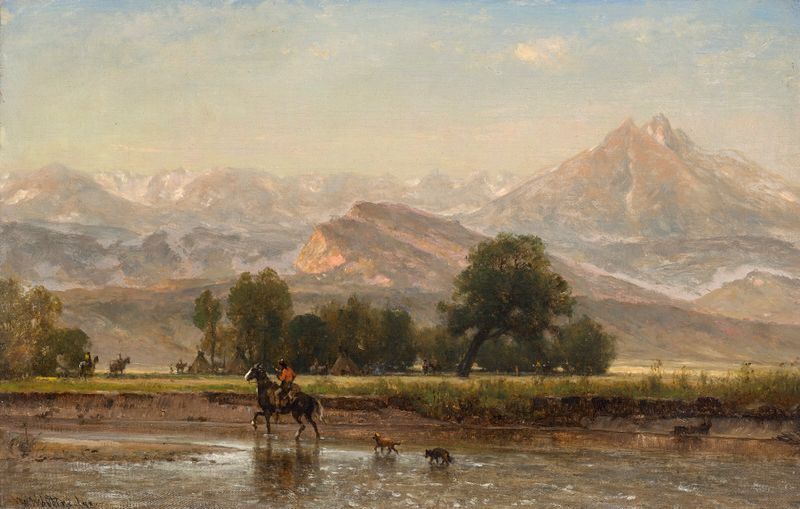
The Hayfield — History & Facts
In the stillness of a summer day, nature breathes quietly, holding within its embrace both the vibrancy of life and the shadows of loss. Look to the left at the gentle undulations of the golden hayfield, where each stroke of paint evokes the warmth of the sun on ripened grain. The horizon stretches, an endless expanse of green and gold, dotted with hints of deep blue sky. Notice how soft light dances across the terrain, illuminating the textures of the hay, while deeper shadows whisper of an unseen melancholy, creating a dialogue between joy and sorrow. The subtle interplay of light and shadow serves not only to define the landscape but also to evoke the duality of existence.
In this pastoral scene, the vibrant colors resonate with the echoes of laughter and labor, yet the vastness of the field can also symbolize the isolation that accompanies grief. Each detail—the scattered haystacks, the distant trees—holds a story, reminding us that beauty often coexists with profound loss. In 1863, Whittredge was immersed in the evolving American landscape movement, capturing the essence of rural life in a rapidly changing nation. He painted The Hayfield during a time marked by the Civil War, when many were grappling with the weight of loss and the desire for connection to the land.
This piece reflects not only his mastery of capturing nature but also the emotional landscape of a country in turmoil, finding solace amidst the fields that had nourished generations.