On the shore of Lake Langbathsee — History & Facts
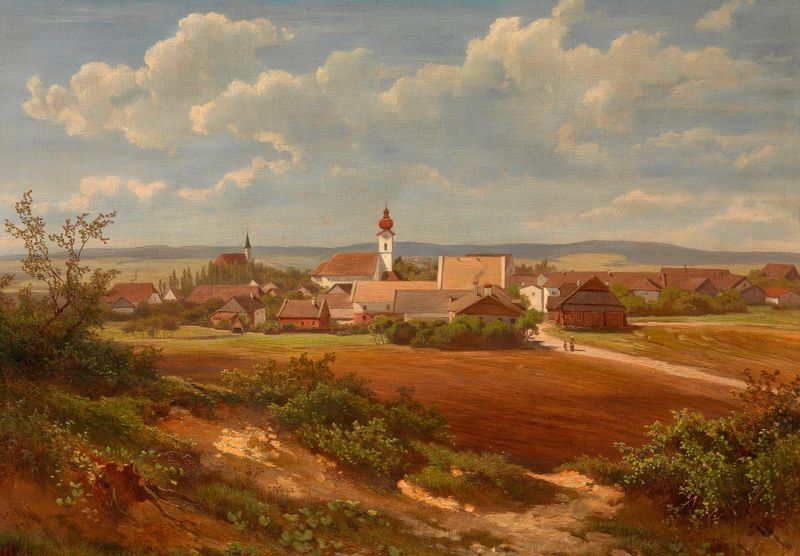
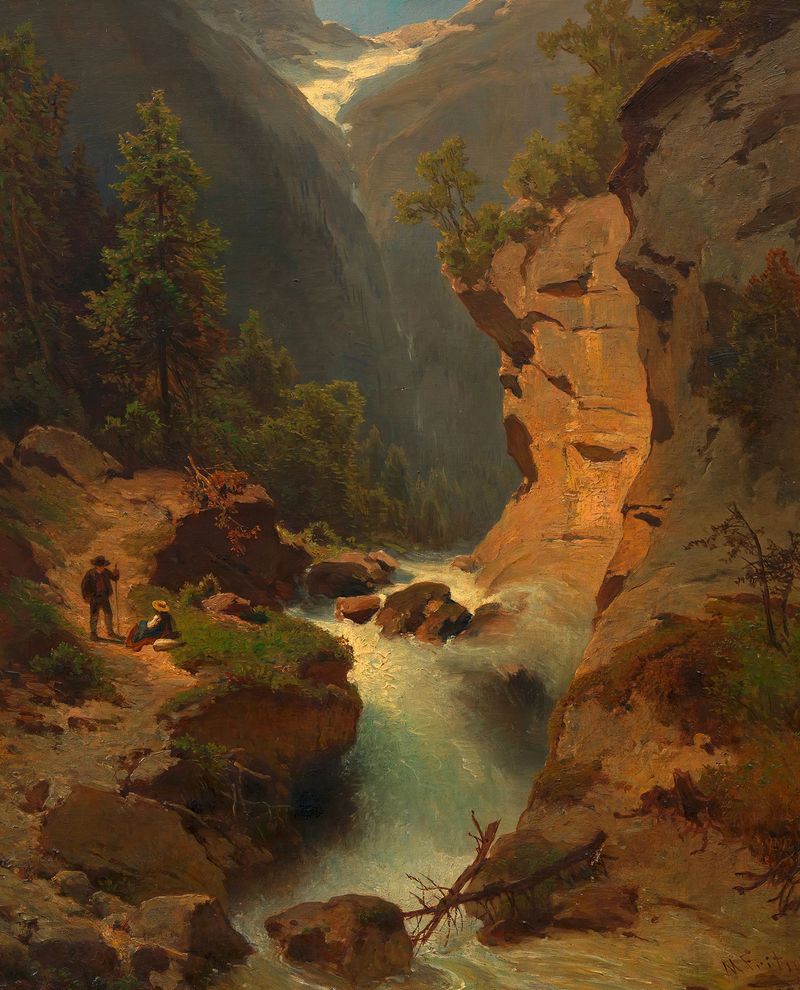
What if beauty was never meant to be finished? In On the shore of Lake Langbathsee, the essence of transformation dances upon the canvas, revealing an eternal dialogue between nature and emotion. Look to the left at the serene expanse of the lake, its surface a mirror reflecting the softly glowing sky. The artist employs a delicate palette of blues and greens, harmonizing the water with the surrounding foliage. Notice how light spills across the scene, casting gentle shadows that suggest movement and life.
The brushstrokes, at once fluid and deliberate, invite the viewer to experience the peaceful yet dynamic interplay of water and land. As you delve deeper, contemplate the figures engaged in quiet contemplation; their stillness contrasts with the vibrant environment that surrounds them. The juxtaposition of their serene posture against the lively backdrop symbolizes the tension between human existence and the natural world. Moreover, the way the trees seem to bend toward the water suggests an intimate connection, as if they, too, are drawn into a transformative embrace with the landscape. In 1889, Melchior Fritsch painted this scene while immersed in the cultural currents of the late 19th century, a period marked by burgeoning Impressionism and a focus on capturing fleeting moments in time.
At this point in his career, he sought to convey the profound beauty of nature through a lens of emotional resonance, reflecting both personal exploration and broader artistic movements.