Osterseen — History & Facts
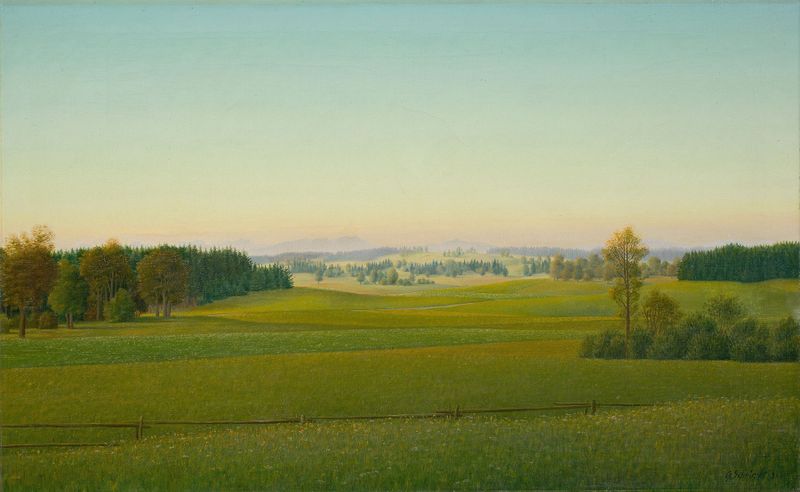
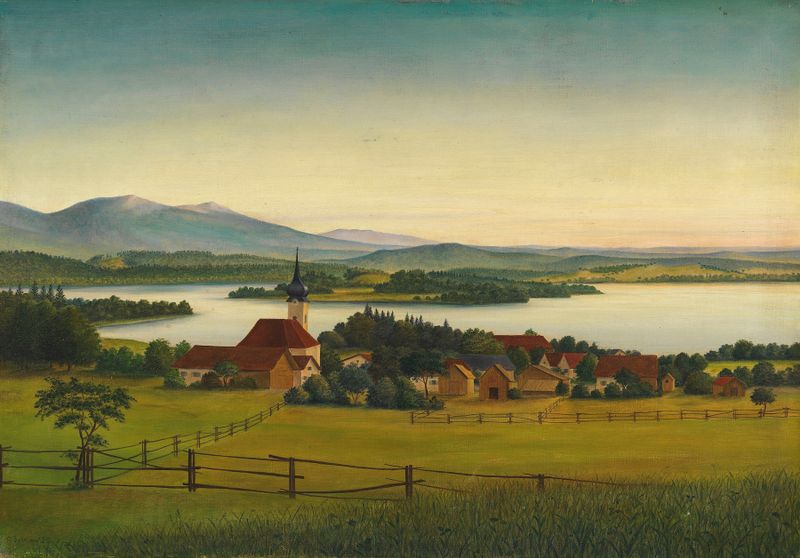
In the stillness of Osterseen, the air hangs heavy with the weight of unspoken destinies, inviting reflection on the interwoven fates of nature and humanity. Each brushstroke whispers promises and regrets, captured eternally in the serene landscape. Look to the left at the gentle curve of the water's edge, where the soft ripples mirror the gentle undulations of the land. Notice how the muted greens and earthy browns blend seamlessly into the horizon, illustrating a world that feels both inviting and melancholic.
The delicate interplay of light, filtering through the trees, creates a dappled effect, reminding us of fleeting moments preserved in memory. This careful composition draws the viewer’s eyes into the heart of the painting, evoking a sense of longing and reflection. Beneath the tranquil surface lies a tension between solitude and connection. The lone figure standing at the water’s edge seems to embody the human experience, caught in the web of life’s choices.
The surrounding landscape, while beautiful, feels both nurturing and isolating, suggesting that destiny is shaped by both external forces and internal decisions. Vague silhouettes of trees linger in the background, hinting at possible paths not taken, amplifying the painting's emotional depth. Georg Schrimpf created Osterseen in 1925, during a period of significant change in Germany. The post-war landscape was marked by a quest for identity and meaning, as artists sought to reconcile the devastation of World War I with the search for new expressions.
Amidst this backdrop, Schrimpf’s work reflects a personal exploration of nature and solitude, encapsulating the complexities of human emotion in a rapidly evolving world.