Staffelsee — History & Facts
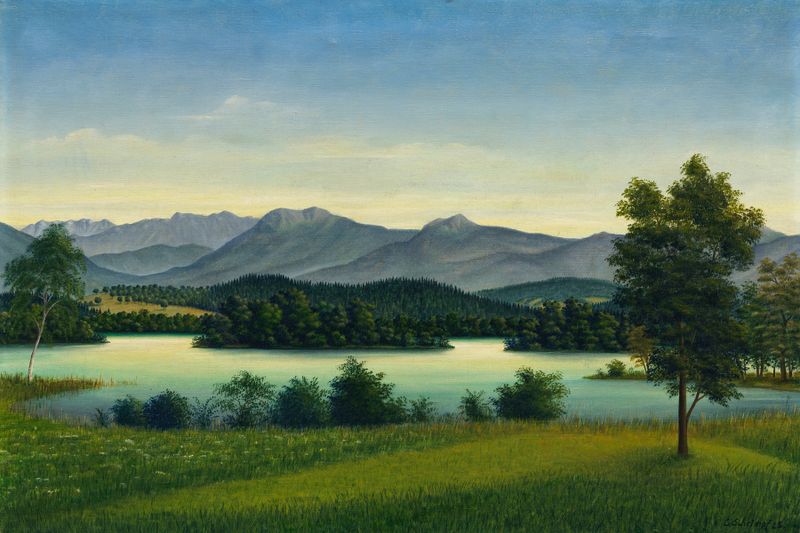
What if silence could speak through light? In Staffelsee, the tranquility of nature envelops a world teetering on the edge of madness, whispering secrets that linger just beyond perception. Focus on the shimmering lake in the center of the canvas, where the water captures the reflections of a soft, ethereal sky. Notice how the delicate brushstrokes create a rhythmic dance of color, blending blues and greens that invite contemplation. The gentle curves of the landscape cradle the water, drawing the eye and evoking a sense of serenity juxtaposed with an underlying tension that suggests the chaos of unseen thoughts. As you delve deeper, observe the subtle details that evoke emotional resonance.
The contrast between the serene water and the jagged outlines of distant hills suggests a struggle within nature, mirroring the tumult of the human experience. Each ripple on the lake’s surface appears to hold a hint of madness, a reminder that beneath calm exteriors lie the swirling currents of the mind. The interplay of light and shadow adds complexity, revealing the duality of peace and unrest. Georg Schrimpf painted Staffelsee in 1925 during a time when the art world was navigating the turbulent aftermath of World War I.
Living in Germany, he was part of a movement that sought to express the fractured psyche of the modern era. This painting reflects both his personal introspection and the broader cultural anxieties of a society grappling with its identity amidst change.