
Pałac w Sieniawie — History & Facts
In a world where beauty teeters on the brink, each moment captured in time carries the weight of fragility. Focus on the delicate interplay of light and shadow that bathes the architectural grandeur. The palace stands proudly, yet its reflections ripple across the water's surface—an image that feels both solid and ephemeral. Notice how the artist's meticulous brushwork reveals each ornate detail, from the elegant arches to the lush greenery that surrounds it, creating a vivid sense of place while reminding us of the transience inherent in such beauty. Yet, beneath this picturesque façade lies a deeper narrative.
The surroundings whisper tales of history, evoking a sense of nostalgia for a bygone era. The serene water mirrors not just the palace but also the fleeting nature of grandeur itself, suggesting that even the most magnificent structures cannot escape time's relentless march. The soft color palette enhances this tension, inviting reflection on what is preserved and what is inevitably lost. In 1876, Kossak created this piece while immersed in a milieu increasingly fascinated by Romanticism and national identity amid a changing world.
Living in Poland, he was influenced by the shifting political landscape and the revival of interest in cultural heritage. This work emerges as both a celebration of architectural beauty and a poignant reminder of its fragility, mirroring the artist’s life as he navigated the complexities of space, memory, and legacy.
More Artworks by Juliusz Kossak
Browse all →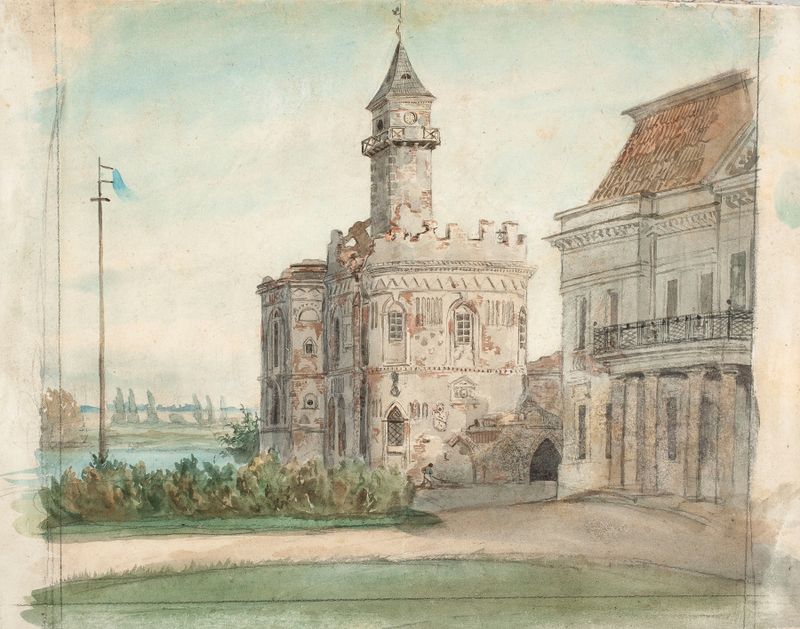
More Architecture Art
Browse all →
The statue of Liberty
Frédéric Auguste Bartholdi

View of Houses in Delft, Known as ‘The Little Street’
Johannes Vermeer

View of Houses in Delft, Known as ‘The Little Street’
Johannes Vermeer

The Cathedral in Rouen. The portal, Grey Weather
Claude Monet

The yellow house
Vincent van Gogh

The Church in Auvers-sur-Oise, View from the Chevet
Vincent van Gogh