Paddington Canal — History & Facts
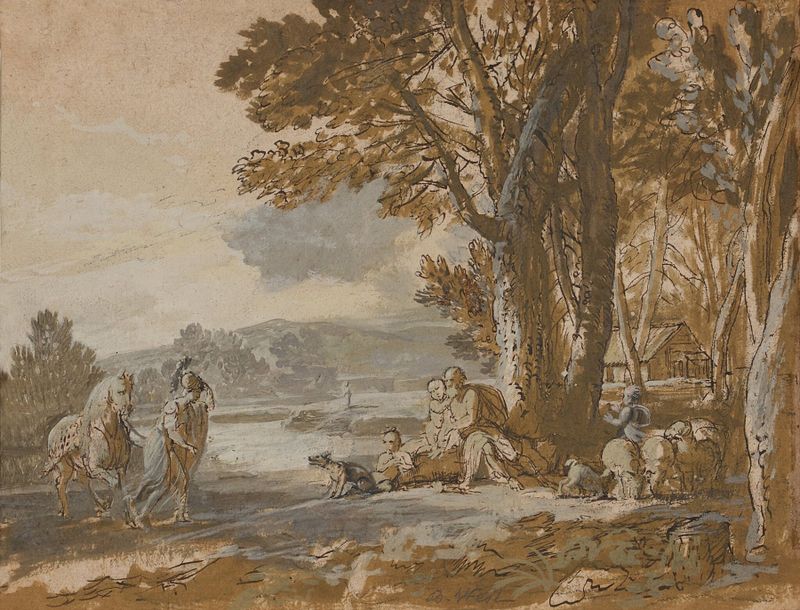
Did the painter know this moment would outlive them? As the world transforms around us, Paddington Canal captures an ephemeral serenity, whispering of divinity in the commonplace. Look to the center, where a gentle curve of water mirrors the soft hues of dawn. Notice how the reflections dance across the surface, infused with a palette of aquamarine and warm gold that intertwines like a fleeting memory. The elongated shadows of trees on the banks guide your gaze toward a distant bridge, their verdant forms framing the scene with an inviting stillness.
Each stroke reveals West’s skillful manipulation of light, breathing life into the tranquil setting, as if nature itself has paused to marvel at its beauty. Beneath the surface, this painting reveals contrasting elements — the stillness of the water juxtaposed with the vibrant life suggested by the boats and figures along the canal. The interplay of light and shadow symbolizes the transient nature of existence, imbuing the scene with a sense of divine presence amid the mundane. This harmony of tranquility and activity speaks to a deeper connection between humanity and the natural world, urging us to recognize the sacred in our everyday lives. Created in 1801 during a period of evolving artistic thought, the artist painted this piece in London, a city on the brink of industrialization.
West, who was influenced by neoclassical ideals, sought to capture the essence of life with dignity and beauty. In this work, he reflects both the serenity of the British landscape and the subtle challenges posed by a changing world, blending the personal and the universal in a masterful stroke.