A classical landscape — History & Facts
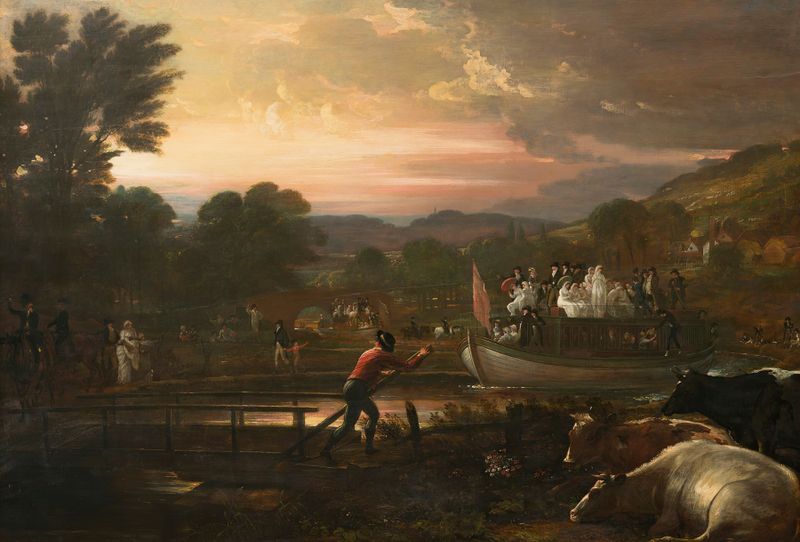
In the depths of a landscape, rebirth breathes life into the canvas, drawing the viewer into a vibrant dialogue between nature and art. Look to the foreground, where lush greenery unfurls like a soft embrace, inviting you to wander deeper into this pastoral haven. Notice how the light cascades through the trees, dappling the ground and illuminating the rich hues of emerald and gold. The gentle undulations of the land create a rhythmic harmony, guiding the eye toward distant hills that stretch against a cerulean sky, seamlessly blending realism with an almost ethereal beauty. Consider the interplay between shadow and light, which reveals a tension between tranquility and chaos.
The trees whisper of growth, while the scattered clouds above hint at a storm passing, embodying the duality of life—serenity interlaced with struggle. Hidden figures in the distance, perhaps farmers or travelers, suggest a narrative of human connection to the land, evoking the age-old relationship between mankind and nature, and reminding us that every cycle of rebirth is accompanied by a story of labor and love. Benjamin West painted this piece during a time when neoclassicism was gaining momentum, likely in the late 18th century. Based primarily in England, West was a pivotal figure in the transition toward Romanticism, as he sought to blend classical themes with more emotive subjects.
Emerging from a period marked by revolution and societal change, his works encapsulated a longing for a return to nature, showcasing the profound beauty and complexity of the world around him.