Painting — History & Facts
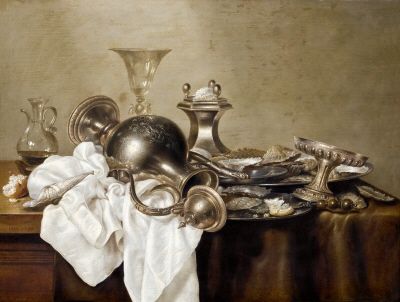
In the stillness of a moment captured on canvas, a yearning emerges, inviting the viewer to explore the depths of beauty in simplicity. Look to the left at the interplay of light and shadow dancing across the surfaces of the meticulously arranged objects. The gleam of glass and the soft sheen of polished wood draw your attention, highlighting the artist's masterful technique. Each element—crusty bread, a gleaming silver goblet, and the vibrant fruit—unfolds in a harmonious composition, creating a sumptuous feast for the eyes.
The subdued color palette evokes a sense of calm, while the delicate brushwork adds a tactile quality that brings the scene to life. Yet beneath this surface tranquility lies a poignant contrast. The juxtaposition of the ephemeral nature of the food against the lasting beauty of the objects hints at themes of desire and transience. The goblet, though exquisite, stands empty—a symbol of longing, while the vibrant fruits decay at the edges, echoing the inevitability of time.
The quiet arrangement speaks to the tension between abundance and loss, enticing the viewer to reflect on their own desires and what they may leave behind. Claesz Heda painted this still life in 1645 during the Dutch Golden Age, a period marked by a flourishing of art and commerce. Living in Delft, Heda was immersed in a world where the interplay of light and form was paramount. At this time, the genre of still life was gaining prominence, as artists explored the beauty and complexity of everyday objects, a reflection of both personal and societal aspirations.