Palestine — History & Facts
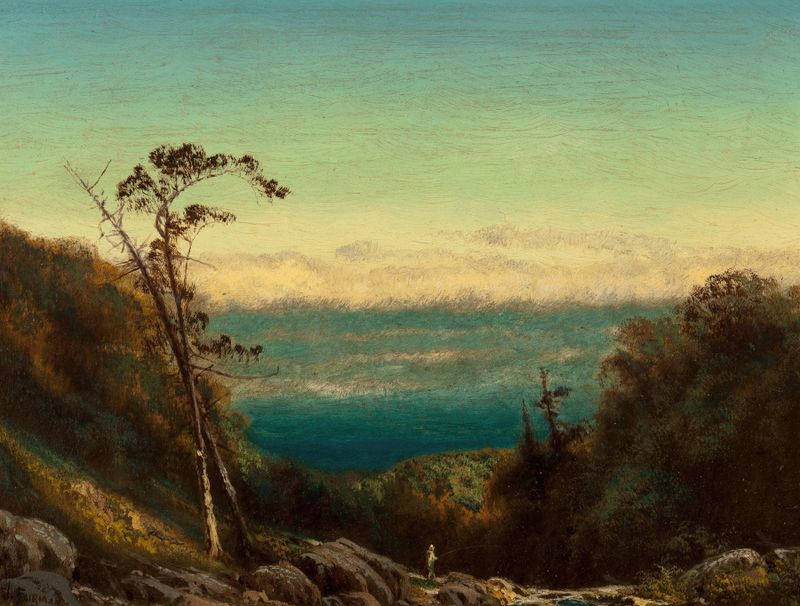
What if silence could speak through light? In Palestine, a haunting stillness envelops the landscape, drawing viewers into a realm where time feels suspended and obsession lingers in the air. Look to the horizon, where gentle hills sweep into a vast expanse under a delicate sky. The soft pastels of oranges and blues blend seamlessly, evoking a twilight that bathes everything in a dreamlike glow. Notice how the light reflects off the rugged terrain, creating a sense of depth and inviting the gaze into the distance.
Each brushstroke reveals Fairman's meticulous attention to detail, from the textures of the earth to the ethereal quality of the atmosphere, illuminating the artist's profound connection to the land. Yet, beneath this tranquil surface lies an emotional tension. The stark contrast between light and shadow may symbolize a spiritual yearning, a search for belonging in a land steeped in history and conflict. The solitary figure in the foreground, small against the vastness of the landscape, suggests the weight of obsession—a longing for understanding and a deep connection to the roots of a tumultuous past.
This juxtaposition of personal introspection against the expansive world evokes a poignant sense of solitude. Painted in 1872, this work emerged during a period of intense exploration and fascination with the Middle East in Western art. Fairman, an American artist known for his landscapes, traveled through Europe and the Near East, where he absorbed the complexities of the cultures and landscapes he encountered. At a time when the art world was increasingly drawn to exoticism, he captured a quiet yet profound reflection on a region shrouded in historical and contemporary tumult, bridging personal emotion with broader narratives.