Man Fishing Before a Grand Landscape — History & Facts
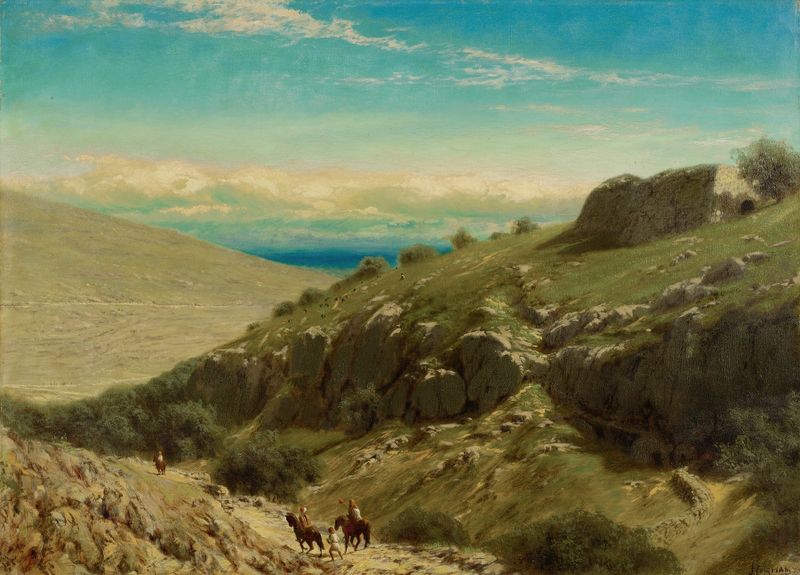
Can paint confess what words never could? In the silence of a vast landscape, longing dances between man, nature, and the unspoken depths of desire. Look to the left at the figure of the angler, his posture exuding a blend of patience and yearning as he casts his line into the shimmering water. The strokes of blue and green are layered masterfully, capturing both the vibrant hues of the land and the reflective quality of the lake. Notice how the light filters through the trees, creating a dappled effect that adds a sense of serenity, while the expansive sky stretches infinitely above, suggesting both freedom and isolation. The juxtaposition of the solitary fisherman against the grand landscape evokes a poignant sense of solitude.
The gentle ripples in the water mirror his inner turbulence, hinting at a deeper connection with nature that goes beyond mere recreation. The sweeping canvas conveys both the beauty and the overwhelming vastness of existence, symbolizing the pursuit of peace amidst life’s uncertainties—a silent dialogue between man’s desire for connection and nature’s indifferent eternity. Created during a period when the American art scene was exploring naturalism and romanticism, the artist captured this work in an unspecified moment of his life, likely during the late 19th century. Fairman, influenced by the transcendentalist movement, was drawn to the emotional resonance of landscapes, reflecting a time when artists sought to depict the sublime beauty of the natural world as a counterpoint to the industrial age.