
Palmenhain — History & Facts
Can beauty exist without sorrow? In Palmenhain, Ernst Schiess invites us to ponder this profound question through a tranquil yet haunting landscape. Look to the left at the lush palm fronds, their verdant hues contrasting sharply against the muted earth tones of the background. Notice how the sunlight filters through the trees, casting delicate shadows that dance on the ground, while the soft palette evokes a sense of nostalgia. The careful brushwork creates a sense of movement within the foliage, as if the palms themselves are whispering secrets of their surroundings.
The composition draws the viewer’s eye toward the horizon, fostering a sense of longing and introspection. In the foreground, the juxtaposition of light and shadow serves as a reminder of the fragility of beauty. The palms stand tall, resilient against a backdrop that hints at desolation, suggesting both strength and vulnerability. Each leaf holds a story, reflecting the emotional dichotomy between hope and despair, serenity and unrest.
The stillness of the scene belies an undercurrent of tension, evoking the complexity of human experience — where joy often coexists with pain. Created in 1918, during a tumultuous period in post-war Germany, this work reflects Ernst Schiess's response to the changing world around him. As Europe grappled with the aftermath of conflict, artists sought solace and meaning in nature. Schiess, influenced by his contemporaries, embraced impressionistic techniques to capture fleeting beauty, offering both a refuge and a reflection of the poignant realities of his time.
More Artworks by Ernst Schiess
Browse all →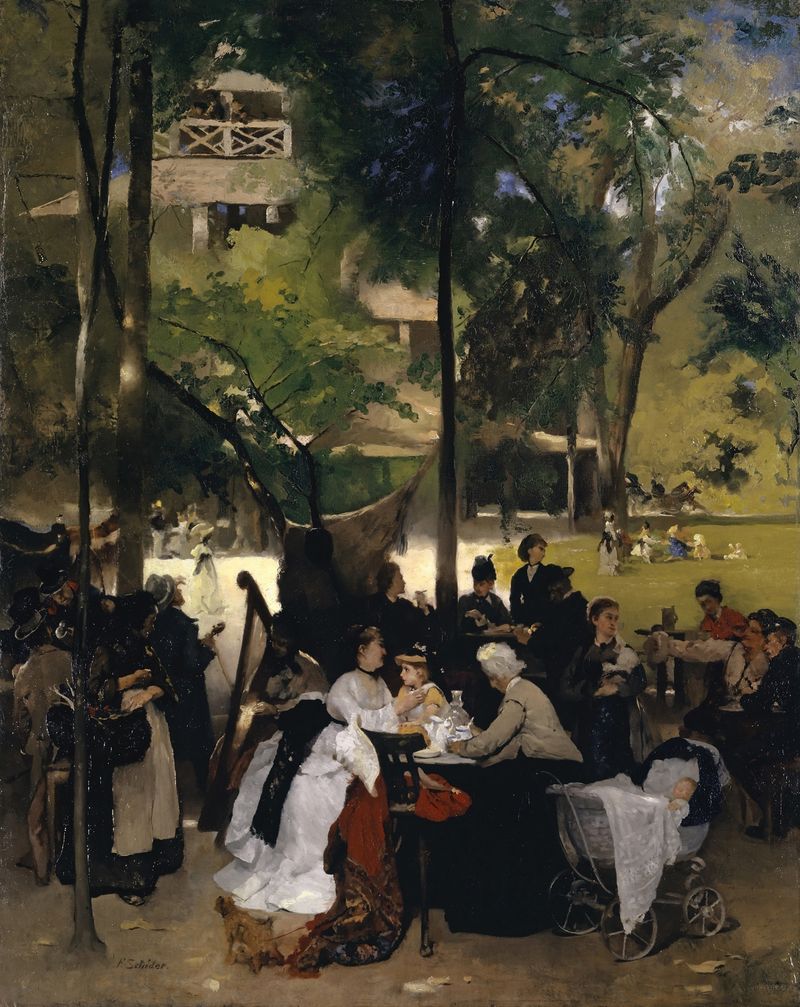
The Chinese Tower in the English Garden in Munich
Ernst Schiess

Evening Walk Above a Southern Lake
Ernst Schiess
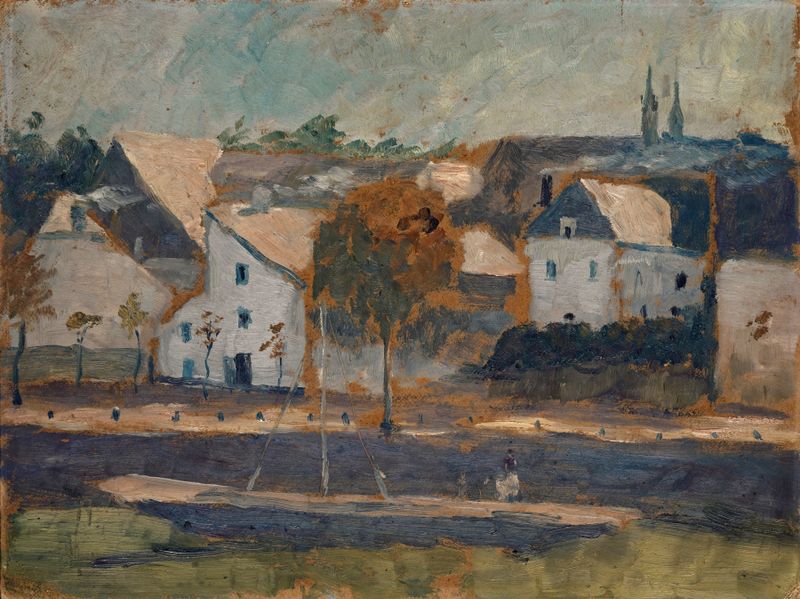
Kleine Stadt an Kanal
Ernst Schiess
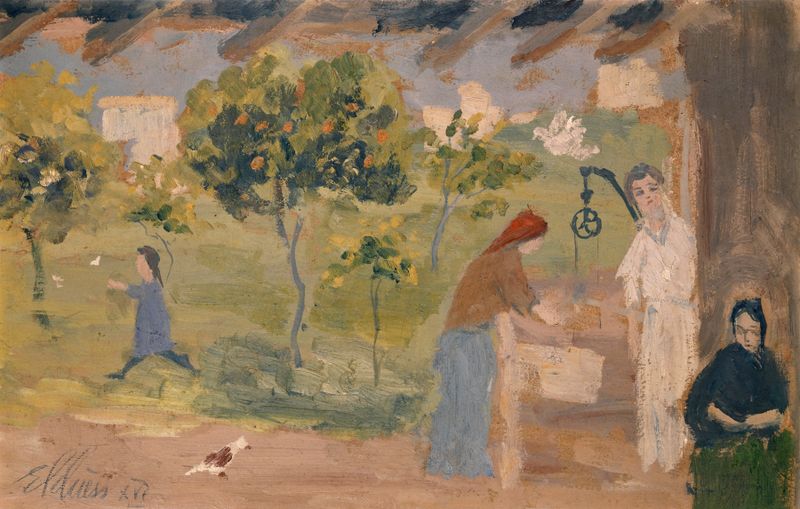
At the Fountain
Ernst Schiess

At the Harbour of Palma de Mallorca
Ernst Schiess
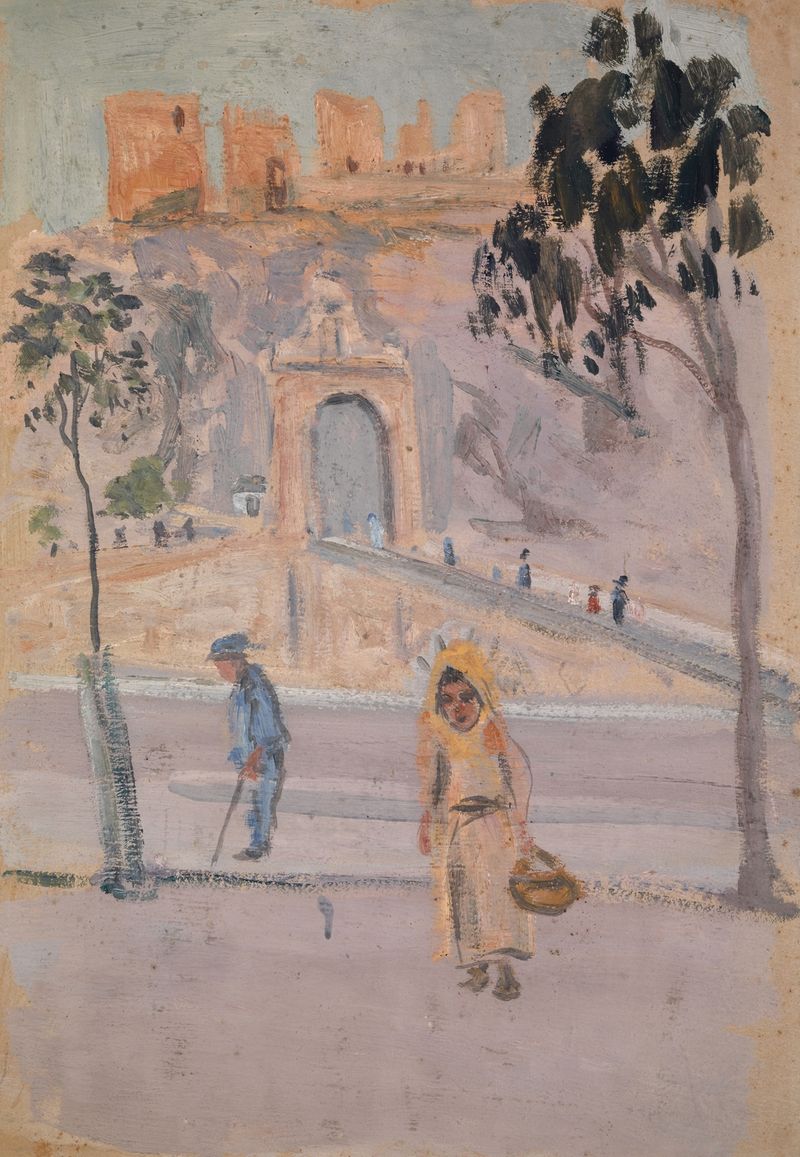
Alcantarabridge and Castillo de San Servando at Toledo
Ernst Schiess
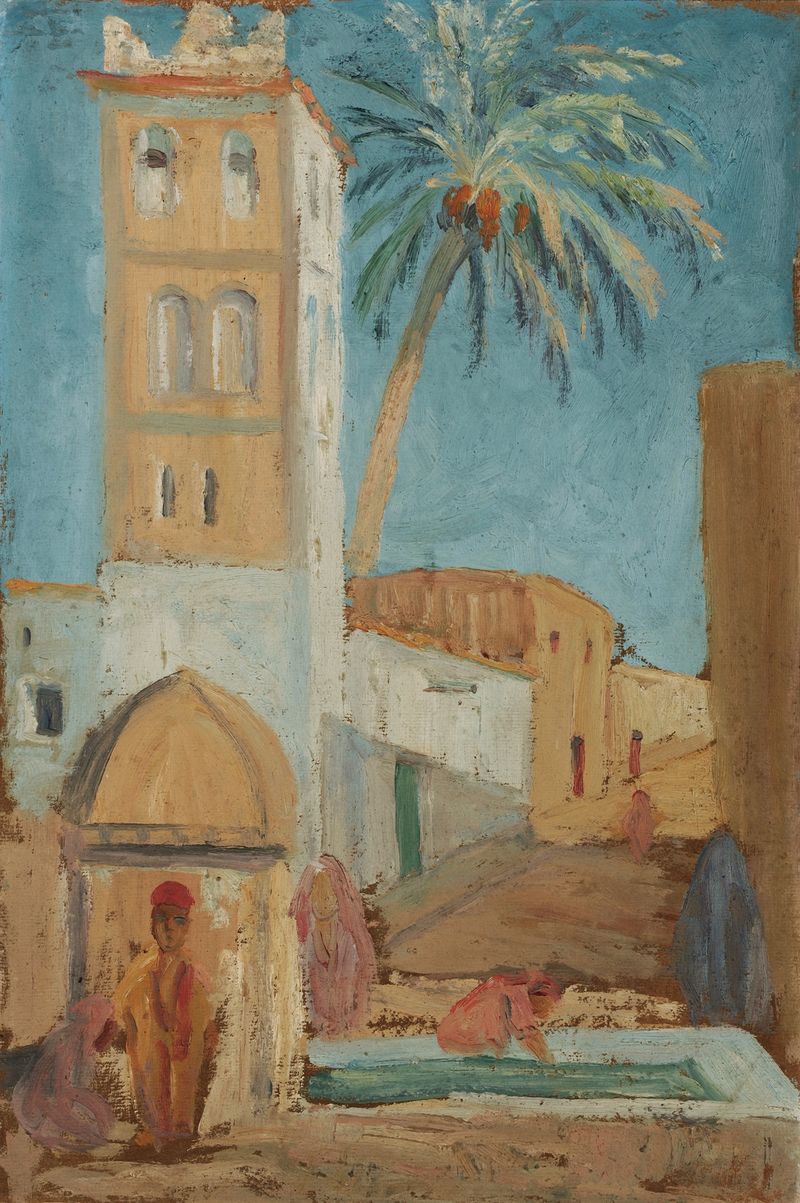
Scene at a Fountain in a Moroccan Place
Ernst Schiess
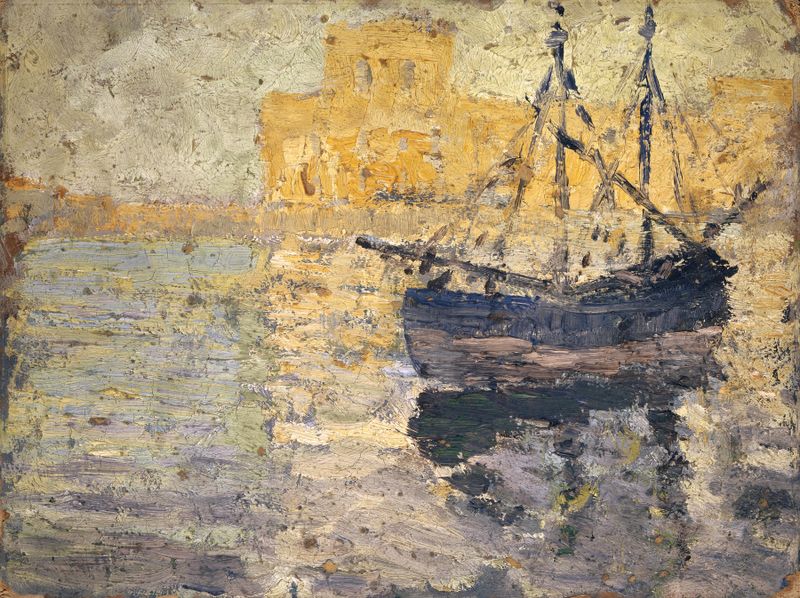
Harbour with Sailing Boat
Ernst Schiess
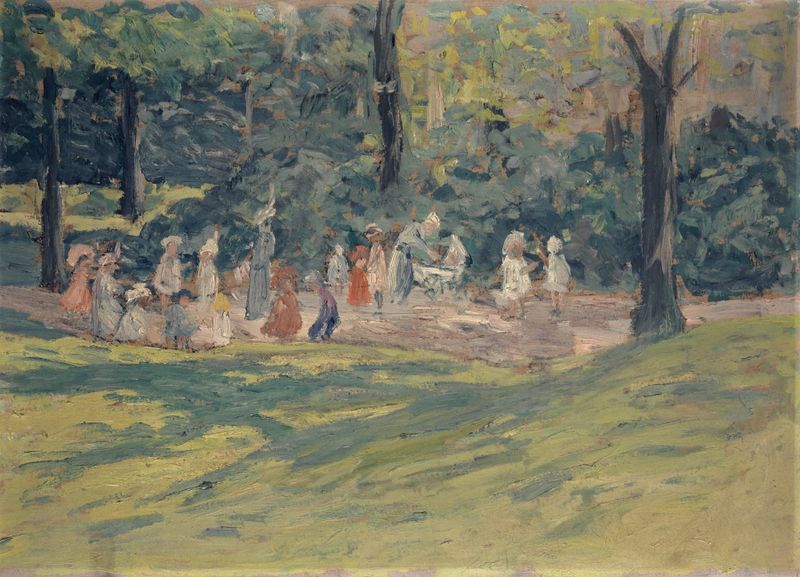
Children Playing in a Public Park
Ernst Schiess

Mohammedanischer Friedhof
Ernst Schiess





