
Paradise with the Creation of Eve — History & Facts
Is this a mirror — or a memory? In Paradise with the Creation of Eve, a lush garden unfolds, teeming with vibrant flora yet enveloped in profound solitude. The verdant paradise is filled with shimmering details, yet an invisible tension lurks beneath its beauty, echoing a sense of loneliness amidst the divine promise of companionship. Focus on the central figures, where Eve, newly formed, stands in gentle repose beside Adam. Notice how the delicate play of light captures the softness of her skin and the ethereal quality of her surroundings.
The artist employs intricate brushwork to weave together rich greens and warm golden hues, drawing your eye to the cascading foliage framing the couple, almost as if nature itself cradles them in a tender embrace. The stillness in their poses contrasts sharply with the vibrant life around them, evoking a haunting sense of isolation despite their apparent unity. Delve deeper into the contrasting themes within the painting. The juxtaposition of the lush paradise and the solitary figures hints at the bittersweet nature of creation — the beauty of companionship shadowed by an impending sense of separation.
The lavish flora reflects abundance and potential, yet the careful positioning of Eve and Adam suggests a longing for connection that may never fully blossom. Their expressions are serene, yet there's an unspoken melancholy that resonates with the viewer, evoking the fragility of newly formed bonds. Jan Brueghel the Younger painted this work between 1636 and 1640, a period marked by both the flourishing of baroque art and an exploration of human emotion. Working in Antwerp, he navigated the legacy of his father, while also responding to a society that teetered on the edge of transformation.
Amidst the artistic evolution of the time, he captured not just a moment in biblical narrative, but an exploration of the profound complexities of existence itself.
More Artworks by Jan Brueghel the Younger
Browse all →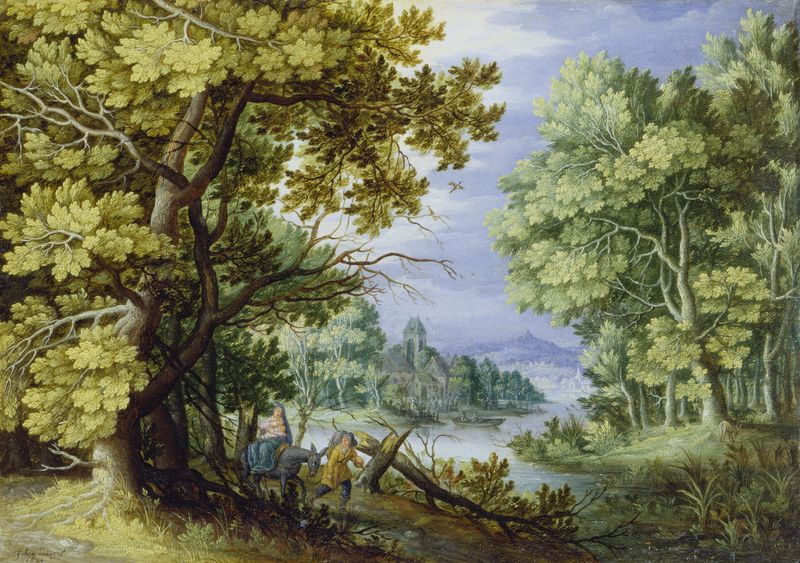
Forest Landscape with Flight into Egypt
Jan Brueghel the Younger
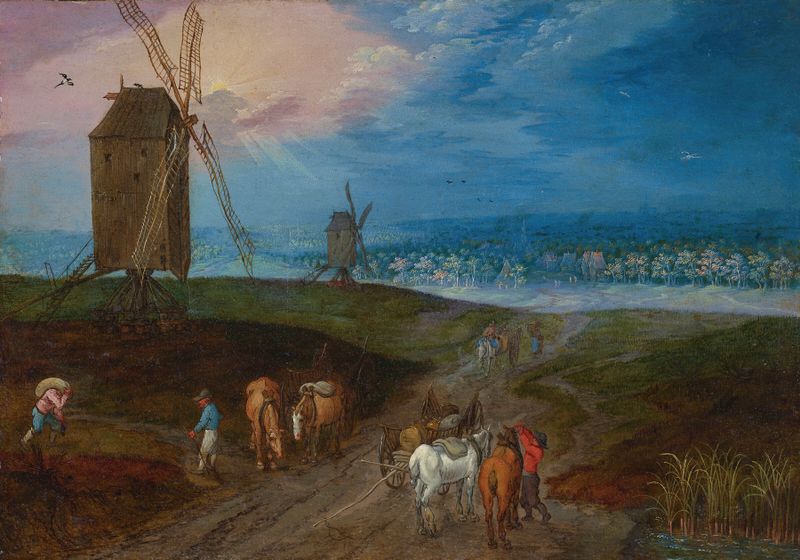
An extensive landscape with travelers before a windmill
Jan Brueghel the Younger
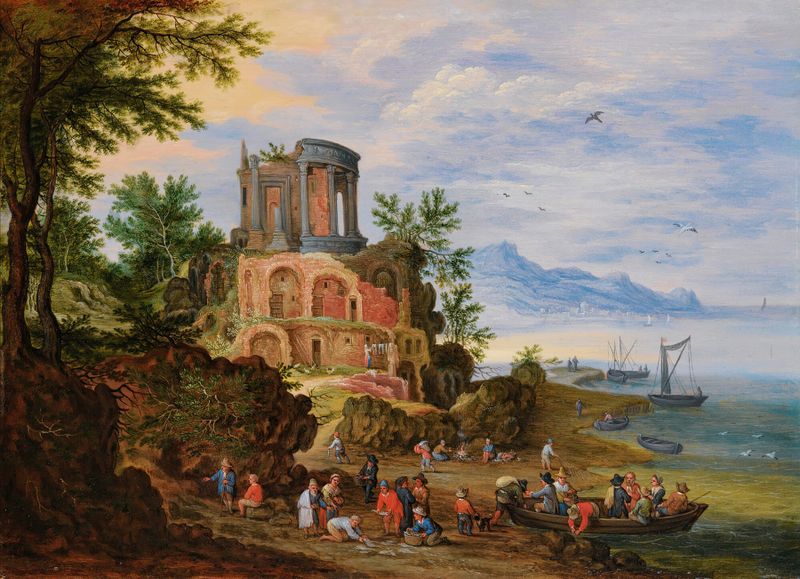
Landscape With Ruins Animated With Figures
Jan Brueghel the Younger
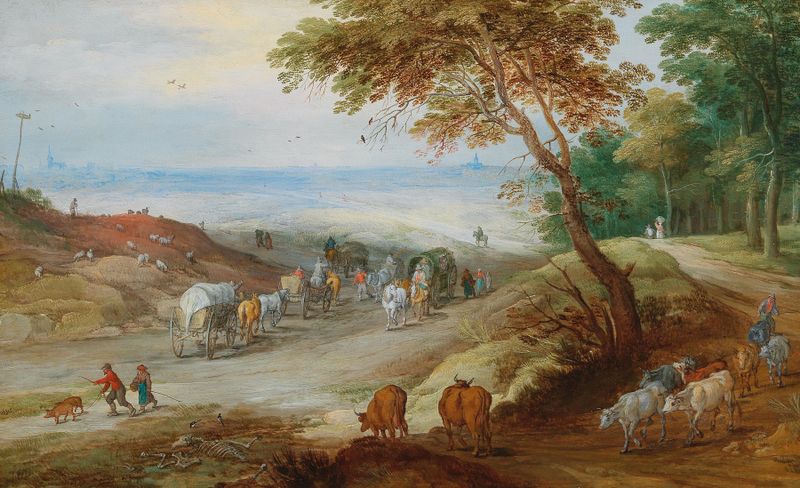
An extensive hilly landscape with travellers on a path and cattle in the foreground
Jan Brueghel the Younger
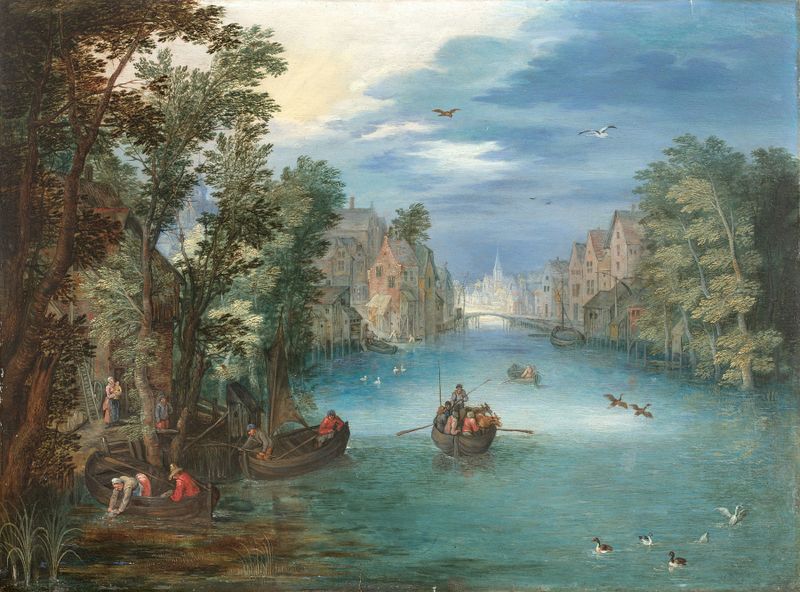
Paysage fluvial animé de personnages
Jan Brueghel the Younger
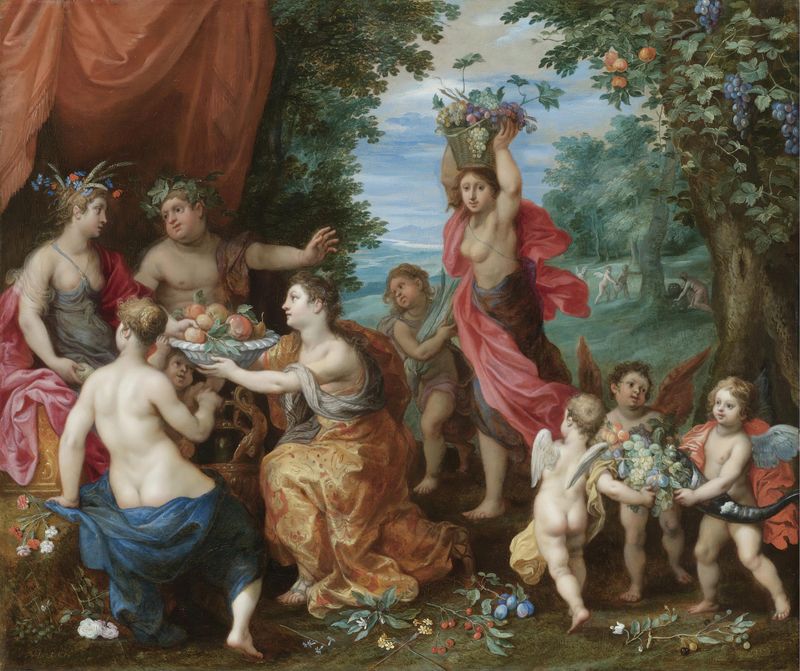
A Bacchanal With Ceres, Bacchus And Venus
Jan Brueghel the Younger
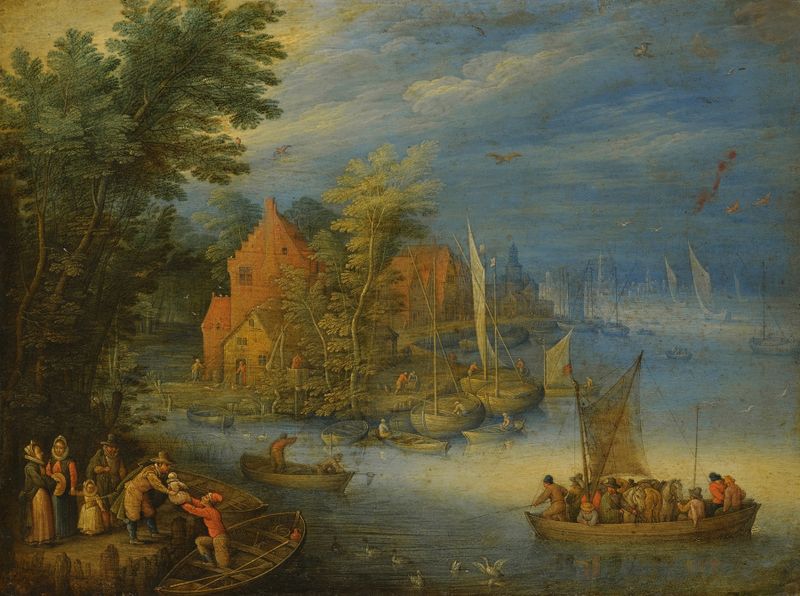
A Town On The Banks Of A Wide River With A Heavily Laden Ferry Approaching The Shore In The Forgeound
Jan Brueghel the Younger
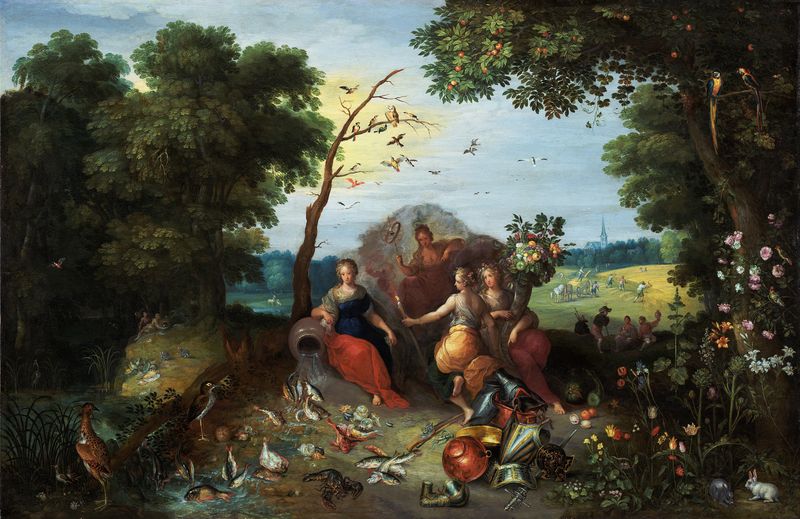
Landscape with Allegories of the Four Elements
Jan Brueghel the Younger
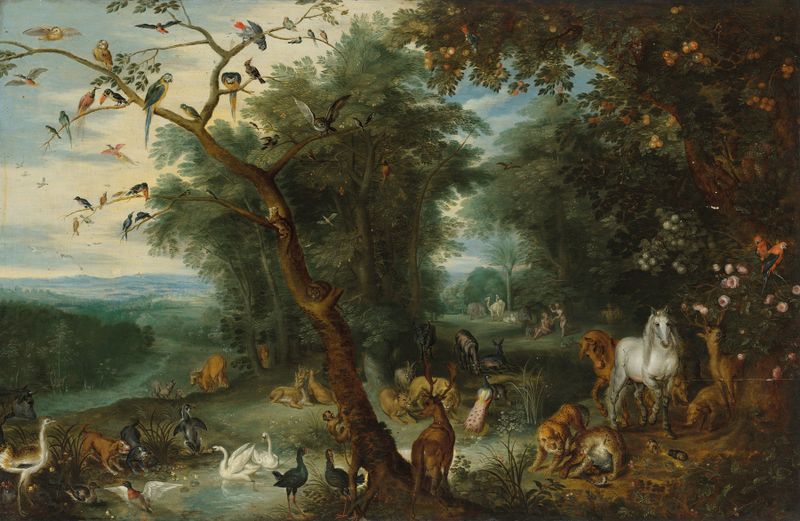
Paradise
Jan Brueghel the Younger
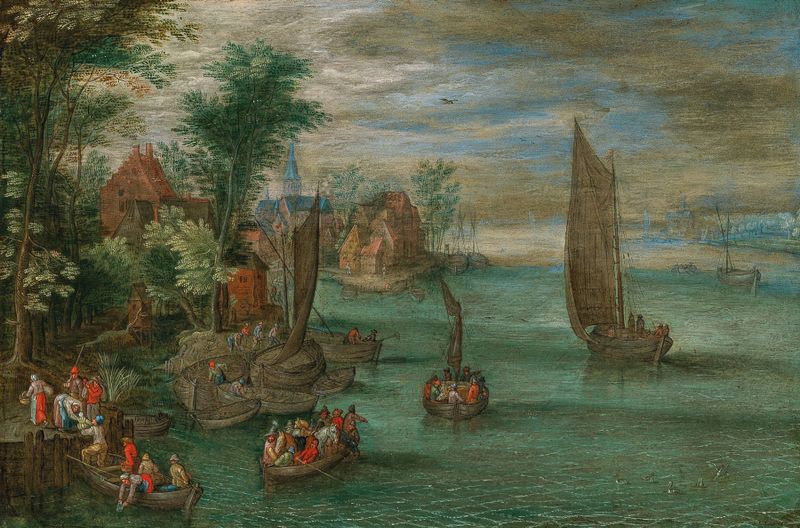
A river landscape with ferries and sailing boats
Jan Brueghel the Younger
More Religious Art
Browse all →
The Return of the Prodigal Son
Rembrandt van Rijn

The Garden of Earthly Delights
El Bosco

Count Orgaz’ funeral
El Greco

The Hundred Guilder Print: the central piece with Christ preaching, the plate arched
Rembrandt van Rijn

The Descent from the Cross
Rogier van der Weyden

The return of the prodigal son
Rembrandt van Rijn