Paris in Winter — History & Facts
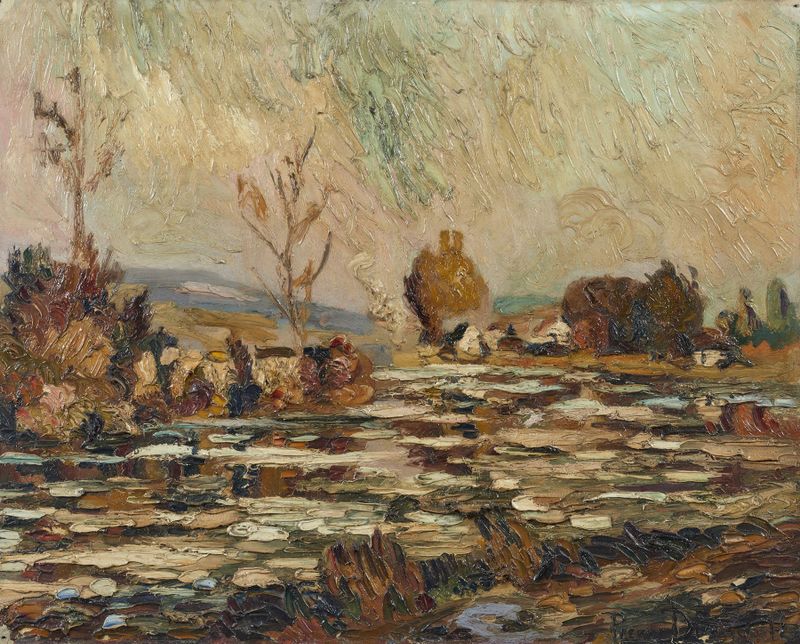
What if silence could speak through light? In Paris in Winter, an unspoken obsession unfurls, capturing the essence of a city cloaked in serene solitude. Look to the center of the canvas, where pale, shimmering snow blankets the cobblestone streets. Observe the delicate strokes that create a textured interplay between the soft white snow and the grayish blue shadows cast by the buildings. The cool palette evokes a sensation of chill, while the warm glow of a distant streetlamp introduces a comforting contrast, beckoning the viewer to explore the scene’s hidden depths.
Each brushstroke seems to resonate with the tranquil atmosphere, guiding our gaze through the deserted pathways of Paris. Beneath the surface lies an intricate tension between isolation and warmth. The absence of human figures amplifies the quietude, suggesting a longing for connection amidst the coldness of winter. This paradox echoes through the silent streets, inviting contemplation on the nature of obsession—an unyielding desire for belonging, even in solitude.
The interplay of light and shadow illuminates not just the physical landscape but the emotional landscape of a city that breathes life into those who wander its winter embrace. In 1912, Pierre Dumont painted this work during a period of artistic experimentation in Paris, surrounded by the avant-garde movements of the time. The city’s vibrant art scene was a crucible of ideas, yet Dumont chose to evoke a sense of stillness, a departure from the chaos that defined his contemporaries. This piece reflects his personal journey, revealing a fascination with the haunting beauty of winter and the emotional resonance of solitude.