Paysage — History & Facts
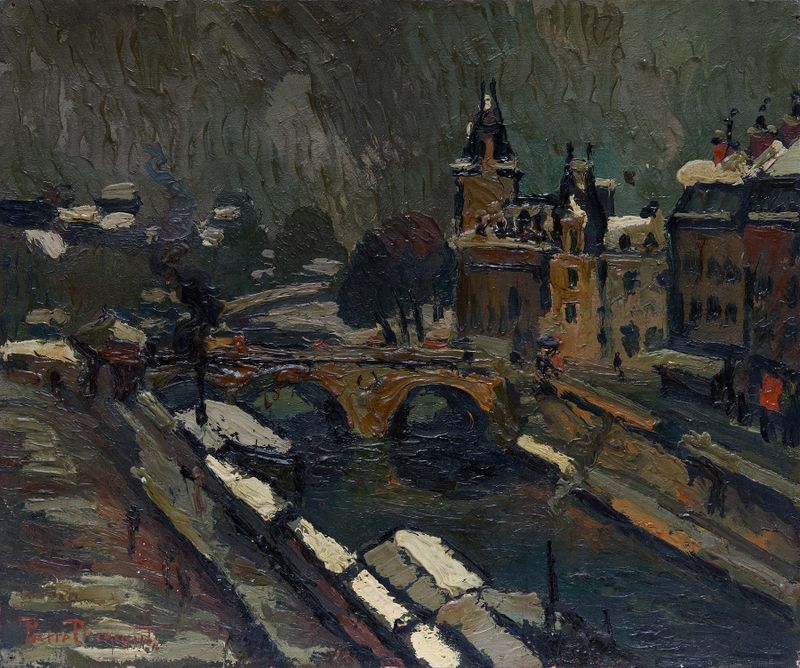
In that lonely intersection of memory and art, we find ourselves confronted by silent landscapes that echo the ache of solitude. Focus on the gentle curves of the river that meanders across the canvas, leading the eye to the horizon. The muted palette of blues and grays creates an atmosphere heavy with mist, inviting you to step closer and feel the cool, damp air of the scene. Notice how the brushstrokes seem to linger, as if reluctant to let go of the fleeting moment captured — the stillness of water, the weight of the sky, and the silence that envelops. Delve deeper and you’ll uncover contrasting elements: the liveliness of nature juxtaposed with the stillness of the scene.
The trees, though vibrant and full, stand solemnly along the banks, witnessing a solitude that feels palpable. The interplay of light and shadow hints at unspoken narratives, evoking feelings of longing and introspection, as if the landscape itself shares in the isolation of those who gaze upon it. Pierre Dumont painted Paysage during a transformative period in the early 20th century, amidst the shifting tides of post-impressionism in France. Working in the Normandy region, the artist found inspiration in the serene yet melancholic beauty of his surroundings, reflecting his own experiences as he navigated the complexities of life and artistic expression during this era of change.