Paris, vu de la Butte Montmartre — History & Facts
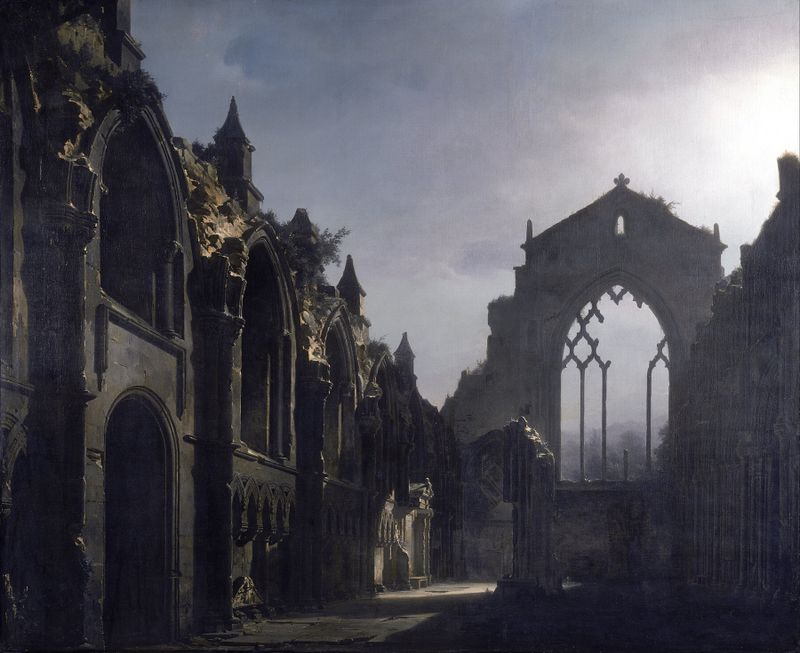
Can beauty exist without sorrow? In Paris, vu de la Butte Montmartre, the viewer stands on the precipice of a city that breathes life and hope, yet hints at the shadows lurking beneath its charm. Look to the foreground, where the vibrant rooftops of Paris unfold like a patchwork quilt, each tile capturing the soft, golden light of a late afternoon sun. The brushstrokes create a sense of movement, sweeping across the canvas, drawing your eye toward the horizon where the sky blushes with hues of pink and orange. The carefully rendered details of the distant structures invite exploration — a church steeple, a hint of the Seine, the silhouette of the city merging with the atmospheric sky. Beneath this picturesque view lies a dichotomy: the dazzling beauty of Paris' landscape juxtaposed against the struggles of its inhabitants.
The tranquility of the scene, with its idyllic light, belies the underlying tension of urban life that Daguerre knew too well. The ethereal quality of the sky speaks to the hope and faith that permeates the city, yet it also evokes a sense of impermanence, reminding us that joy is often punctuated by trials. In 1830, Daguerre was at the forefront of the emerging medium of photography, capturing the essence of a rapidly changing Paris. This period was marked by political upheaval and artistic experimentation, as the Romantic movement inspired new ways of seeing the world.
Living in a city teeming with innovation, he translated his observations into this painting, reflecting both the vibrancy and the complexity of life in the heart of France.