
The Ruins of Holyrood Chapel — History & Facts
In the haunting stillness of The Ruins of Holyrood Chapel, longing permeates the air, echoing the whispers of history and loss. Each crumbling stone tells a story, a reminder of what once was and the passage of time that has left its indelible mark. Look to the left at the intricate tracery of the windows, where light filters through the remnants, casting ethereal shadows on the ground. The careful detailing in the ruined arches draws the eye, leading to the broken columns that stand as weary sentinels of the past.
Daguerre’s adept use of chiaroscuro enhances the depth, while the subdued palette of greys and browns evokes a sense of nostalgia and melancholy, inviting the viewer to ponder the chapel’s storied past. In the delicate interplay of light and shadow, there is a tension between decay and beauty. The juxtaposition of the once-grand architecture against the encroaching nature hints at both the inevitability of time and the resilience of memory. Each fragment of stone and vine intertwines with the longing for the sacred, suggesting a deep emotional resonance that speaks to the human experience of loss and remembrance. During the early 19th century, while living in France, Daguerre was at the forefront of the nascent field of photography.
Though the precise date of this work remains unknown, it reflects his fascination with capturing atmospheric effects and the sublime nature of ruins. This period in his life was marked by innovation, as he sought to blend artistry with emerging photographic techniques, forever transforming the landscape of visual representation.
More Artworks by Louis Daguerre
Browse all →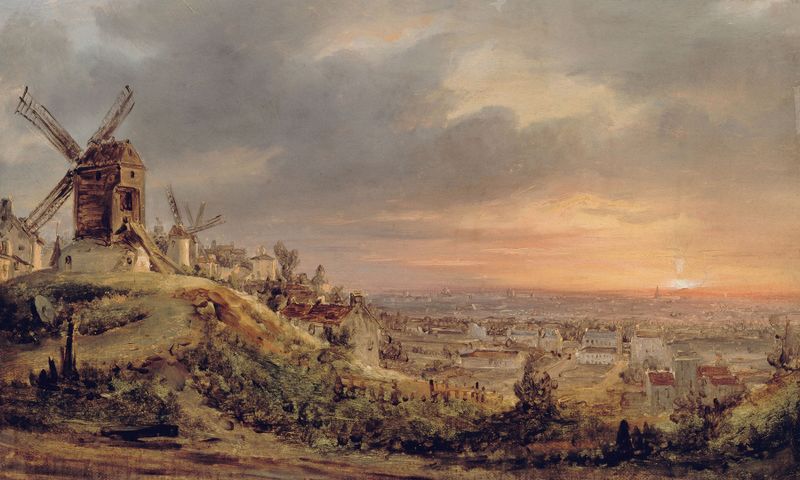
More Architecture Art
Browse all →
The statue of Liberty
Frédéric Auguste Bartholdi

View of Houses in Delft, Known as ‘The Little Street’
Johannes Vermeer

View of Houses in Delft, Known as ‘The Little Street’
Johannes Vermeer

The Cathedral in Rouen. The portal, Grey Weather
Claude Monet

The yellow house
Vincent van Gogh

The Church in Auvers-sur-Oise, View from the Chevet
Vincent van Gogh