‘Partie vom Thuner See’, Switzerland — History & Facts
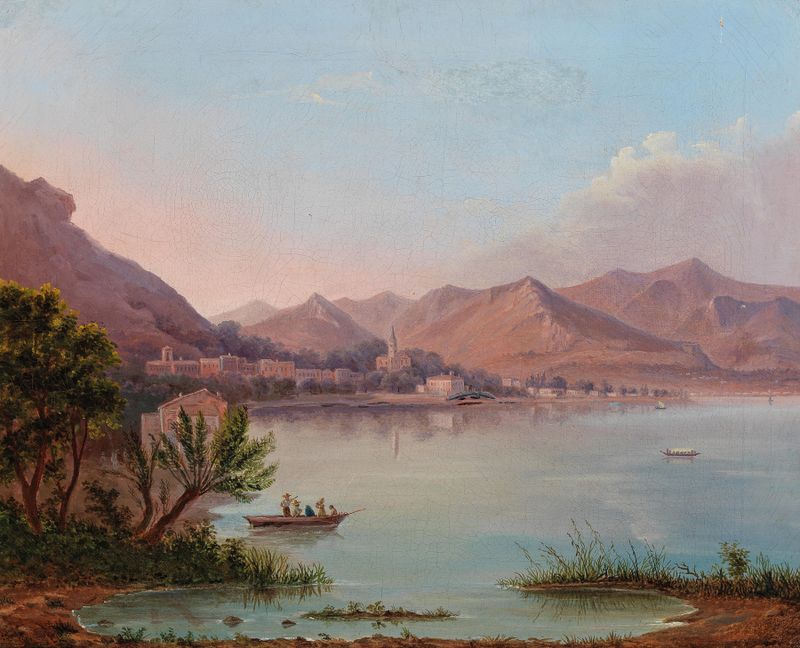
Can beauty exist without sorrow? In the silent embrace of the Thuner See, a mournful beauty unfurls, inviting contemplation on the delicate balance between joy and loss. Look to the tranquil waters that dominate the canvas, reflecting a muted sky, where soft hues of blue and gray intertwine. The gentle undulation of the lake creates a serene rhythm, inviting the viewer to lose themselves in its depths. Notice how the distant mountain silhouettes cut against the horizon, their starkness enhanced by the subdued palette, which evokes a sense of nostalgia.
Each brushstroke conveys both tenderness and restraint, as if the artist has captured a fleeting moment of quiet introspection. In this piece, the interplay of light and shadow suggests a depth of emotion—each ripple in the lake whispers stories of what once was. The horizon, though beautiful, also feels distant and unattainable, echoing the theme of longing and the bittersweet nature of existence. Jaeckel captures the essence of solitude, laying bare the heart’s yearning for connection amidst tranquil isolation. During the time he created this work, Heinrich Jaeckel was navigating a period of personal reflection, influenced by the post-war ethos of the early 20th century in Switzerland.
The serene landscapes he painted often mirrored the collective psyche of a nation grappling with loss and recovery. As modernism began to reshape the art world, Jaeckel’s focus on the Swiss landscape became a poignant statement, imbuing the natural beauty around him with profound emotional resonance.