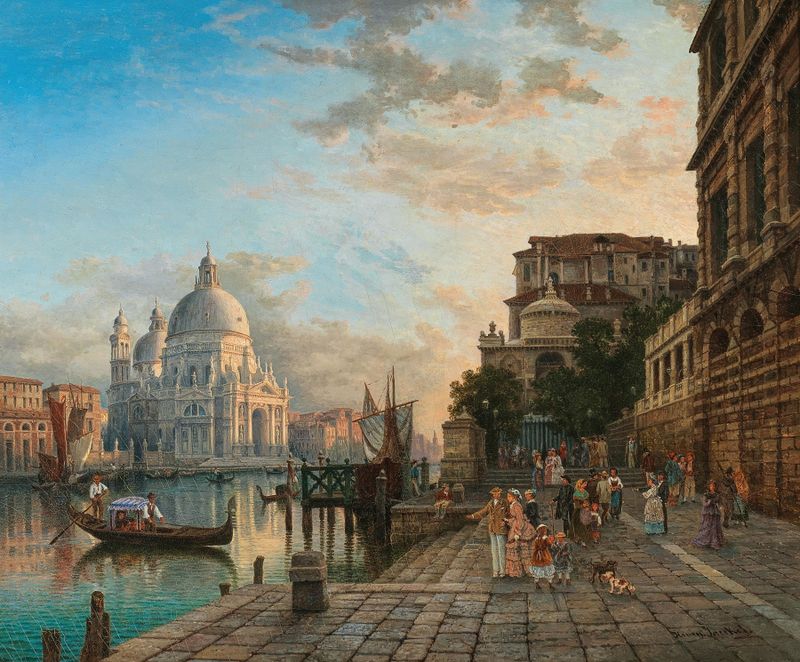
Venice, Grand Canal with Santa Maria della Salute — History & Facts
In the vibrant hues of a Venetian sunset, madness looms quietly beneath the surface, blending the splendor of architecture and water with a haunting sense of longing. Focus first on the shimmering reflections that dance across the Grand Canal, where your eyes should trace the gentle ripples. Notice how the light bathes the domed silhouette of Santa Maria della Salute, imbued with shades of amber and deep cerulean. The intricate brushwork captures the essence of a city alive yet disquieted, as if each stroke wrestles with the duality of beauty and chaos inherent in Venice. Delve deeper into the subtle contrasts at play; the serene facade of the church stands in stark opposition to the turbulent waters, suggesting an emotional tumult beneath the idyllic surface.
The warm tones of the twilight sky evoke a sense of nostalgia, while the cool blues hint at an underlying melancholy. This tension echoes the city’s storied past, a place once vibrant with life now teetering on the edge of reverie and madness. Heinrich Jaeckel painted this piece during a period when the world was grappling with profound change, likely in the early 20th century, as the artistic movements of expressionism began to rise. In the midst of his own explorations of color and form, he sought to capture not just the visual allure of Venice, but its complex emotional landscape, reflecting both the beauty and the dark undercurrents that shape its identity.