Passage de la Monnaie depuis Belair — History & Facts
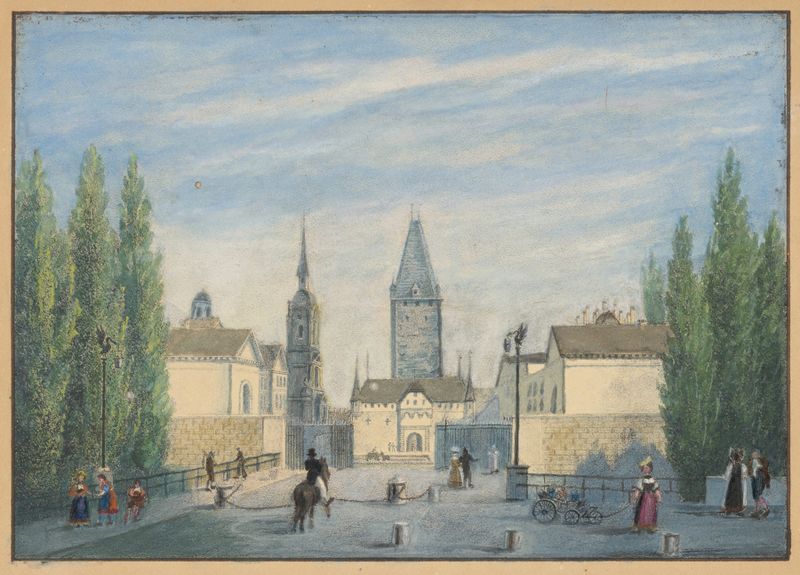
Is this a mirror — or a memory? In the undulating lines and soft hues, a sense of faith emerges, holding tenderly to the fragility of existence. Focus on the center of the canvas, where the shimmering waters reflect a gentle dawn. The delicate brushwork brings to life the interplay between light and shadow, creating a dreamlike quality that invites contemplation. Notice how the warm pastels of the sky blend into the cool blues of the water, suggesting a seamless transition between the physical and the spiritual.
As you gaze deeper, the figures appearing at the water's edge beckon you into their world, their gestures steeped in reverence and connection. The painting captures a moment steeped in emotional tension. The juxtaposition of the serene landscape against the figures’ contemplative poses speaks to the harmony between nature and human experience. The water, a fluid boundary between reality and reflection, symbolizes faith itself—a bridge from the tangible to the ethereal.
Here, the mundane intersects with the sacred, suggesting that every glance upon this scene may evoke personal memories or aspirations. Created during an unspecified period in Jean Dubois' career, Passage de la Monnaie depuis Belair stands as a testament to the artist's exploration of light and emotion. Operating within a context of evolving artistic movements, Dubois sought to portray the transient beauty of life through his landscapes. While exact circumstances of its creation remain elusive, it reflects a time when artists were increasingly drawn to themes of introspection and spirituality, paving the way for deeper connections between viewer and artwork.