Passage de la Monnoye Vu de la Cité — History & Facts
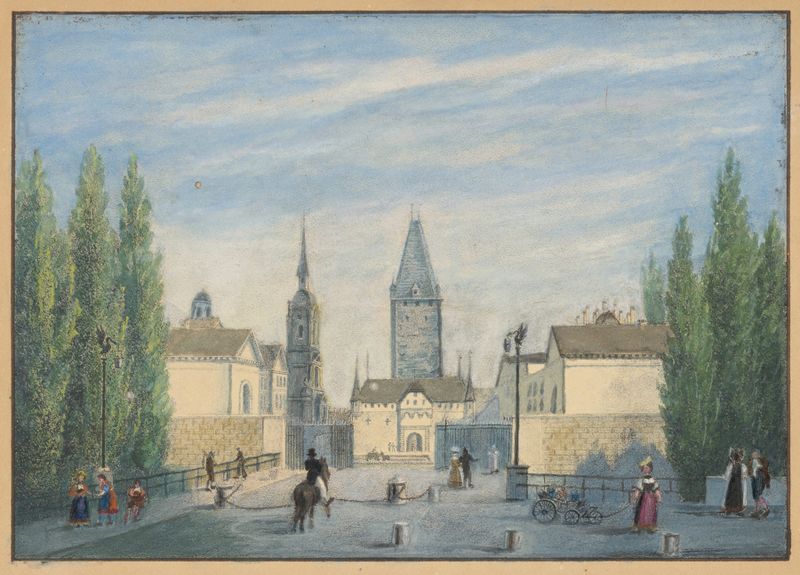
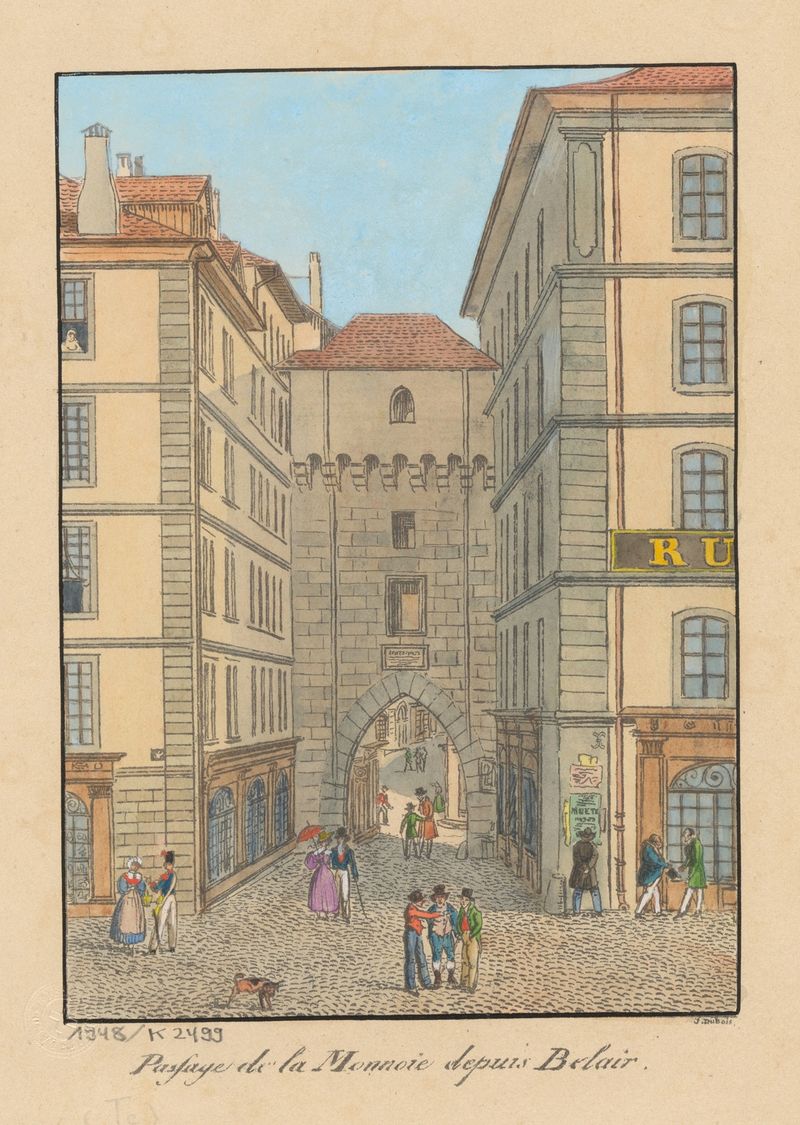
When did color learn to lie? In Passage de la Monnoye Vu de la Cité, the vibrancy of hues suggests a world brimming with life, yet whispers of underlying madness linger just beneath the surface. Look to the left at the swirling blues and greens that give a false sense of calm, their intensity contrasting sharply with the muted earth tones of the buildings. Notice how the light dances across the water, creating reflections that twist and contort, almost as if the scene itself is unsettled. The composition invites the viewer’s gaze to flow through the archway, leading into an unsuspecting chaos, as figures move about with frenetic energy, their postures suggesting urgency and unrest. This tension is further deepened by the juxtaposition of warmth and coolness throughout the painting.
The vivid colors evoke a sense of optimism, yet the disarray in the figures’ movements invites contemplation of a deeper madness. Each stroke seems to pulse with emotion, hinting at the chaos of life just beyond the idyllic setting. The painting teeters on the edge of tranquility and turmoil, urging the viewer to probe the very essence of perception and reality. Created in an uncertain period, Jean Dubois painted this work amid the transformative tides of 19th-century Paris, an era marked by rapid change and social upheaval.
While the exact date remains undetermined, the influences of Impressionism and burgeoning modernity paint a backdrop of excitement and anxiety in the world of art. Dubois’s choice to focus on such a scene reflects a moment in history where the boundaries of perception were as fluid as the colors on his palette.