Pastoral Sunset — History & Facts
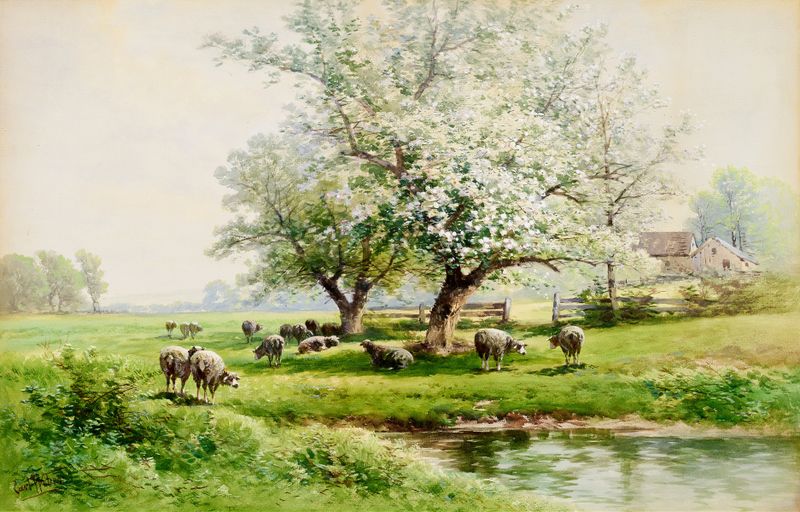
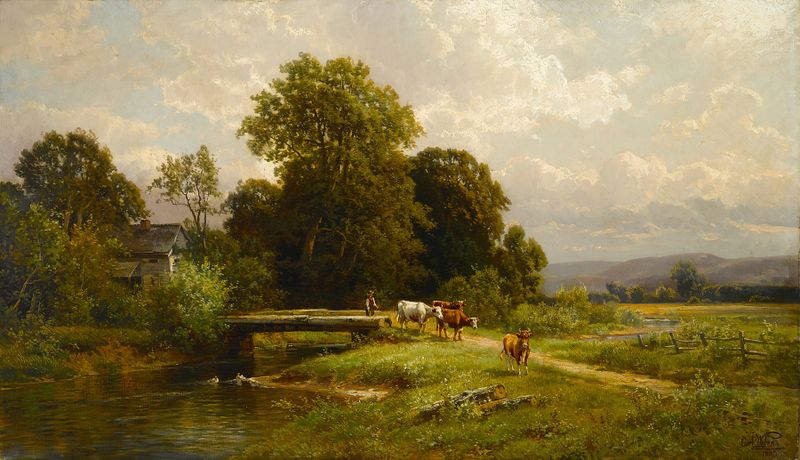
In Pastoral Sunset, you can feel the yearning for a tranquil world, where the tumult of modernity fades beneath nature’s embrace. This piece invites reflection, acting as a bridge between the viewer and a serene past. Notice how the eye is drawn first to the golden hues of the sunset, radiating warmth that bathes the landscape in a soft glow. The foreground is filled with lush greens and gentle undulations of the hills, leading you naturally into the depths of the composition.
The brushwork is fluid yet deliberate, creating a sense of movement that mirrors the whispers of the wind through the grass. Subtle variations in color highlight the transition from day to night, illustrating the passage of time and the inherent beauty of fleeting moments. The interplay of light and shadow evokes a deep emotional resonance, suggesting a longing for connection with nature that transcends the ordinary. The distant trees appear almost as silhouettes, while the vibrant sky captivates with its contrasting intensity—reminding us of the balance between hope and melancholy.
There’s a delicate tension in this harmony, as the calmness of the natural world stands in stark contrast to the inner turmoil often experienced by the soul. Carl Weber created this artwork during a period when many artists were seeking solace in nature amidst the growing complexities of urban life. The date remains uncertain, yet the style reflects the broader movement towards Impressionism, where the emphasis on light and color spoke to an emerging desire for personal expression and connection to the environment. As Weber painted, he channeled an era that yearned for simplicity and the beauty of the pastoral landscape.