
Pastorale — History & Facts
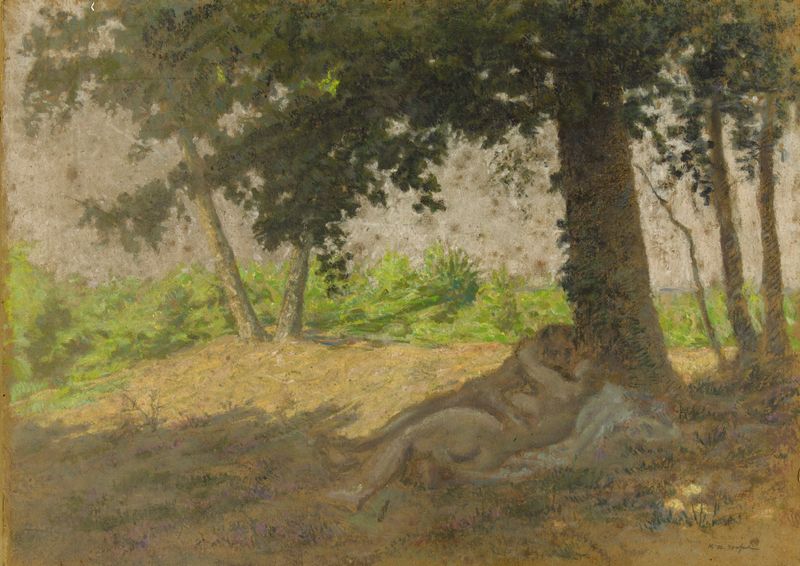
In a world that often rushes past, Pastorale invites us to pause and contemplate the delicate interplay of serenity and longing. It speaks to the human experience, where tranquility can hide deeper currents of emotion. First, gaze at the gentle, flowing forms that populate the canvas. A harmonious palette of greens and soft pastels underscores the idyllic scene, drawing attention to the central figure, a woman draped in a flowing gown, reclining with a serene expression.
Notice how the light dances across her figure, illuminating her skin while casting gentle shadows that suggest both comfort and solitude. The composition invites your eye to travel through the lush landscape, where each brushstroke seems to breathe life into the serene backdrop. Yet, beneath this veneer of calm, tension simmers. The juxtaposition of the figure’s relaxed demeanor against the wild, untamed flora around her suggests a longing for peace amidst chaos.
The subtle golden accents that weave through the painting symbolize both aspiration and fragility, evoking a bittersweet feeling. It is as if the landscape itself cradles the figure while simultaneously reminding her of the transient nature of bliss. In 1926, Roussel painted Pastorale during a period of profound transformation in art, as post-war emotions shifted the thematic focus towards introspection and beauty. Living in France—where the Surrealist movement was gaining momentum—he sought to express tranquility in a world recovering from turmoil, marking a pivotal moment in his career as he blended the traditional with the modern, seeking solace in the representation of serene landscapes.
More Artworks by Ker-Xavier Roussel
Browse all →
La Source
Ker-Xavier Roussel

Baigneuses
Ker-Xavier Roussel
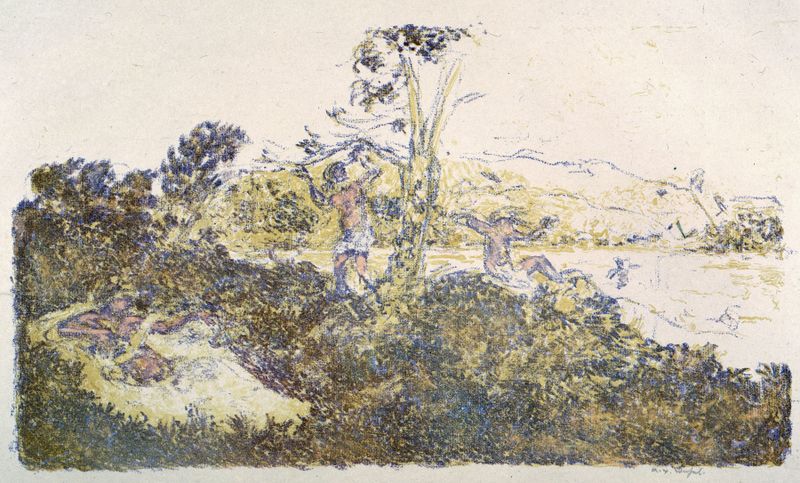
Personnages au bord de la mer
Ker-Xavier Roussel

Faunes et nymphes dans un chemin forestier
Ker-Xavier Roussel
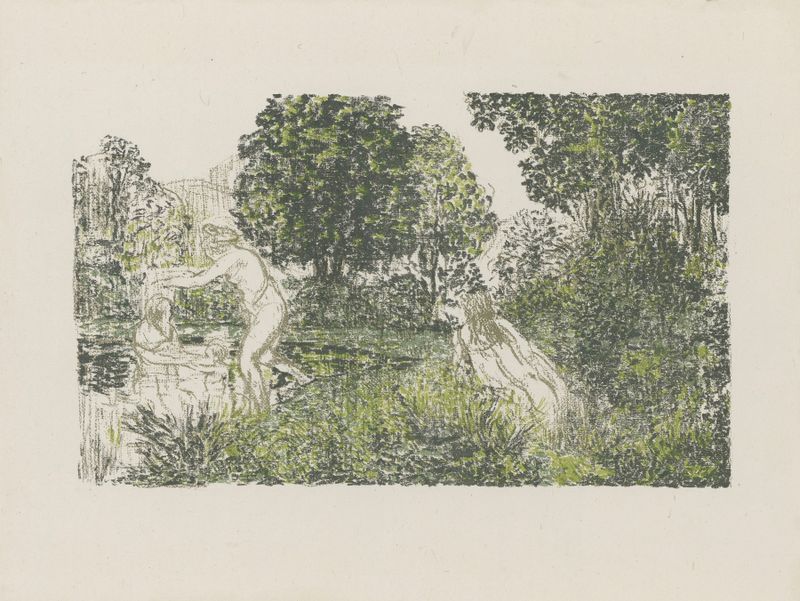
Baigneuses
Ker-Xavier Roussel
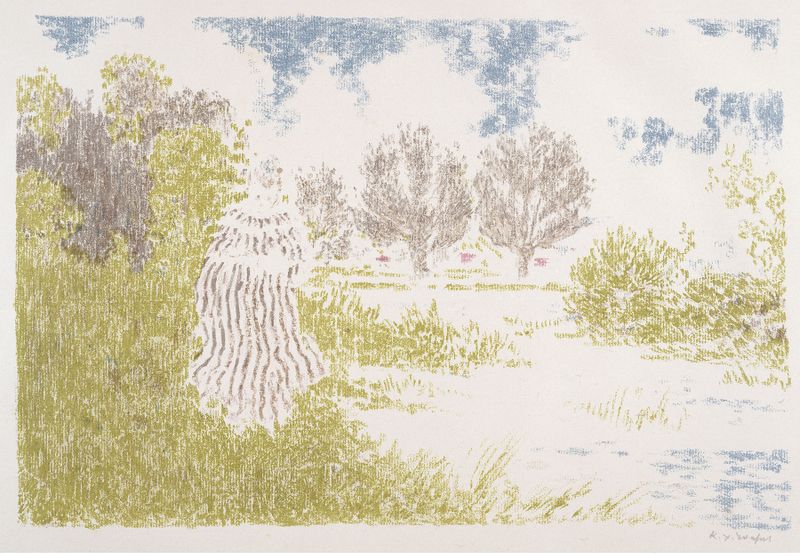
Femme en robe à rayures
Ker-Xavier Roussel
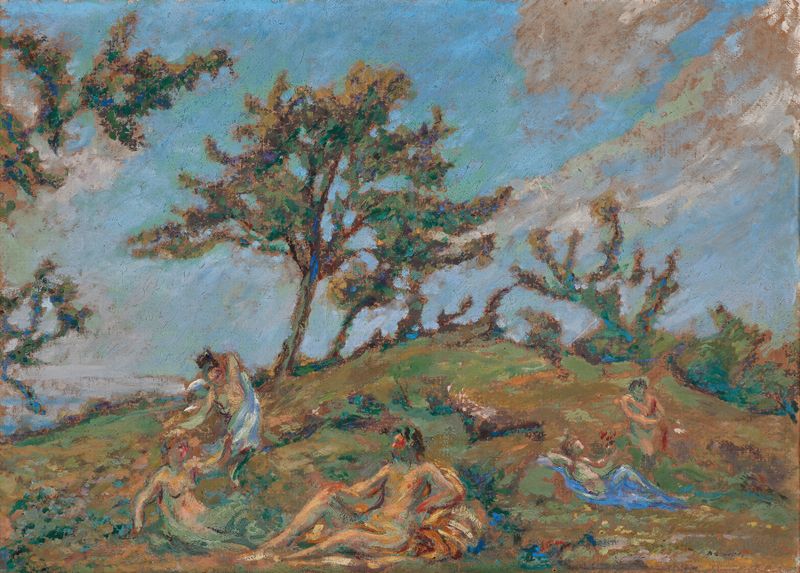
Pastorale
Ker-Xavier Roussel

Deux femmes assises dans un paysage de l’Ile de France
Ker-Xavier Roussel
Couple enlacé couché dans un paysage
Ker-Xavier Roussel

Femme en rouge dans un paysage
Ker-Xavier Roussel





