Pavillion de Flore, August 22, 1828 — History & Facts
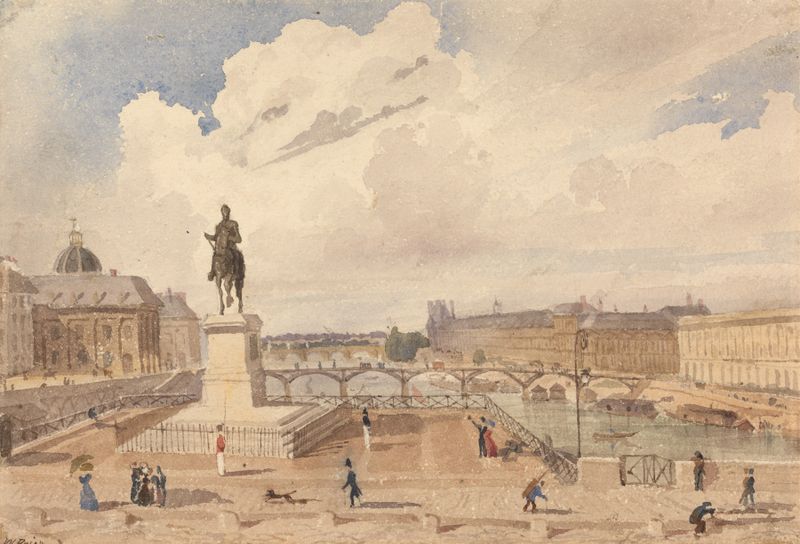
When did color learn to lie? In the delicate brushwork of Pavillion de Flore, a dreamlike quality envelops the viewer, inviting contemplation of reality's boundaries and art's interpretive nature. Begin by focusing on the soft strokes that build a lush tapestry of greens and blues. The vibrant hues of the foliage draw your eye first, creating a serene backdrop that contrasts sharply with the architectural details of the pavilion. Notice how the light spills through the trees, dappling the ground and infusing the scene with a whimsical glow.
Each meticulously painted leaf seems to dance in the gentle breeze, evoking a sense of tranquility and timelessness. Yet beneath this idyllic facade lies an intriguing duality. The pavilion, a structure often associated with leisure, is juxtaposed against the natural world, suggesting a tension between manmade beauty and the rawness of nature. The way the colors blend suggests an otherworldly quality, inviting questions about authenticity and illusion.
This interplay encourages viewers to ponder the nature of their own perceptions, blurring the lines between dream and reality. In 1828, while residing in London, the artist crafted this piece during a period when Romanticism was gaining momentum, exploring themes of nature and emotion. The art world was alive with innovation, and he sought to capture the enchanting allure of the famed pavilion in the Tuileries Garden—a symbol of the intertwining of culture and the natural landscape, reflective of the evolving artistic dialogue of his time.