Paysage — History & Facts
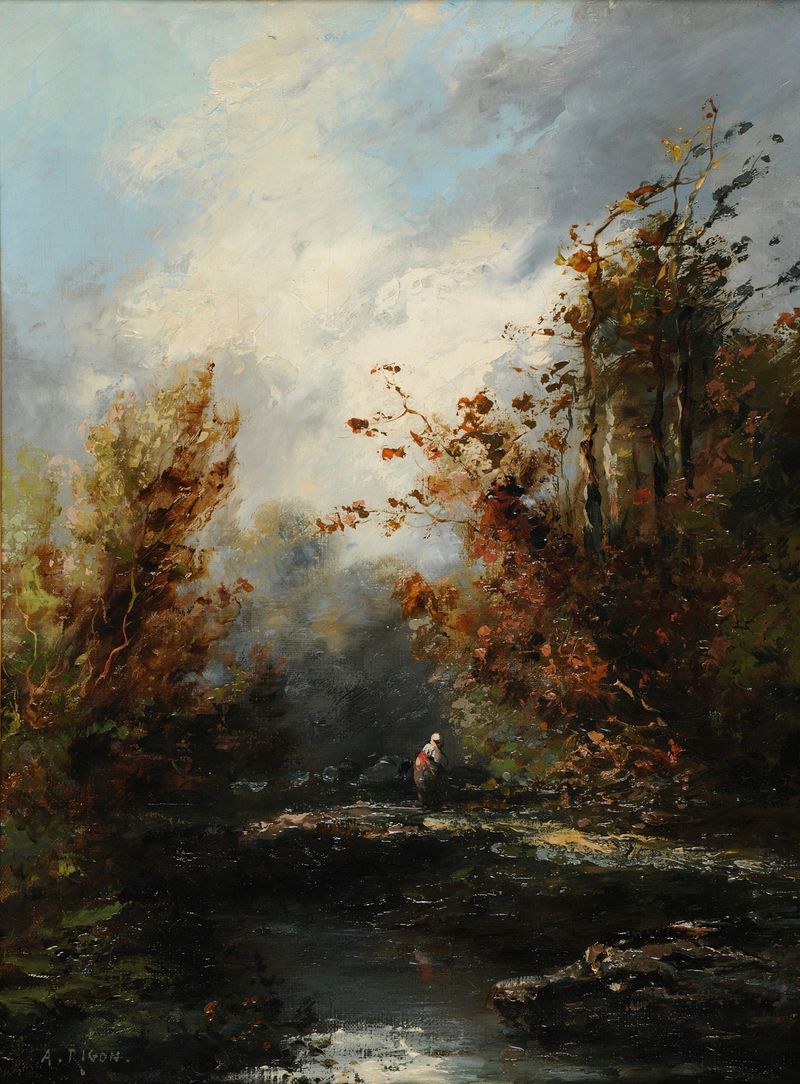
In the stillness of creation, Rigon captures the essence of beauty, revealing nature's subtle whispers through light and color. Look closely at the horizon, where soft hues of blue converge with gentle strokes of green. The sky, painted with strokes of lavender and gold, invites the viewer into a tranquil embrace. Notice the delicate brushwork that defines the trees, their forms blending seamlessly into the landscape, like old friends in quiet conversation.
The composition beckons with an inviting path winding through the scene, leading the eye deeper into the serene wilderness, evoking a sense of exploration and peace. As you delve into the details, consider the contrast between the vibrant foreground and the muted background. The lush vegetation teems with life, while the distant hills appear almost dreamlike, a reminder of the beauty found in both proximity and distance. The interplay of shadow and light creates an emotional tension, suggesting an eternal dance between presence and absence, joy and longing.
Each brushstroke tells a story, whispering secrets of the natural world that resonate within our hearts. During this period of his career, Rigon was deeply influenced by the Impressionist movement, which emphasized the fleeting effects of light and atmosphere. While the exact date of Paysage remains unknown, it reflects the artist’s aspiration to capture the essence of nature in a way that speaks to the viewer’s soul. In a world increasingly preoccupied with industrialization, his work stands as a testament to the enduring beauty of the natural landscape.