Paysage avec cours d’eau et paysanne — History & Facts
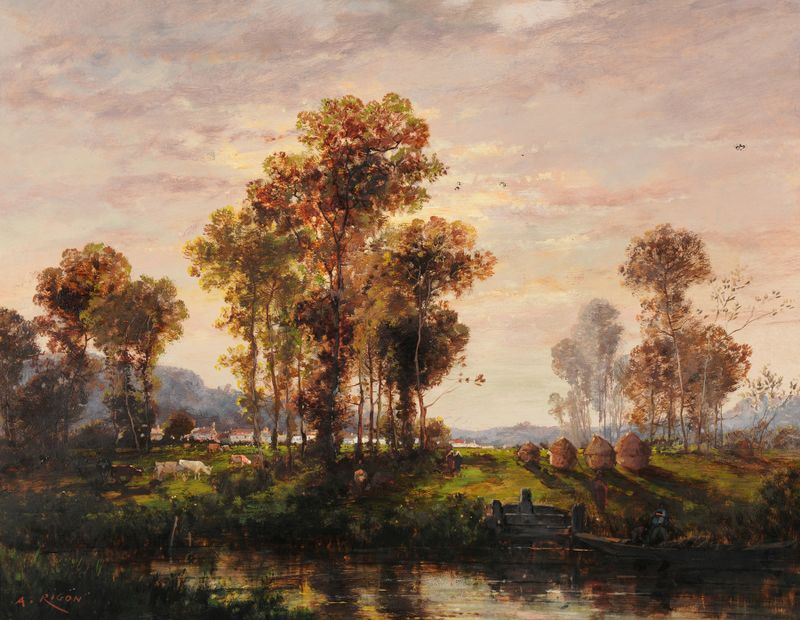
Is this a mirror — or a memory? The delicate interplay of nature and human presence invites us to ponder the balance between our lives and the landscapes we inhabit. Look to the left at the shimmering water, where the gentle curve of the river reflects the sky’s soft palette. The brushstrokes create a sense of movement, capturing not only the flow of water but also the passage of time. Notice how the warm hues of the earth contrast with the cool blues of the river, emphasizing a harmony that exists in the quiet moments of rural life.
The figure of the peasant, rendered in muted tones, seems to meld with the surrounding landscape, embodying the very essence of toil against the backdrop of serene beauty. Deeper insight emerges in the small details: the slight bend of the woman’s posture as she tends to her task, the fluttering leaves that suggest a breeze, and the distant hills that stand as silent witnesses to her labor. These components evoke a tension between solitude and connection, highlighting not only the physical but also the emotional landscape within the composition. Each element speaks to a shared existence — the nurturing of the earth and the quiet resilience of those who inhabit it. Auguste Rigon created this work during a period of exploration in the late 19th century, a time when artists sought to capture the authenticity of everyday life.
Working in France, Rigon was influenced by the Impressionist movement, which emphasized a connection to nature and the fleeting moments of life. This painting reflects a desire to find equilibrium within a rapidly changing world, as both art and society began to embrace new perspectives.