Paysage aux environs de Lagny, l’église de Conches — History & Facts
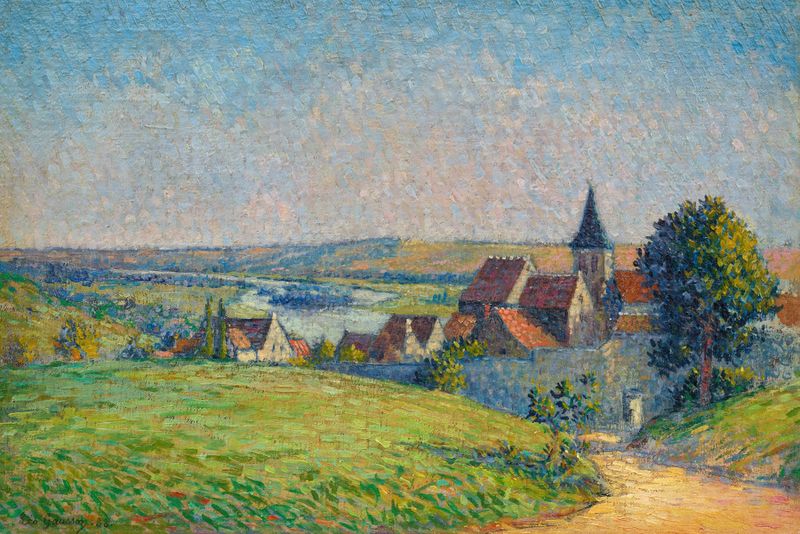
In a world that often rushes by, the quietude of a landscape can evoke the profound solitude we seldom acknowledge. Look at the horizon first. Soft strokes of muted greens and browns give way to a delicate sky, where ethereal clouds stretch across the canvas. The church stands steadfast in the middle ground, a lonely sentinel amidst the sprawling countryside.
Notice how the light filters through the trees, casting gentle shadows that dance upon the ground, hinting at the passage of time. The composition invites the eye to wander, yet it is anchored by the serene architecture, suggesting both permanence and isolation. The juxtaposition of the vibrant landscape and the solitary church creates an emotional tension—an invitation to reflect on the human experience. The quiet surroundings echo the loneliness inherent in the scene, a reminder of the connection between nature and the spiritual realm.
Subtle details, like the brushwork in the foliage, evoke a sense of nostalgia, suggesting that while the world outside flourishes, the church remains a solitary witness to the passing seasons of life. In 1887, Léo Gausson was immersed in the Impressionist movement, painting in the picturesque surroundings of France. This period was marked by a growing exploration of light and atmosphere, and Gausson’s works began to reveal an intimate relationship with nature. The artist’s life was a blend of personal struggles and artistic ambition, reflecting the broader transformations in society as it moved towards modernity.