Paysage En Provence — History & Facts
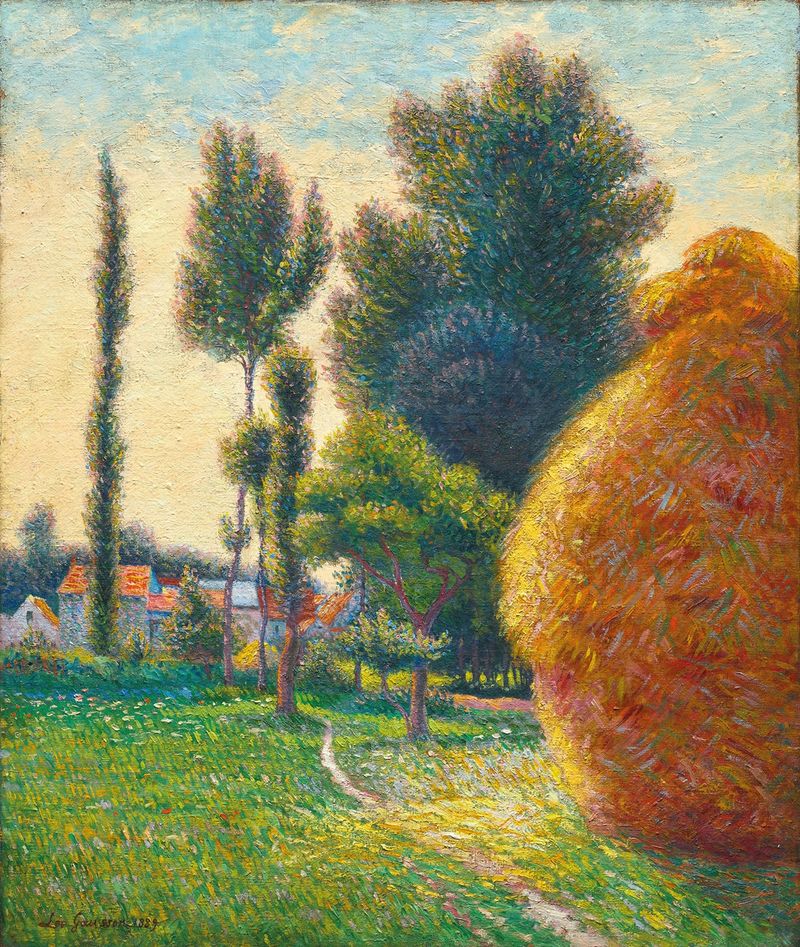
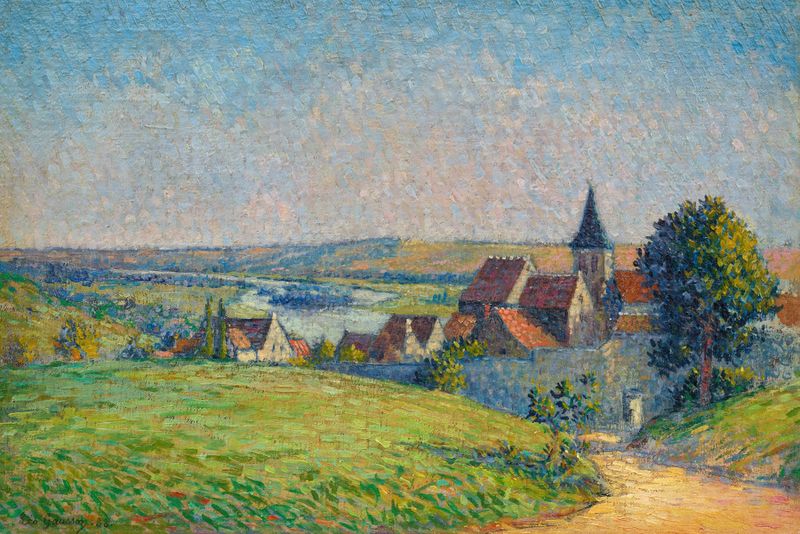
What if beauty was never meant to be finished? In Léo Gausson's Paysage En Provence, the landscape seems to whisper this sentiment, evoking a poignant blend of serenity and sorrow. Look to the foreground, where the vibrant greens of the fields stretch like a patchwork quilt under the vast blue sky. Notice how the brushstrokes dance with life yet reveal a certain fragility, as if the scene itself might dissolve at any moment. The composition is anchored by the distant hills, their gentle undulations softening the horizon, while dappled sunlight filters through the clouds, casting an ethereal glow over the landscape.
This interplay of light and shadow creates a dynamic tension, drawing the viewer's eye across the canvas, inviting contemplation upon the fleeting nature of such beauty. Delve deeper, and the emotional undercurrents surface. The lush vegetation, while vibrant, hints at a loss—perhaps a nostalgia for a world untouched by time. The muted tones in the background suggest a lingering grief, a reminder that while nature flourishes, it is also transient.
The swirling clouds above evoke a sense of melancholy, as if they are witnesses to the change that inevitably comes with every passing season. Each element in this scene resonates, portraying the bittersweet balance between existence and impermanence. In 1891, Gausson painted this work during a time when Impressionism was at its peak, thriving amidst a backdrop of artistic innovation in France. Living in a world that was rapidly modernizing, he found solace in the natural allure of Provence, capturing not just the landscape but the emotional landscape within himself.
This painting emerged from a moment in history ripe with transformation, as artists began to explore the profound connections between nature, beauty, and the passage of time.