Paysage breton — History & Facts
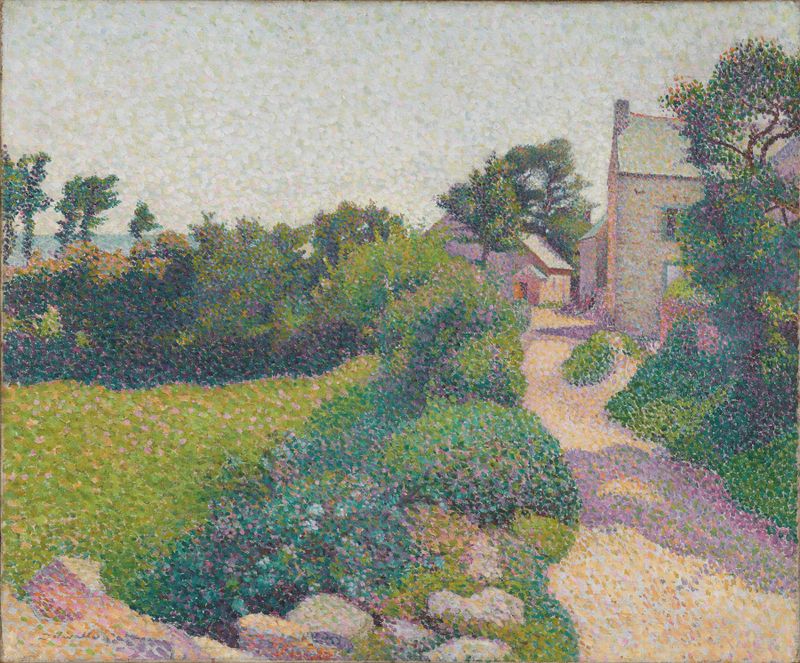
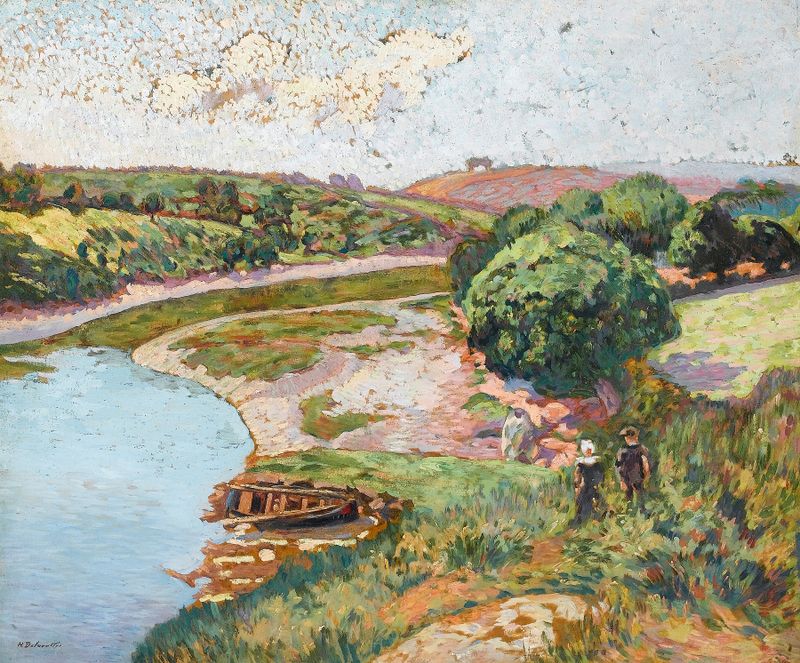
Within its silence, Paysage breton captures a serene equilibrium, where land meets sea in a delicate embrace of nature’s elements. Here, one can find the essence of balance, manifesting through the harmonious interplay of colors and form. Look to the left at the gentle rise of the hills, painted in soft greens and browns that cradle the horizon. Notice how the light dances on the water's surface, creating a shimmering path that leads your gaze deeper into the scene.
The subtle brushstrokes convey a sense of tranquility, while the sky’s muted blues blend seamlessly with the earthy tones below, establishing a visual conversation between earth and sky. Each color choice reinforces the calmness of the landscape, inviting contemplation. Yet, there lies an undercurrent of tension in this idyllic setting. The darkened clouds threaten to overshadow the tranquil scene, hinting at the unpredictability of nature and life.
The contrast between the vibrant greenery and the somber sky speaks to the dualities inherent in existence — joy and sorrow, calm and chaos. The composition balances these elements, prompting viewers to reflect on the fleeting nature of serenity amidst life’s storms. In 1886, Delavallée created this work during a period marked by a rising interest in Impressionism. Living in France, an era punctuated by artistic exploration and the quest for authenticity, he found inspiration in the Breton landscape.
This painting reflects not only the beauty of its surroundings but also the artist's desire to capture the essence of a moment, blending the personal and the universal in a tranquil tableau.