Paysage de Bou-Saâda — History & Facts
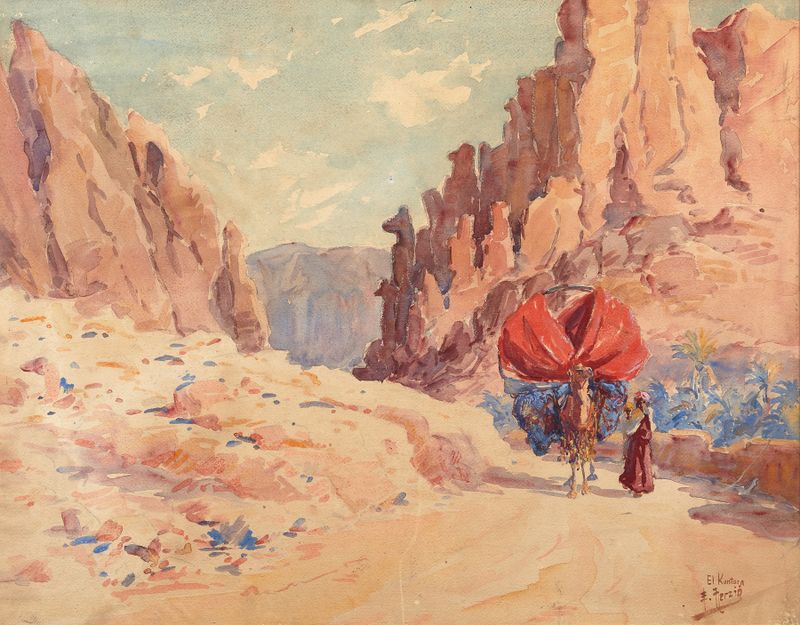
In the realm of art, shadows play an essential role, whispering secrets that color alone cannot convey. They invite introspection, revealing layers of meaning often overlooked in the brightness of the surface. Look to the left at the soft, muted hues that define the landscape, where earthy tones blend seamlessly with the gentle contours of the hills. Notice how the light filters through the trees, casting delicate shadows that dance across the ground, adding depth and a sense of movement to the composition.
The interplay of light and shade draws the viewer's eye towards a solitary figure within the landscape, a quiet reminder of humanity's place within nature. Delve deeper, and you’ll find the contrast between the vibrant colors and the somber shadows creates an emotional tension that resonates throughout the piece. The warm tones of the terrain evoke a sense of comfort, yet the lurking shadows suggest an underlying solitude or uncertainty. This duality captures the essence of the human experience—the struggle between enlightenment and the obscured truths that lie beneath the surface. Edouard Herzig created Paysage de Bou-Saâda during a time when artists were increasingly exploring the effects of light and atmosphere in their work.
While the exact date of this piece remains unknown, it reflects his engagement with a rapidly changing world as he sought to convey both the beauty and complexity of the landscapes around him. His exploration of light and shadow was part of a broader movement in art, focusing on how these elements could evoke emotion and convey deeper meanings.