Paysage méditerranéen aux deux ovins — History & Facts
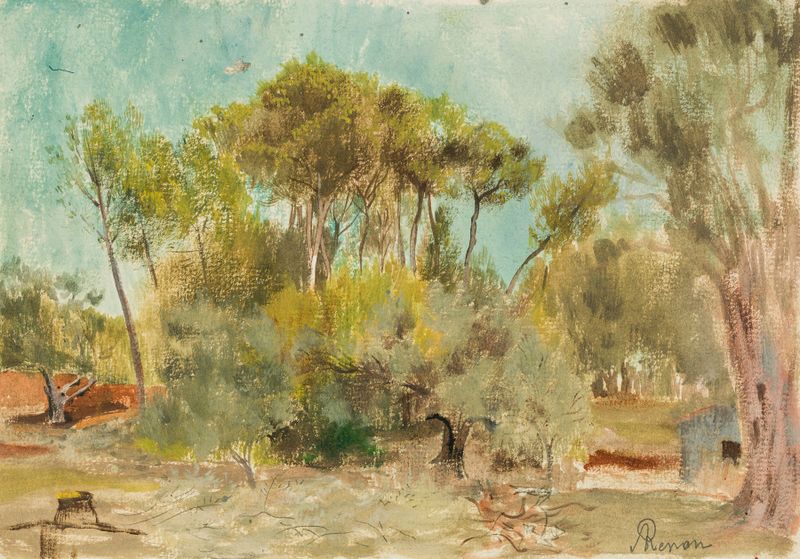
What if beauty was never meant to be finished? In Paysage méditerranéen aux deux ovins, emptiness breathes life into the scene, inviting the viewer to embrace the quietude of a Mediterranean landscape. Focus first on the rolling hills that cradle the horizon, gently undulating under a soft blue sky. The restrained palette of muted greens and warm earth tones evokes a sense of stillness, while the two sheep, mere silhouettes in the foreground, become vital characters in this tranquil narrative. Notice how the light bathes the land in a golden hue, suggesting the warmth of a sun that will never set, amplifying the painting's sense of timelessness and solitude. The contrasting presence of the sheep against the vast, open space encapsulates a profound emotional tension; they signify life within an expansive emptiness, a reminder of nature's delicate balance.
The absence of human figures intensifies this feeling, as if the landscape is waiting for its story to be completed, inviting contemplation on what lies beyond the visible. Each brushstroke seems to whisper of the beauty that exists in the unoccupied—an expression of longing for connection in a world that often feels too vast and empty. Cornelis Ary Renan painted this work during a period of exploration and reflection, although the exact date remains unknown. Active in the late 19th century, Renan was part of a broader movement that sought to capture the essence of nature, drawing inspiration from the landscapes of Southern Europe.
At a time when the art world was increasingly turning toward Impressionism, his focus on the serene and the solitary speaks to a unique voice amidst changing artistic currents.