Paysage avec un ponton — History & Facts
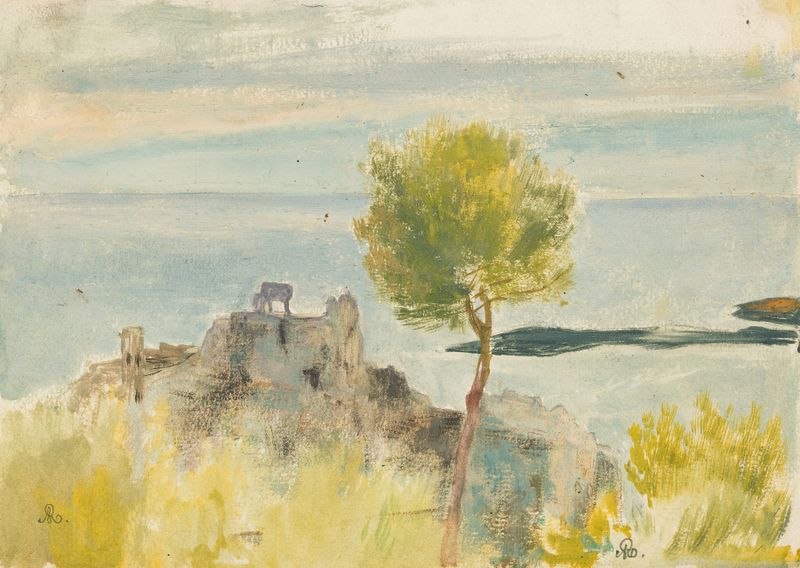
In a world often shrouded in noise and distraction, the essence of awakening beckons within the strokes of a brush. Here lies a moment captured in time, a gentle invitation to reflect upon the beauty that lies in stillness. Look to the foreground where a serene landscape unfolds, anchored by the delicate lines of a wooden pontoon stretching out towards a tranquil expanse. The soft hues of green and blue blend harmoniously, guiding your gaze across the canvas.
Notice how the sunlight dapples the water's surface, creating glimmers that dance with life, while the muted earth tones of the shoreline provide a grounding counterpoint. Each brushstroke invites you deeper into this peaceful scene, encouraging an exploration of textures and colors that evoke a sense of calm. Within this idyllic setting lies a subtle tension—the juxtaposition of nature’s serenity against the faint suggestion of human intervention. The pontoon, a symbol of our presence in the natural world, hints at fleeting moments of connection and disconnection between humanity and the landscape.
This scene whispers of stories untold; the peacefulness inviting introspection, while the pontoon reminds us of the transience of all things. It beckons us to awaken to the world around us, to find meaning in the stillness. Created during an undated period of exploration in the late 19th century, the artist emerged amidst a shifting tide in the art world. Renan was part of a movement that celebrated the intimate relationship between man and nature, capturing transitional moments in landscapes that reflected both personal and societal awakenings.
His work encapsulated not only the beauty of the environment but also the emotional depth that such encounters evoke.