Paysage urbain — History & Facts
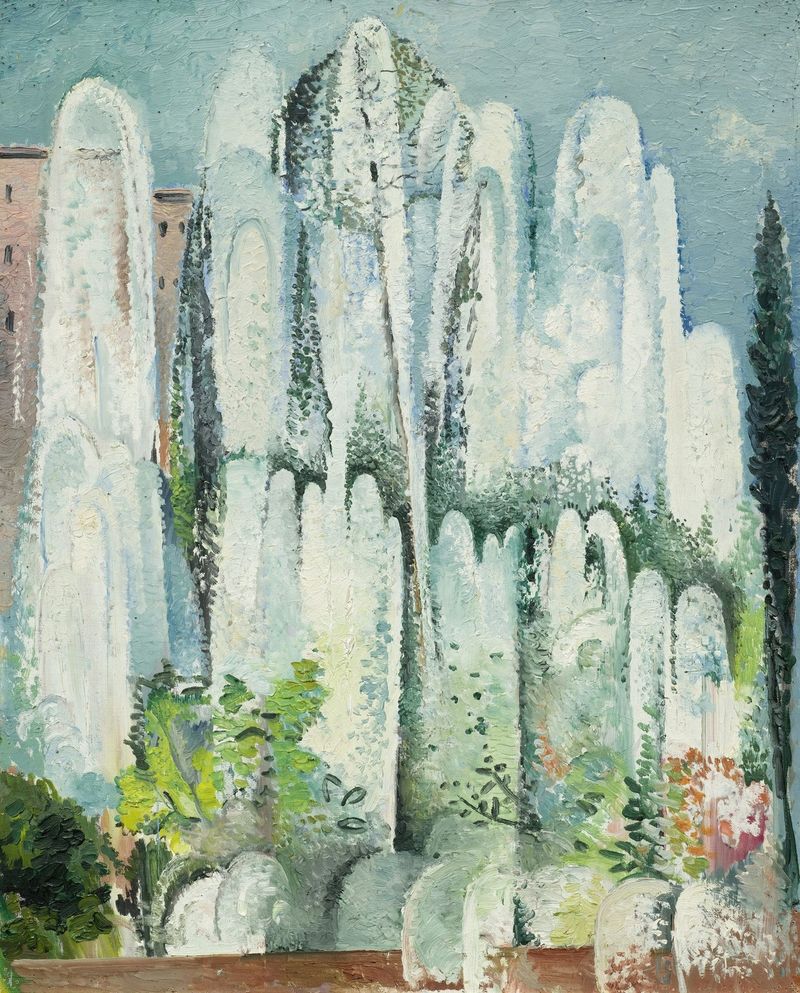
In the interplay of hues and forms, one can sense the unvoiced yearnings that weave through the urban landscape, a longing for connection amid the chaos. Focus on the luminous palette that radiates from the canvas, drawing your eye to the vibrant splashes of blue and orange. Notice how the geometric shapes rise and fall, creating a rhythmic pulse that mimics the heartbeat of the city. The brushstrokes are both deliberate and spontaneous, giving life to the structures that stand in stark contrast to the ethereal sky above. Bailly’s use of color and form reveals a deeper narrative—each angular structure hints at a story, a life lived, while the expanses of color evoke feelings of isolation.
The juxtaposition of solid forms against the fluidity of the sky speaks to the tension between human ambition and the vastness of existence. Here, the city becomes a metaphor for inner longing, a reflection of the emotional landscape often concealed beneath the surface. During the early 20th century, this artist was immersed in the vibrant avant-garde scene of Paris. While Paysage urbain remains undated, it likely reflects her exploration of modernity and abstraction during a time of rapid change and innovation in art.
Bailly sought to bridge the gap between the tangible and the ethereal, capturing the spirit of an era characterized by both excitement and yearning for deeper meaning.