
Piazza San Marco — History & Facts
Where does light end, and longing begin? In the gentle embrace of twilight, memories linger like whispers, echoing through the cobblestones of a timeless square. Look to the center of the canvas, where the grand façade of St. Mark's Basilica rises majestically, bathed in a soft, golden light. The intricate details of its mosaics shimmer, their colors—a symphony of azure and gold—drawing the eye.
Notice how the shadows play across the square, creating a dance of light and dark that imbues the scene with a palpable sense of nostalgia. The figures scattered throughout the piazza seem suspended in their own stories, each gesture and posture inviting us to ponder their unspoken thoughts. Amidst this bustling hub, contrasts emerge. The vibrancy of human activity stands in stark opposition to the stillness of the architecture, suggesting a poignant tension between civilization and the passage of time.
The reflections in the puddled stones hint at moments fleeting, capturing the ethereal nature of memory itself. Each passerby, lost in their own reverie, becomes a symbol of universal longing—an exploration of the human condition that resonates deeply. In 1861, Jean-Baptiste van Moer was settled in Belgium, painting scenes inspired by his travels through Italy. This period marked a time of rich artistic exploration, as the Romantic movement influenced many to depict emotional landscapes and historical places.
Van Moer’s work emerged in an era that valued both the picturesque and the emotive, capturing the essence of memory and the allure of Italy's renowned architecture.
More Artworks by Jean-Baptiste van Moer
Browse all →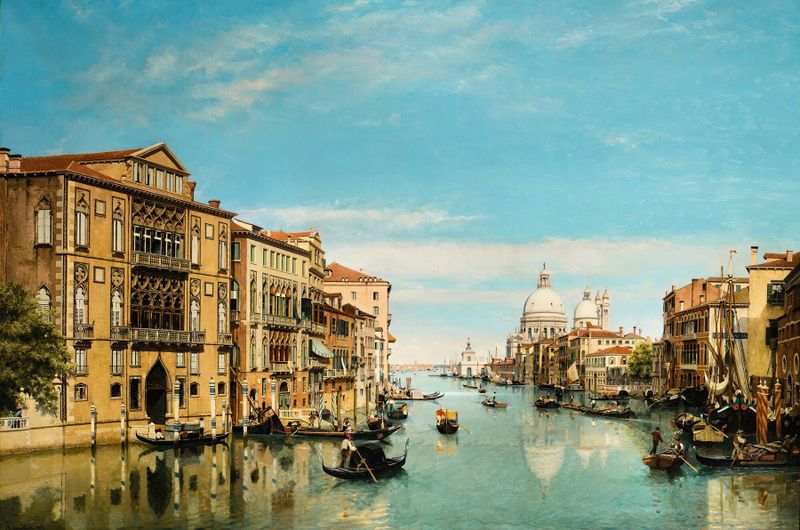

More Architecture Art
Browse all →
The statue of Liberty
Frédéric Auguste Bartholdi

View of Houses in Delft, Known as ‘The Little Street’
Johannes Vermeer

View of Houses in Delft, Known as ‘The Little Street’
Johannes Vermeer

The Cathedral in Rouen. The portal, Grey Weather
Claude Monet

The yellow house
Vincent van Gogh

The Church in Auvers-sur-Oise, View from the Chevet
Vincent van Gogh