The Grand Canal, Venice — History & Facts
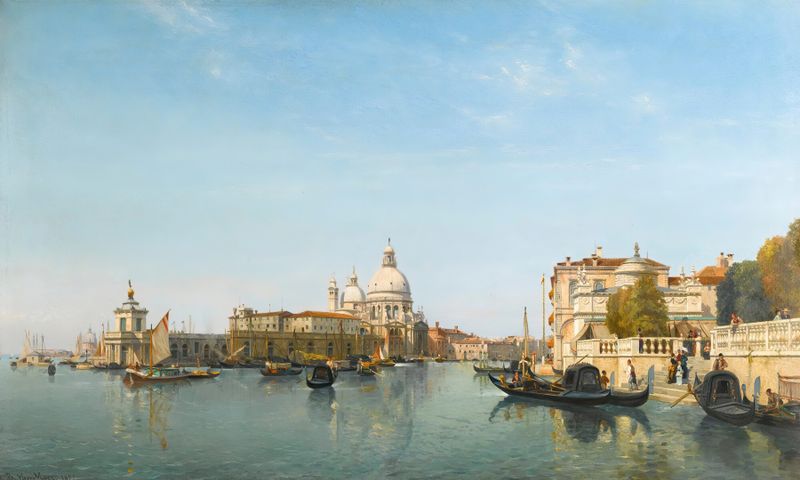
In the stillness of The Grand Canal, Venice, we are swept into a moment where time seems to hold its breath, inviting us to meditate on melancholy’s embrace. This work offers a window into a world alive yet hauntingly distant. Look to the left at the shimmering reflections dancing upon the water’s surface, where the soft hues of twilight blend with the opulence of Venetian architecture. The vibrant yellows and blues of the buildings mirror the fading light, creating an interplay between the warmth of civilization and the encroaching coolness of dusk.
Notice how the brushwork captures both the vibrancy of the scene and its underlying stillness, suggesting a narrative beyond mere observation. Delve deeper, and you will find a tension between the serenity of the canal and the shadows that envelop it. The boats, gently swaying, are a reminder of fleeting moments, while the darkening sky echoes a sense of inevitable loss. Each element in the painting reflects the bittersweet nature of existence, where beauty and melancholy coexist in delicate harmony, prompting a reflection on what it means to truly belong to a place. In 1879, Jean-Baptiste van Moer created this masterpiece while living in Belgium, at a time when the Impressionist movement was beginning to influence artists across Europe.
The industrial age was altering landscapes and lifestyles, and the artist sought to capture the essence of Venice, a city straddling tradition and modernity. This period in art history was marked by a desire to convey emotion and atmosphere, where the passing of time became a poignant theme.