
Pit-Palace, Epsom, The Seat of Thomas Jeudwine, Esq. — History & Facts
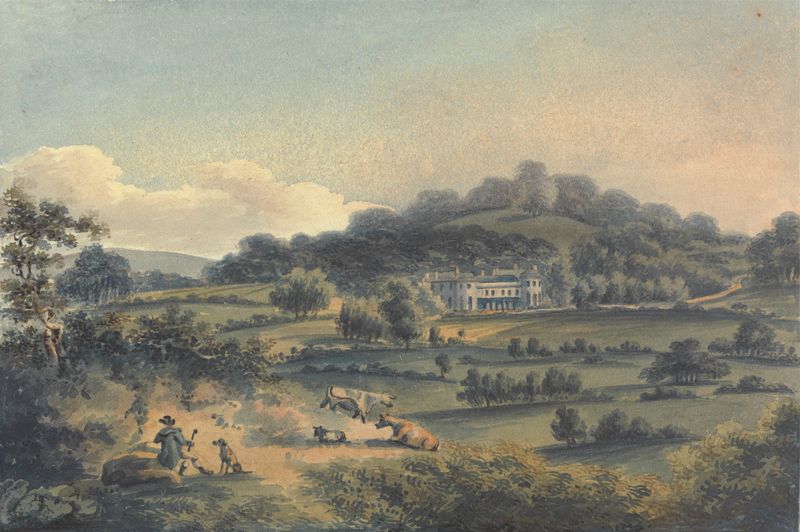
In the stillness of the painted landscape, what secrets are woven into the fabric of illusion? Each stroke of the brush invites the viewer to step into a world both familiar and enigmatic, revealing layers of meaning that linger beyond the surface. Look to the center of the composition, where the grand edifice of the pit-palace rises majestically against the gentle sweep of the landscape. Notice how the light dances upon the façade, illuminating the intricate details that define its architectural beauty. The soft hues of greens and browns embrace the structure, contrasting with the vibrant blues of the sky, creating a sense of harmony that draws you into this serene scene.
The careful arrangement of trees and shadows adds depth, subtly guiding your gaze through the idyllic setting. Deeper insights emerge as you examine the juxtaposition between the man-made and the natural. The palace, a representation of human ambition, stands proud yet isolated amidst the vastness of nature, hinting at the tension between civilization and wilderness. Each window of the structure reflects not only light but also the dreams and aspirations of its inhabitants, whispering the stories that echo through time.
The surrounding scenery, lush and unyielding, serves as a reminder of the relentless passage of time, suggesting that human endeavors are but fleeting moments in the endless cycle of life. In 1812, John Hassell painted this work amidst a burgeoning interest in landscape and architectural representation, reflecting the romantic ideals of the time. Living in England, Hassell captured the essence of both the natural world and human achievement, showcasing his mastery of perspective and light. It was a period when artists began to explore and redefine their connection with the environment, merging reality with the imaginative landscapes of their minds.
More Artworks by John Hassell
Browse all →
More Architecture Art
Browse all →
The statue of Liberty
Frédéric Auguste Bartholdi

View of Houses in Delft, Known as ‘The Little Street’
Johannes Vermeer

View of Houses in Delft, Known as ‘The Little Street’
Johannes Vermeer

The Cathedral in Rouen. The portal, Grey Weather
Claude Monet

The yellow house
Vincent van Gogh

The Church in Auvers-sur-Oise, View from the Chevet
Vincent van Gogh