
Plac Bankowy — History & Facts
In the quiet spaces of the heart, beauty often emerges as a whisper, urging us to look closer. Focus on the striking architecture that dominates the foreground, where solid forms rise majestically against the muted sky. The elegant lines of the building lead your gaze upwards, inviting contemplation of the intricate details etched into its façade. Notice how the soft, golden hues blend with the cool grays, creating a harmonious balance that speaks to both stability and transience, while shadows dance subtly across the cobblestones below. Beneath this serene exterior lies a tension between the permanence of structure and the fleeting nature of life.
The bustling figures, caught in mid-stride, suggest a vibrant community, yet their anonymity evokes a sense of isolation amid the beauty. The interplay of light and shadow emphasizes the contrast between the bustling life of the square and the quiet endurance of the architecture, reminding us how beauty can exist even in the midst of ordinary chaos. In 1833, the artist found himself immersed in the cultural revival of Poland, a moment brimming with a renewed national identity. Living in Warsaw, Wincenty Kasprzycki was influenced by the Romantic movement, reflecting the aspirations and struggles of his time.
The creation of this piece coincided with a period of political unrest, and through his work, he captured not just a scene but the spirit of resilience and hope that characterized the era.
More Artworks by Wincenty Kasprzycki
Browse all →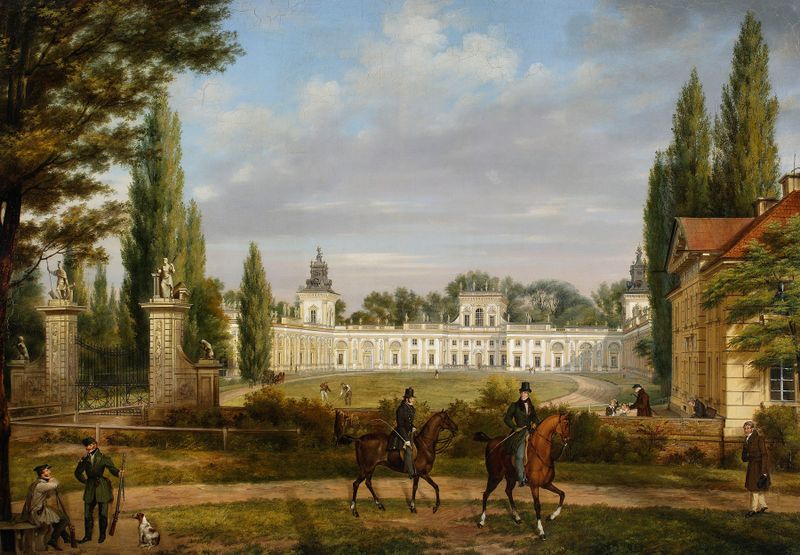
View of the Wilanów Palace from the entrance
Wincenty Kasprzycki
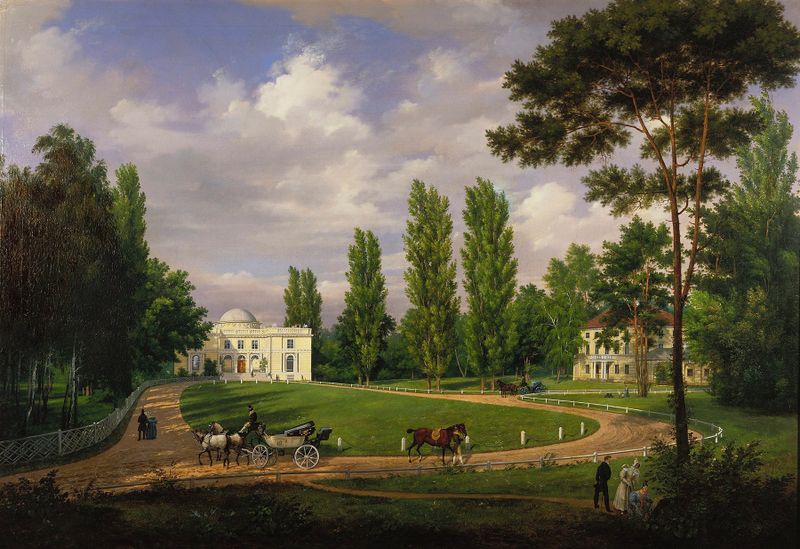
View of the Natolin Palace from the courtyard
Wincenty Kasprzycki
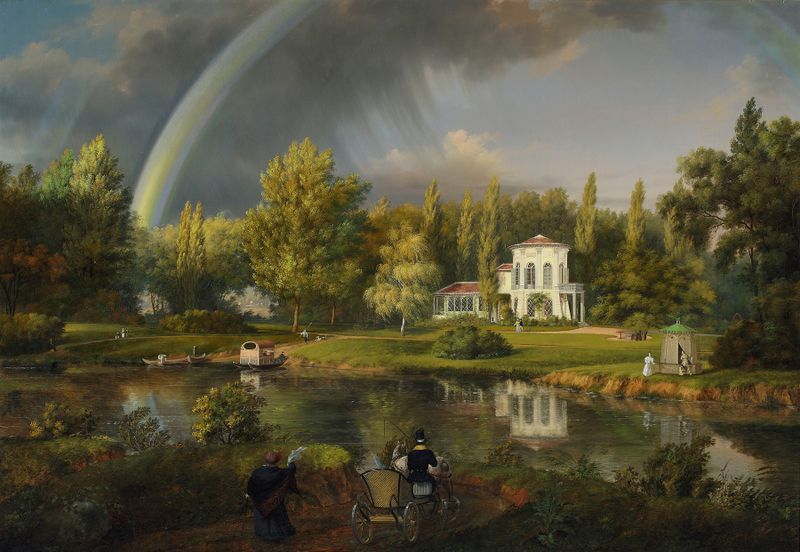
View of Morysinek in Wilanów
Wincenty Kasprzycki
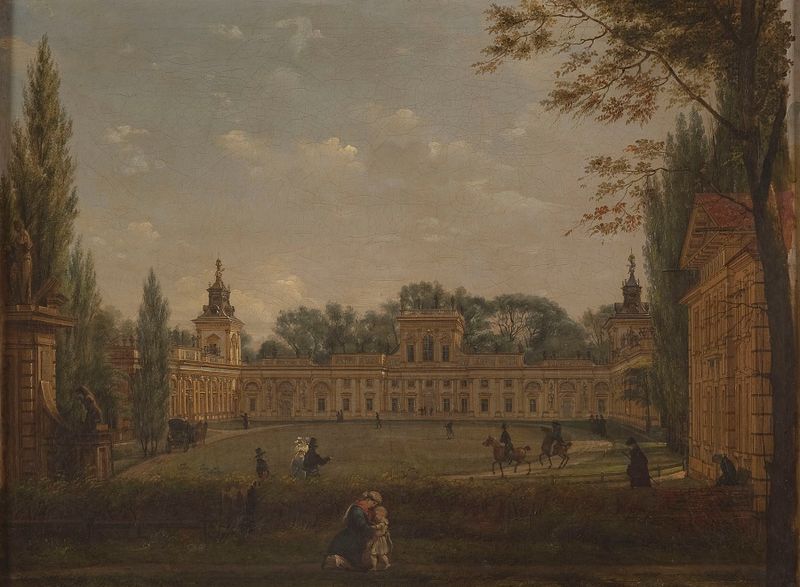
View of the Wilanów Palace from the courtyard
Wincenty Kasprzycki
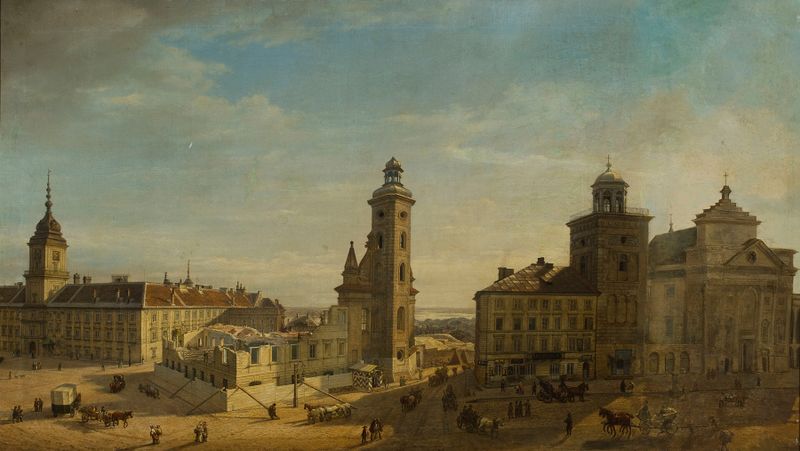
Demolition of the church St. Clara and the Bernardine nunnery in Warsaw
Wincenty Kasprzycki
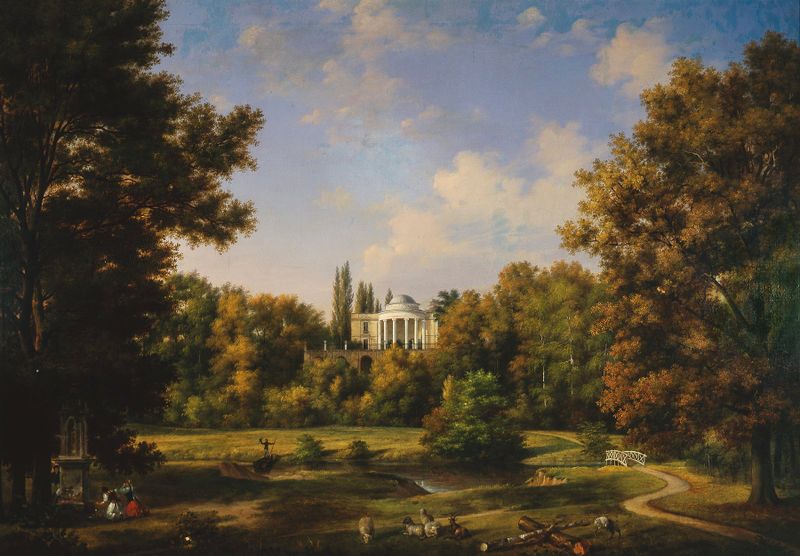
View of the Natolin Palace from the side of the park
Wincenty Kasprzycki
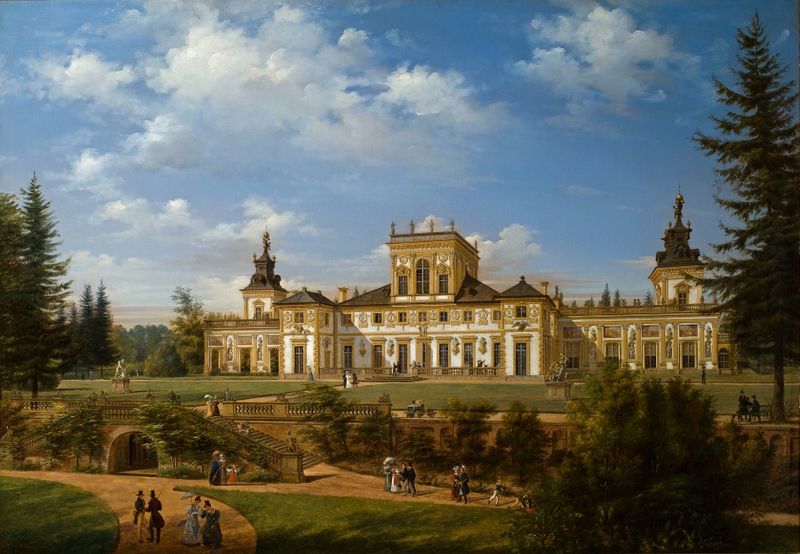
View of the Wilanów Palace from the side of the park
Wincenty Kasprzycki
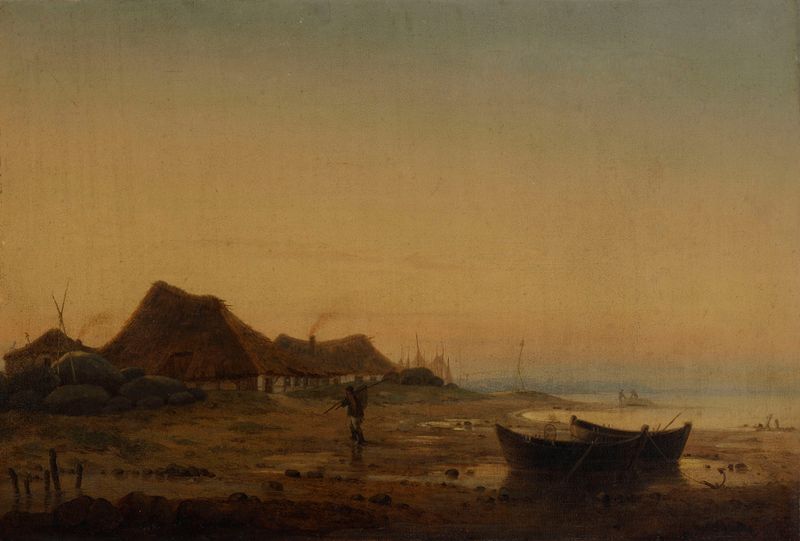
Ponadwiśle
Wincenty Kasprzycki
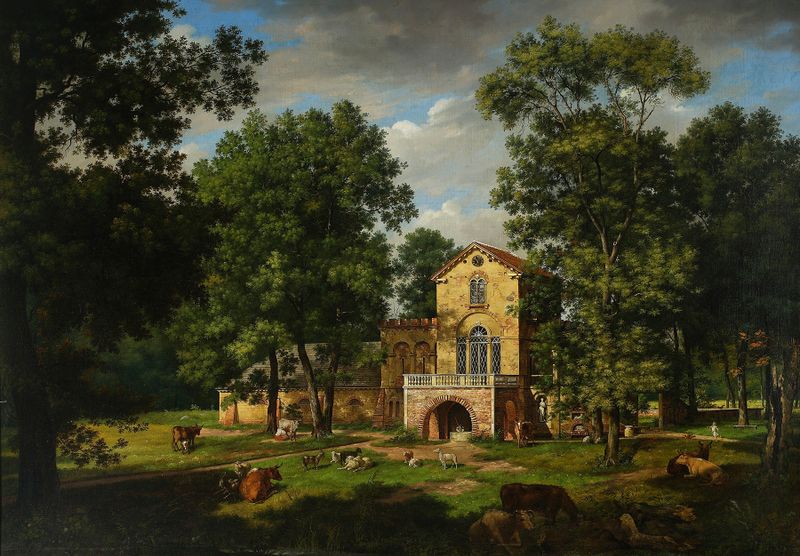
Fragment of the park in Natolin with the cowshed
Wincenty Kasprzycki
More Architecture Art
Browse all →
The statue of Liberty
Frédéric Auguste Bartholdi

View of Houses in Delft, Known as ‘The Little Street’
Johannes Vermeer

View of Houses in Delft, Known as ‘The Little Street’
Johannes Vermeer

The Cathedral in Rouen. The portal, Grey Weather
Claude Monet

The yellow house
Vincent van Gogh

The Church in Auvers-sur-Oise, View from the Chevet
Vincent van Gogh