
Polder landscape — History & Facts
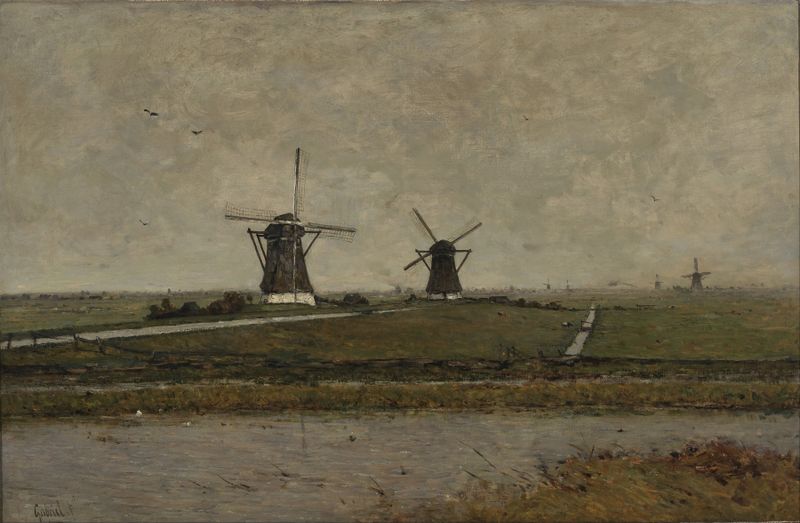
Can beauty exist without sorrow? In the stillness of a polder landscape, nature unfolds her quiet narrative of rebirth, whispering secrets of renewal through the soft earth and gentle sky. Look to the horizon where vast fields stretch beneath an expansive sky, infused with subtle hues of green and gold. The painter's deft brushwork captures the interplay of light and shadow, guiding your eye across the tranquil waters that reflect the delicate clouds above. Notice how the soft strokes create a sense of movement, as if the landscape itself breathes, inviting you to explore every nook and cranny of this serene composition. Beneath the peaceful surface lies a deeper tension — the contrast of cultivated land against untamed nature embodies the ongoing dialogue between humanity and the environment.
A solitary tree stands sentinel, its gnarled branches hinting at the passage of time and the cycles of life. This juxtaposition provokes thoughts on growth and decay, suggesting that even in the most idyllic settings, echoes of sorrow and resilience coexist, each enriching the other. During the late 19th century, the artist found inspiration in the Dutch countryside, a period marked by a growing fascination with the interplay of natural elements and human presence. Gabriël, a member of the Hague School, sought to convey the emotional depth of the landscape, reflecting both personal and collective experiences of renewal.
This painting encapsulates a moment where the boundaries between sorrow and beauty blur, leaving an indelible mark on the viewer’s soul.
More Artworks by Paul Joseph Constantin Gabriël
Browse all →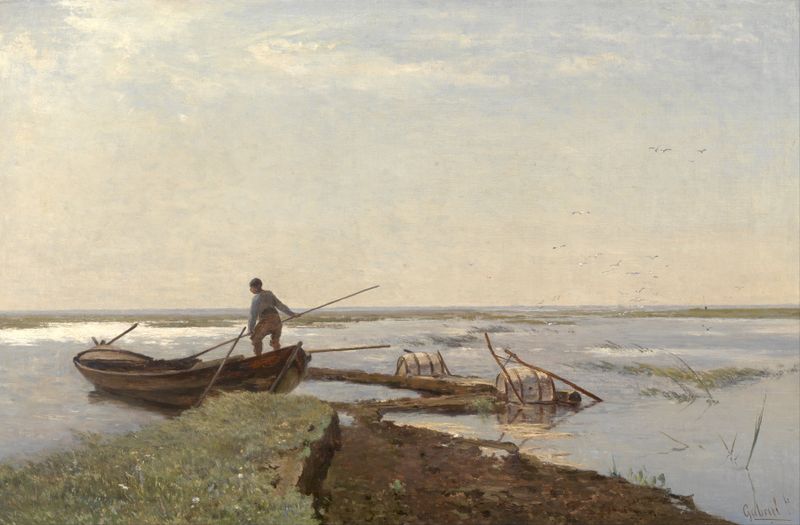
Polder Landscape (in the Kamperpolder)
Paul Joseph Constantin Gabriël

Polderlandschap met molens
Paul Joseph Constantin Gabriël
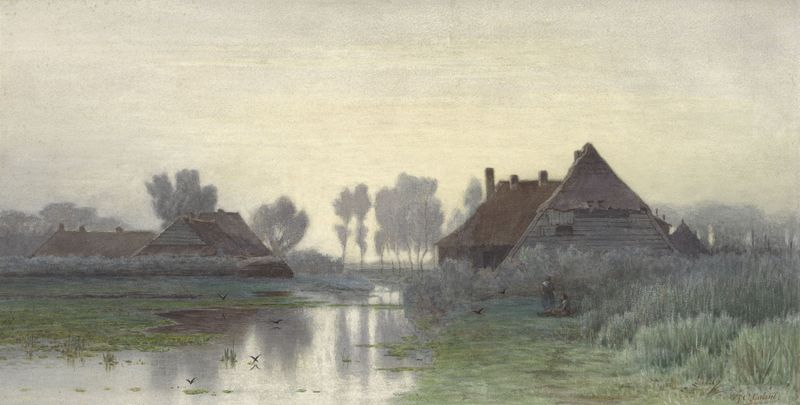
Boerenwoningen aan het water bij ochtendnevel
Paul Joseph Constantin Gabriël

Dutch Landscape
Paul Joseph Constantin Gabriël
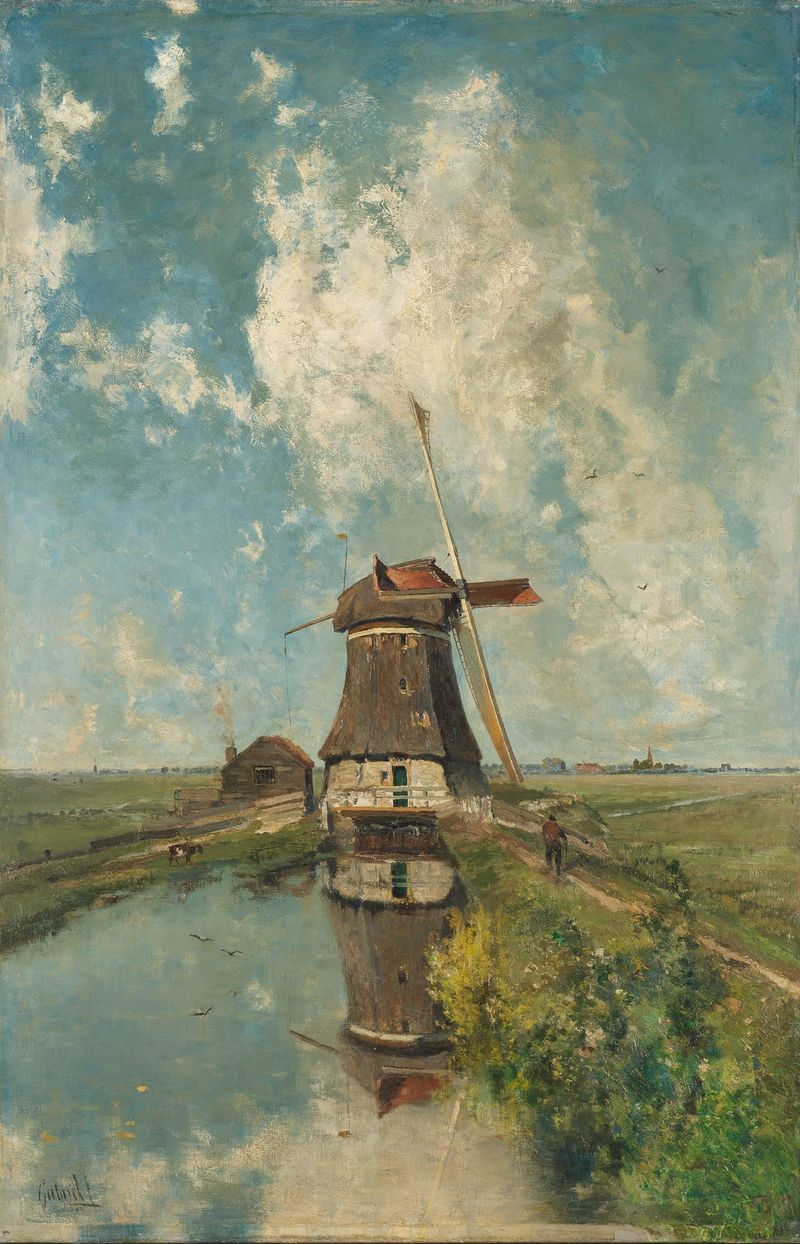
A Windmill on a Polder Waterway, Known as ‘In the Month of July’
Paul Joseph Constantin Gabriël

Landscape near Kortenhoef
Paul Joseph Constantin Gabriël

Landscape near Abcoude
Paul Joseph Constantin Gabriël
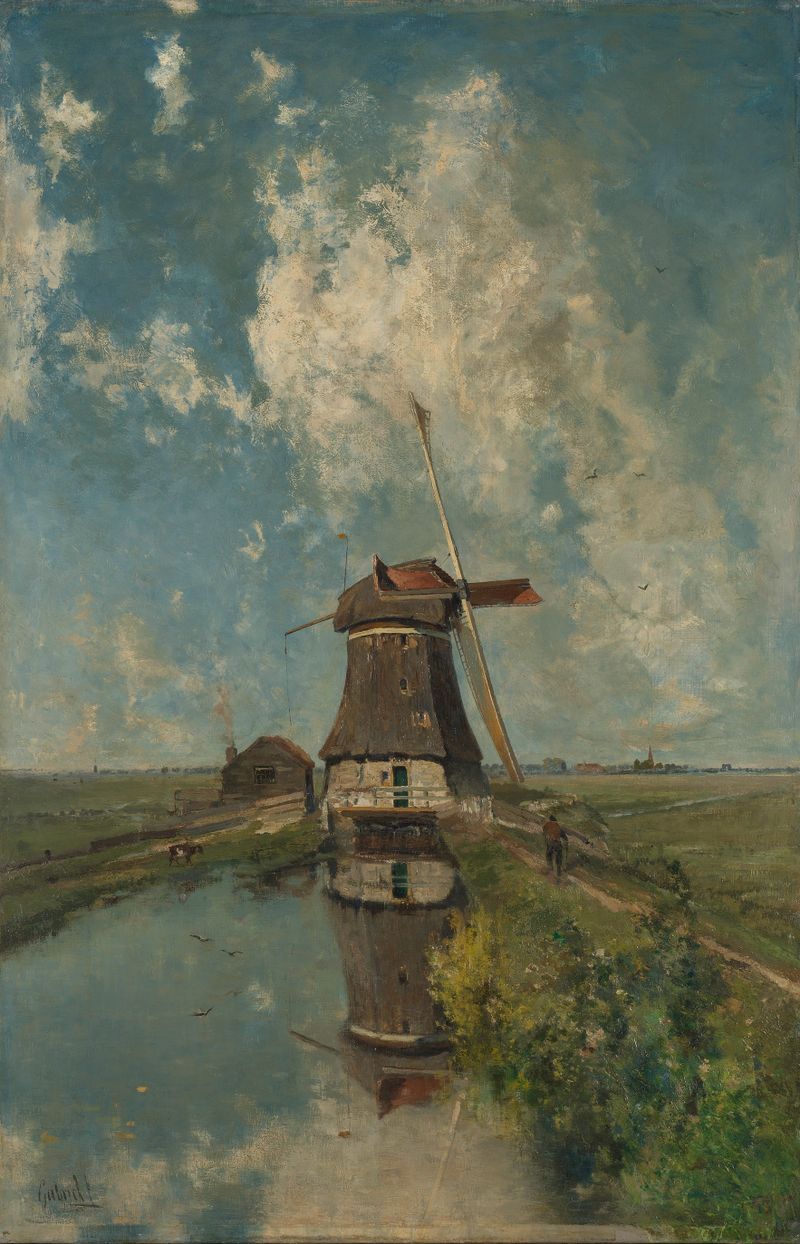
A Windmill on a Polder Waterway, Known as ‘In the Month of July’
Paul Joseph Constantin Gabriël

Windmill on a Pond
Paul Joseph Constantin Gabriël
Polder with Mills near Overschie
Paul Joseph Constantin Gabriël





