
Windmill on a Pond — History & Facts
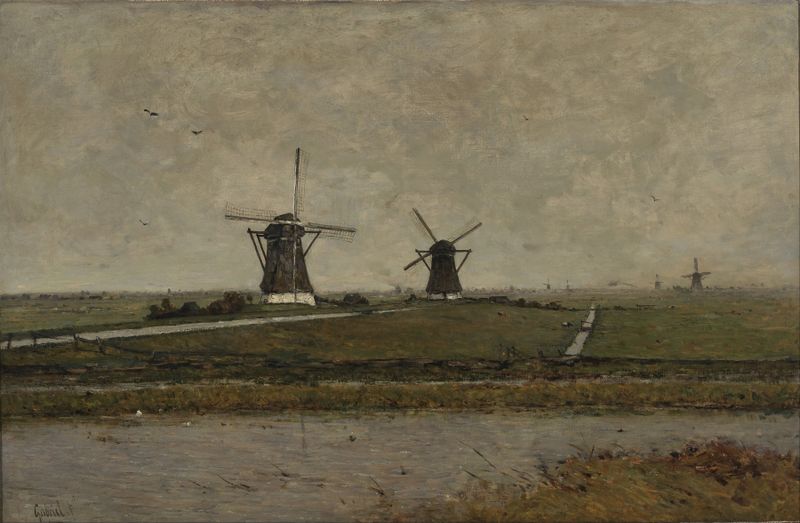
In the serene embrace of nature, a windmill stands as a steadfast guardian over a tranquil pond, whispering tales of time and transformation. The delicate marriage of land and water invites us to reflect on our place in the vastness of existence, revealing a sense of awe that is both humbling and profound. Look to the center of the canvas, where the windmill rises majestically against a backdrop of soft, swirling clouds. Notice how the sunlight dapples the water's surface, creating shimmering reflections that dance in harmony with the gentle breeze.
The rich greens of the surrounding foliage contrast beautifully with the warm earthy tones of the windmill, showcasing the artist's skilled blending of colors and textures. Each brushstroke evokes a sense of movement, as if the very fabric of nature is alive and breathing. Yet, within this idyllic landscape lies an undercurrent of solitude. The solitary windmill, while a symbol of industriousness, stands in stark contrast to the open stillness of the pond, suggesting a dialogue between human endeavor and the serenity of nature.
Additionally, the calm waters mirror the sky’s hues, merging the boundaries of earth and heaven, evoking thoughts of interconnectedness and the transient nature of life itself. During the late 19th century, Windmill on a Pond was created amidst a time of artistic exploration for Paul Joseph Constantin Gabriël in the Netherlands. As he painted this piece, the Impressionist movement was gaining momentum, challenging traditional techniques and encouraging artists to capture fleeting moments of beauty. His work reflects both a personal affinity for the Dutch landscape and a broader shift in art that embraced the emotive power of light and color.
More Artworks by Paul Joseph Constantin Gabriël
Browse all →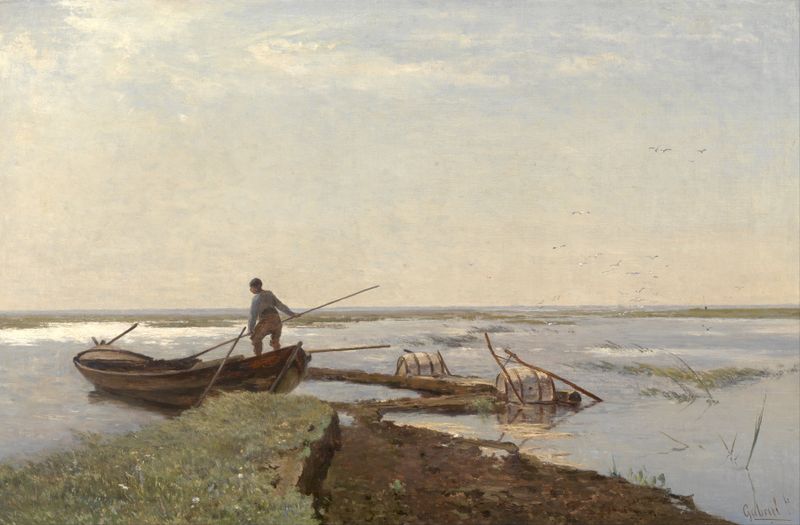
Polder Landscape (in the Kamperpolder)
Paul Joseph Constantin Gabriël

Polderlandschap met molens
Paul Joseph Constantin Gabriël
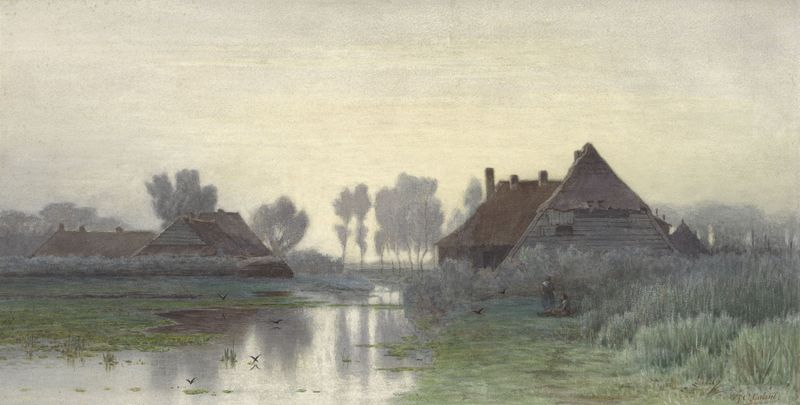
Boerenwoningen aan het water bij ochtendnevel
Paul Joseph Constantin Gabriël

Polder landscape
Paul Joseph Constantin Gabriël

Dutch Landscape
Paul Joseph Constantin Gabriël
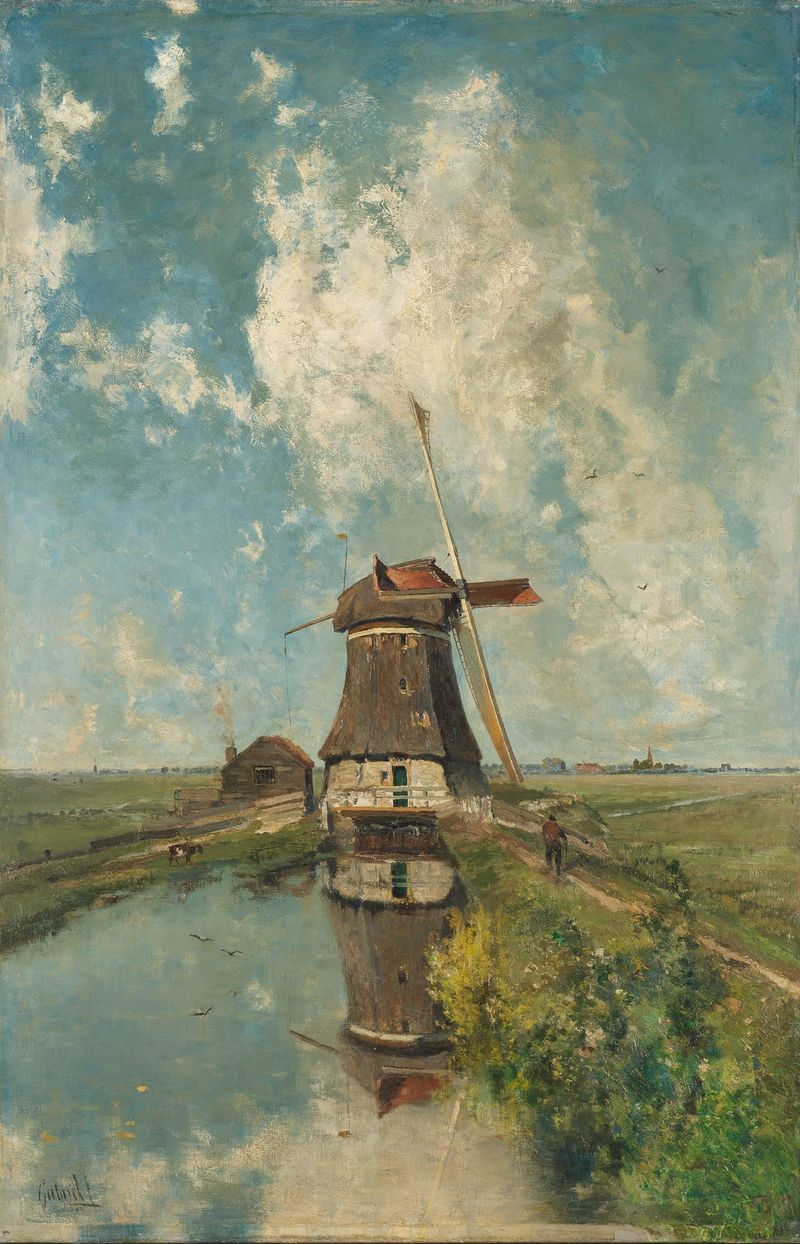
A Windmill on a Polder Waterway, Known as ‘In the Month of July’
Paul Joseph Constantin Gabriël

Landscape near Kortenhoef
Paul Joseph Constantin Gabriël

Landscape near Abcoude
Paul Joseph Constantin Gabriël
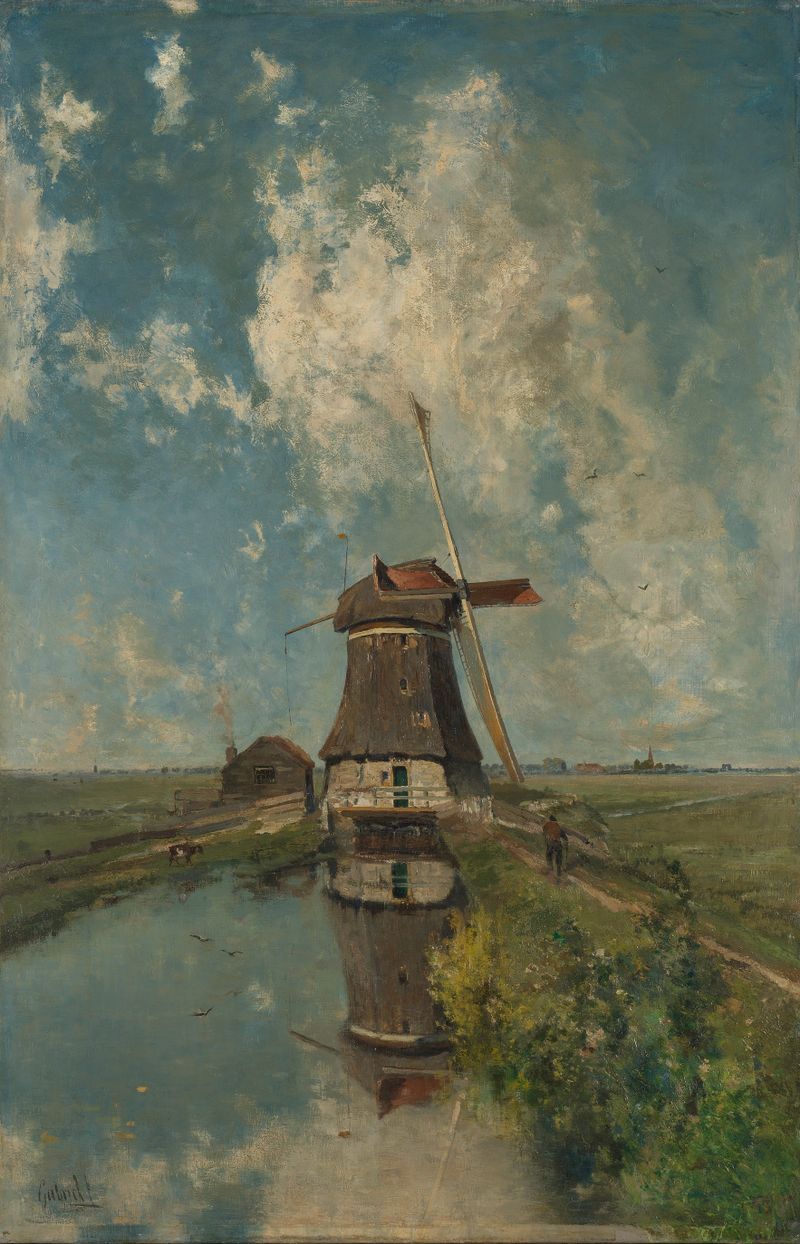
A Windmill on a Polder Waterway, Known as ‘In the Month of July’
Paul Joseph Constantin Gabriël
Polder with Mills near Overschie
Paul Joseph Constantin Gabriël





