Polderlandschap met vissers — History & Facts
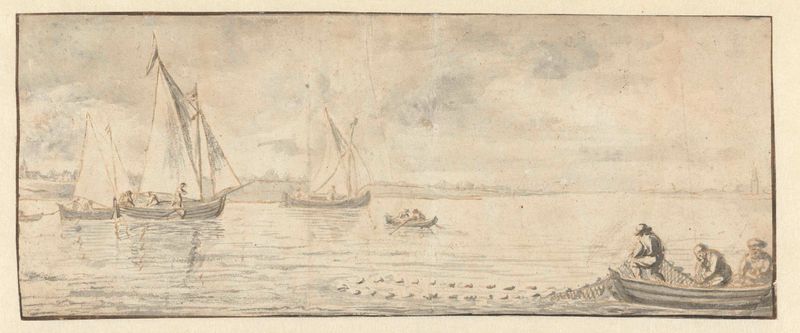
In the vast expanse of Polderlandschap met vissers, a void emerges — not merely of sound but of sensation, a poignant reminder of life’s ephemeral nature amid the stillness of rural existence. The landscape serves as a canvas for contemplation, inviting the viewer to delve deeper into its serene yet haunting beauty. Look to the left where dark, brooding clouds stretch across the sky, casting their shadows over the flat fields below. This is opposed by the soft, muted greens and browns of the land, carefully layered to create a sense of depth and perspective.
The fishermen, small figures in the expansive scene, are rendered with delicate brushwork, their movements subtly suggesting a quest for sustenance in the vastness of nature. Note how the light, diffused yet deliberate, enhances the contours of their forms, suggesting both the weight of labor and the peace of solitude. Yet, within this tranquil tableau lies a tension between humanity and the relentless passage of time. The fishermen’s solitary figures evoke a sense of vulnerability against the unforgiving landscapes, hinting at a shared struggle for survival.
The juxtaposition of their fragile presence with the overwhelming emptiness of the polder creates an emotional resonance, prompting reflections on existence and purpose amid the void. Pieter Coopse painted Polderlandschap met vissers between 1668 and 1677, during a period marked by the Golden Age of Dutch painting. As he created this work, he was deeply influenced by the natural landscapes of his homeland and the shift towards more intimate, personal depictions of everyday life. At this time, the art world was embracing realism, focusing on the sublime beauty of the mundane, which Coopse captures with remarkable sensitivity in this piece.