Zeilschepen op ruwe zee — History & Facts
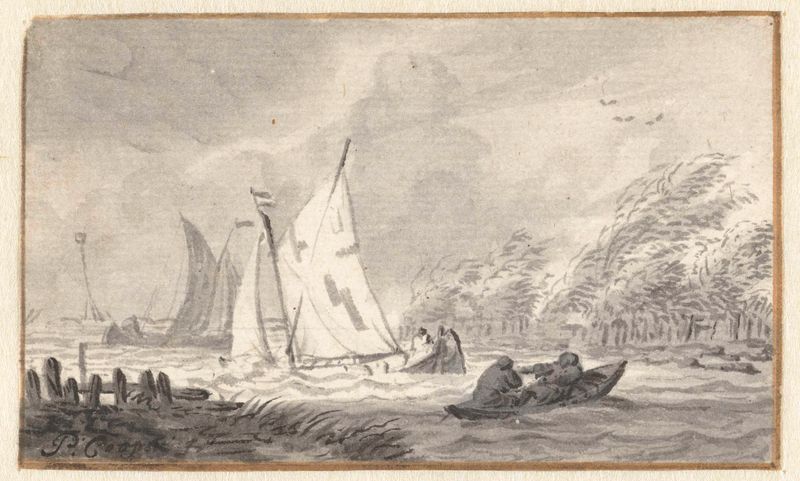
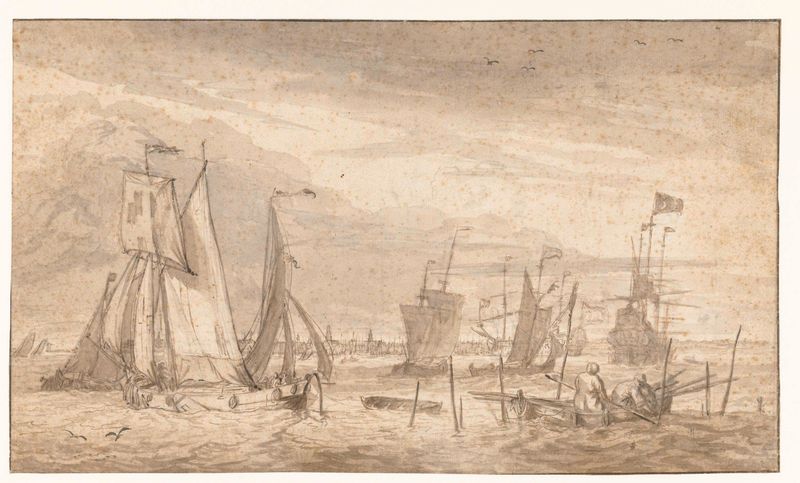
Could a single brushstroke hold eternity? In the tranquil silence of Zeilschepen op ruwe zee, the essence of a tempestuous seascape whispers stories of struggle and endurance. Every wave and sail seems to breathe, capturing a fleeting moment that transcends time, inviting contemplation beyond mere observation. Look to the horizon, where tumultuous clouds loom, swallowing the sun's light in a dramatic interplay of shadow and color. The ships, meticulously detailed, are anchored in a chaotic dance with nature, their sails billowing against the wind.
Notice how the artist’s palette of deep blues and grays reflects the stormy atmosphere, while hints of white froth articulate the violent embrace of the sea. The brushwork conveys movement, creating an almost tactile sensation that pulls you into the heart of the storm. Yet, within this chaotic scene lies a profound contrast—between the fragility of the vessels and the relentless power of the ocean. Each ship, though seemingly vulnerable, emerges as a testament to human resilience, navigating through the raw force of nature.
The stillness found in the silent moments of the painting invites the viewer to ponder the balance between tranquility and turmoil, encapsulating an emotional tension that resonates deeply. Pieter Coopse painted this work between 1668 and 1677, a period marked by the Dutch Golden Age, characterized by thriving maritime trade and exploration. At this time, the artist was living in Amsterdam, where the expansive views of the North Sea inspired much of his seascape imagery. The interplay of light and stormy weather in his works reflects not only his mastery of technique but also a deeper understanding of the relationship between humanity and nature during an era of discovery.